On August 26, 1944, the National Council of Nigeria and the Cameroons (NCNC) was formally established in Lagos.
Reports revealed that delegates from across Nigeria and the Cameroons converged to form a platform aimed at securing constitutional reforms, self-government, and unity for all Nigerians under colonial rule.
Chief Herbert Macaulay, veteran nationalist and founder of the Nigerian National Democratic Party, was unanimously elected the first President of the Council. Dr. Nnamdi Azikiwe, editor and publisher, was named Secretary General.
Macaulay, while addressing the inaugural meeting, described the NCNC as “the voice of the people, for the people, and by the people,” calling on Nigerians and Cameroonians to shelve tribal differences in pursuit of common political goals.
The Council’s first executive committee comprises prominent figures such as Herbert Macaulay, Dr. Nnamdi Azikiwe, Mr. L.A. Onajobi, J.O. Lucas, A.W. Howells, L.P. Ojukwu, Alex Taylor, E.A. Akerele, D.A. Alakija, and J.I.C. Taylor
Speaking after his election, Dr. Azikiwe said the NCNC would pursue “education, economic emancipation, and political freedom” through constitutional means and mass mobilization.
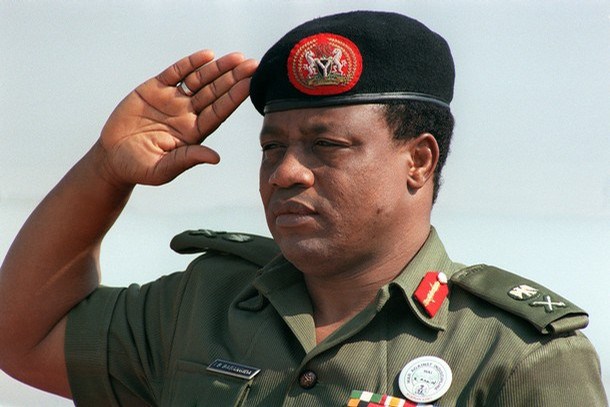
August 26, 1993: General Ibrahim Badamasi Babangida Bows Out
On August 26, 1993, General Ibrahim Badamasi Babangida stepped down as Military President and Commander-in-Chief of the Armed Forces.
Babangida, during a nationwide broadcast at 7:00pm, announced the dissolution of his administration and the immediate transfer of authority to an Interim National Government (ING) headed by Chief Ernest Shonekan.
“I have taken this decision to save the nation from further political turmoil,” Babangida said. “The ING will oversee the process of completing the transition to a democratically elected government.”
Babangida seized power on August 27, 1985, and oversaw the transition program, the annulled June 12, 1993 presidential election, and several constitutional conferences.