As political parties begin positioning themselves for the 2027 governorship election in Oyo State, Governor Seyi Makinde faces a major political challenge: securing victory for his preferred successor in a state where previous governors have struggled to hand over power to candidates of their choice.
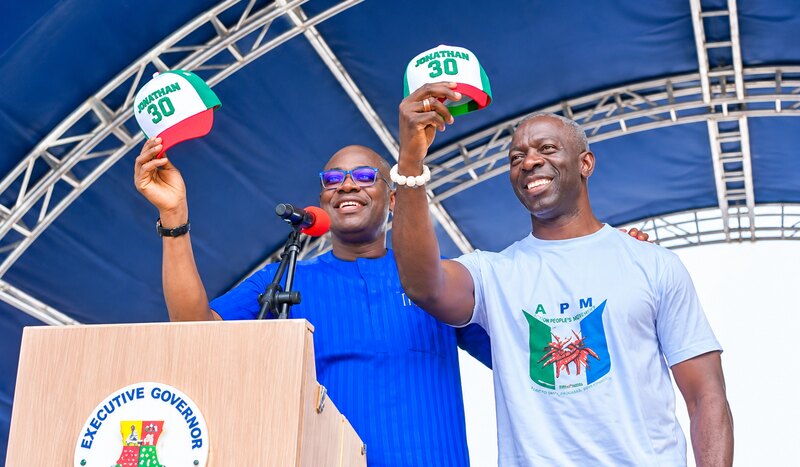
Makinde is backing Bimbo Adekanmbi, the Allied Peoples Movement candidate, in a contest that could determine whether his political influence survives beyond his tenure.
The opposition All Progressives Congress, meanwhile, is seeking to regain control of the state after losing two consecutive governorship elections, although disagreements over its candidate could affect its chances.
A history of failed succession attempts
Since the return to democratic rule in 1999, Oyo has developed a record of outgoing governors failing to retain power for their parties through preferred successors.
Former governors Lamidi Adesina of the defunct Alliance for Democracy, Rashidi Ladoja of the Peoples Democratic Party and Adebayo Alao-Akala all failed to secure another term or install successors.
Abiola Ajimobi, who took office in 2011, became the first governor in the period to win re-election after benefiting from the political momentum created by the formation of the APC in 2013.
However, his influence was insufficient to secure victory for his preferred candidate, Adebayo Adelabu, in 2019, when Makinde defeated the ruling party.
The alliance that brought Makinde to power
Makinde’s first electoral victory was supported by a coalition of opposition parties that capitalised on divisions within the APC.
Before the 2019 election, the APC reportedly had about 37 governorship aspirants competing for its ticket, creating disagreements that weakened the party’s ability to maintain unity behind Adelabu.
Makinde, who had previously contested the governorship on the Social Democratic Party platform, subsequently joined the PDP and secured its ticket.
With former governor Ladoja facilitating an alliance, the PDP worked with the Zenith Labour Party, African Democratic Congress and SDP, among others, to challenge the APC.
Ladoja reportedly persuaded Olufemi Lanlehin of the ADC, Sharafadeen Alli of the ZLP and Bolaji Ayorinde of the SDP to withdraw in support of Makinde.
Although the arrangement was reportedly based on an understanding that Makinde would serve one term to accommodate competing political interests, he sought re-election in 2023.
Without a comparable opposition alliance, he defeated the APC candidate, Teslim Folarin, with 563,756 votes, winning 31 of Oyo’s 33 local government areas.
A different political landscape ahead of 2027
The conditions that shaped the previous elections have changed, with opposition parties experiencing internal disputes and divisions.
Makinde has moved to the APM while maintaining an alliance with his PDP political structure in the state, hoping to use the arrangement to secure victory for Adekanmbi.


However, questions have emerged about whether the governor can transfer his personal electoral appeal to his preferred candidate, particularly as he also pursues a presidential ambition.
Adekanmbi previously served as deputy chief of staff and commissioner for finance, budget and planning under Ajimobi between 2011 and 2019.
He did not hold a substantive cabinet position in Makinde’s administration, although the governor appointed him in July 2024 to head a committee overseeing the proposed upgrade of Ibadan Airport to international status.
Having spent years in the United Kingdom as a consultant and pursuing professional qualifications, Adekanmbi is widely regarded as a technocrat, raising questions about his grassroots political network and ability to mobilise voters across the state.
APC seeks a return but faces internal disagreements
The APC believes it has a stronger opportunity to reclaim Oyo, partly because of the influence of President Bola Tinubu’s administration and efforts to strengthen the party’s national structure.
However, the party is yet to resolve disagreements surrounding its governorship choice, particularly the political ambitions of former minister of power, Adebayo Adelabu.
After losing to Makinde in 2019, Adelabu contested the 2023 election under the Accord Party but finished behind the APC candidate, Folarin.
The APC reportedly favoured Senator Sharafadeen Alli, who is considered an ally of Ladoja, but Adelabu’s rejection of the party’s consensus arrangement has fuelled concerns about a possible division.
Oyo APC spokesperson, Olawale Sadare, said the party had learnt from its previous electoral setbacks and was better prepared to manage internal disagreements.
“The circumstances that led to our loss of the general election in 2019 and 2023 were similar,” Sadare had said.
He alleged that several political figures who supported Makinde in previous elections had since moved to the APC.
“All the people that conspired to work for the opposition party and Makinde at that time, particularly the ones that actually brought him to power in 2019, have all abandoned him. He’s just a giant on paper now,” Sadare said.
Makinde’s camp insists voters remain the deciding factor
However, Moses Alao, the governor’s special assistant on print media, rejected the claim that Makinde had lost the support of influential political stakeholders.
He also maintained that Adekanmbi emerged through consultations within the party rather than being imposed by the governor.
“Honourable Bimbo Adekanmbi was chosen by the party,” Alao said.
“There were a lot of contenders, and at the end of a lot of engagements, meetings and consultations, he was chosen by the party.”
Alao acknowledged that some of the political alliances behind Makinde’s earlier victories might no longer exist, but argued that his principal’s strongest support came from ordinary residents.
“Governor Makinde’s strength in 2019 and 2023 has always been the people, the people of Oyo state,” he said.
He attributed the governor’s continued political appeal to achievements in infrastructure, education and healthcare, expressing confidence that these could help the APM secure an even wider victory.
Alao also warned against involving the Olubadan in partisan political activities, insisting that the traditional ruler had no role in choosing candidates.
“Olubadan is no longer a politician. He has nothing to do with their candidates. They should stop mentioning his name in whatever they are trying to do,” he said.
With both political camps expressing confidence, the 2027 contest will test Makinde’s ability to influence the choice of his successor and the APC’s capacity to resolve its internal differences before the election.