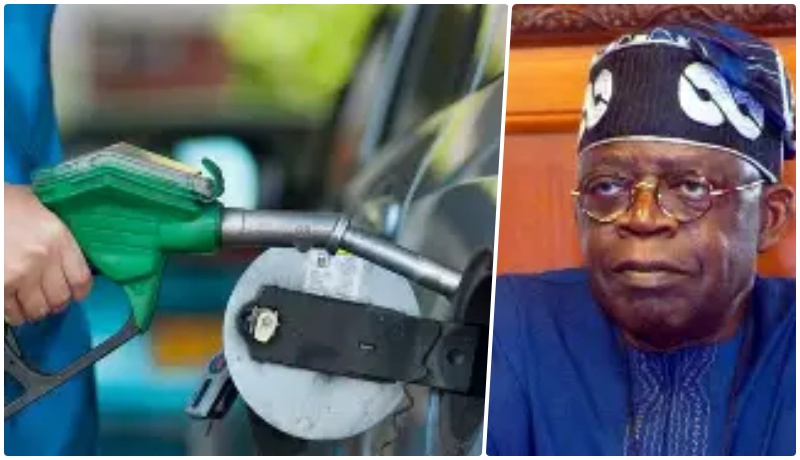
Few days ago, the Federal government of Nigeria resurrected the 5% fuel surcharge.
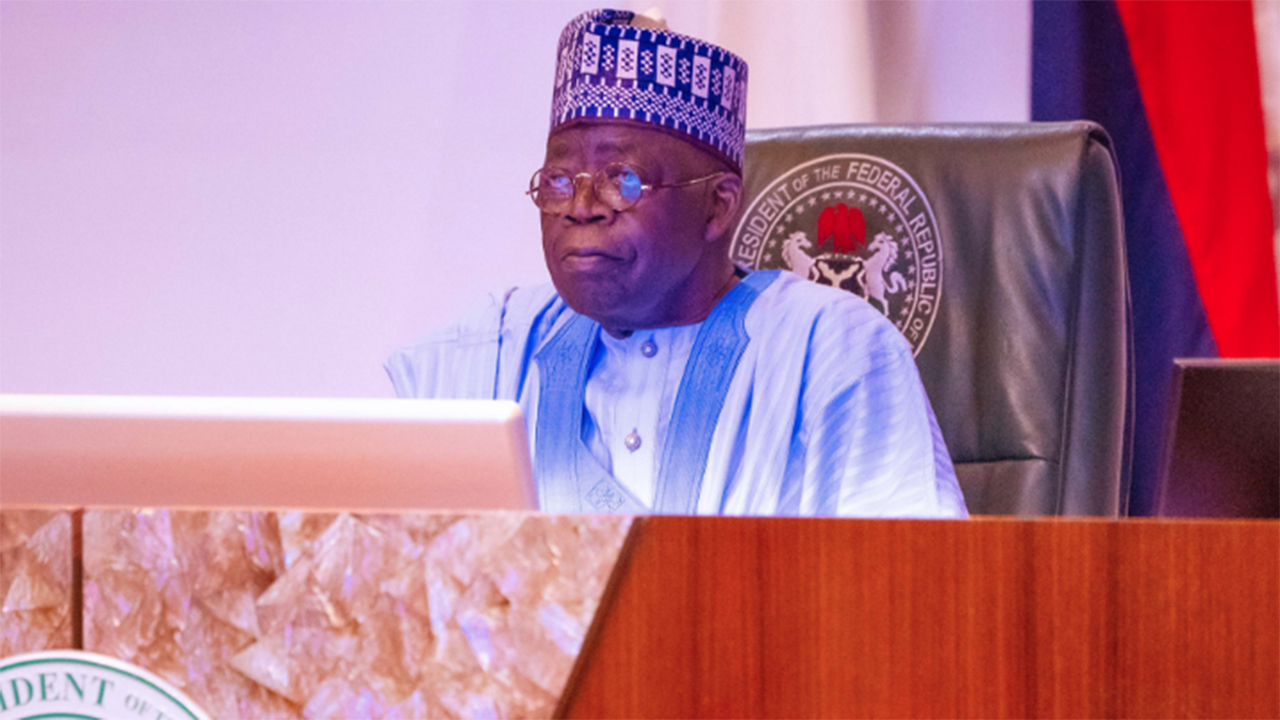
Signed into law by President Bola Tinubu on June 26, 2025, the fuel tax policy aims to reduce the nation’s dependence on fossil fuels, promote the adoption of cleaner energy sources, and generate additional public revenue.
According to report, Nigeria, Africa’s biggest oil producer, is about to once again go a step further by introducing a five per cent surcharge on petrol and diesel sales.
This is in spite of the fact that the economic impact of the fuel subsidy continues to be very much devastating on the citizens since it was implemented on May 29, 2023.
According to findings by WITHIN NIGERIA, the levy is part of the newly signed Nigeria Tax Administration Act, which is one of four tax reform bills signed into law by President Bola Tinubu on June 26, 2025.
However, further findings equally showed that the regulation requires that the surcharge on the product should be applied to every supply or sale of refined petroleum product in the country.
Therefore, whether these products are locally produced or imported, the new tax law will apply on them, with the money collected at the point of sale. The exceptions, according to findings are the Cleaner fuels such as renewables, household kerosene, cooking gas (LPG), and compressed natural gas (CNG) are exempt.

How the law will work
Nevertheless, the relevant provisions of the Nigeria Tax Administration Act has helped out in spelling out the law and its workability.
According to Section 159: The five per cent surcharge is imposed on chargeable fossil fuel products provided or produced in Nigeria, to be collected at the time of supply or sale; Section 160: This surcharge will be calculated based on the retail price of petrol and diesel at the time.
In Section 161: The Minister of Finance is obliged to publish the commencement date in the official Gazette before implementation begins.
Section 162 however, narrates that the surcharge exempts kerosene, LPG, CNG, or renewable energy sources from the surcharge.
From this arrangement and legal framework it has effectively harmonized the FERMA Act provision into a broader national tax system, and went a step further in placing responsibility for collection and administration in the hands of the Federal Inland Revenue Service (FIRS), an establishment that has been reputed for such federal revenue collection.
Is this necessary at this time?
There is no gainsaying the fact that the new tax on petroleum is coming at a very sensitive time in the country.
The country is yet to recover from the unscheduled and uncalculated removal of fuel subsidy on May 29, 2023 which quadrupled all the expenses and prices of goods and services in the country.
The removal of the decades-old fuel subsidy in 2023 skyrocketed petrol prices overnight, and the ripple is the fact that it fuelled inflation thereby eroding household incomes.
What followed was the depreciation of the country’s currency and the purchasing power of naira has continued to take a nosedive.
Since fuel subsidy was removed over two years ago, transport fares and the cost of goods have soared. In the face of the new tax law which highlights 5% tax on the petroleum products, it goes without saying many Nigerians now have become allergic for further increase in cost of living which is one of the effects of the new tax law.
Reactions trail the new tax
In any case, the new tax law since its introduction has continued to generated heated reactions across the political and social spectrum in the country.
However, the presidential candidate of Labour Party in 2023 general elections, Mr. Peter Obi has criticized the new tax.
Obi in a post on his official X handle late Wednesday, explained that the move would further worsen the economic hardship already facing millions of Nigerians since fuel subsidy removal in 2023.
He further posited that the tax should have been suspended until Nigerians begin to see meaningful benefits from President Tinubu’s promises.
In his words, “Nigerians will pay a 5% tax on fuel and diesel at a time when millions can hardly afford transportation.”
“Mr. President only yesterday boasted that Nigeria has met its revenue target for the year. Yet instead of easing hardship, the government imposes more burden on Nigerians.”
The former governor of Anambra state further lamented that even the much advertised alternative, Compressed Natural Gas (CNG), has become unaffordable as the price has continued to jump from about ₦230 to ₦450 per unit, in spite of the promises of subsidizing the product by the federal government.
Obi stressed that if the government indeed had “excessive revenue” as claimed, it should prioritize education, healthcare, and poverty alleviation rather than increasing the burden on struggling citizens.
“Why tax citizens who cannot even breathe anymore? Leadership is not about giving a burden but reducing suffering, and about care and compassion,” Obi added.
FG Clarifies the tax law
As the debate over the suitability of the implementation of the fuel tax law continues, the Federal Government has said that the 5% surcharge on fuel mentioned in the new tax law is not a new tax introduced by President Bola Tinubu’s administration.
In a tweet on Saturday, Chairman of the Presidential Committee on Fiscal Policy and Tax Reforms, Taiwo Oyedele, stated this while explaining the origin of the law.
According Mr. Oyedele, the fuel charge has been in existence for almost two decades now, precisely since 2007 under the Federal Roads Maintenance Agency (FERMA) Act.
He went further to explain that it was only added to the new Nigeria Tax Act for clarity and transparency, not to begin right away.
In his words, “ This note seeks to clarify matters arising regarding the 5% fuel surcharge in the new tax laws. The charge is not a new tax introduced by the current administration.
“The provision already exists under the Federal Roads Maintenance Agency (Amendment) Act, 2007. Its restatement in the new Tax Act is for harmonisation and transparency rather than immediate implementation.
“No. The surcharge is not new. It already exists under the Federal Roads Maintenance Agency (Amendment) Act, 2007 (FERMA Act). The new Tax Act only restates it for harmonisation and transparency. Hence, it was not part of the original tax reform bills submitted by the president to the National Assembly.”
Again many Nigerians are of the opinion that the surcharge will make life harder and increase prices of goods and services, but Oyedele said the money from the charge will be used to fix and maintain bad roads, which in turn will have obvious multiplier effects, like transport cost, lower vehicle repairs.
“The surcharge is designed as a dedicated fund for road infrastructure and maintenance. If implemented effectively, it will provide safer travel conditions, reduce travel time and cost, lower logistics costs and vehicle maintenance expenses, which will benefit the wider economy.


“This practice is virtually universal with over 150 countries imposing various charges ranging between 20% to 80% of fuel products to guarantee regular investment in road infrastructure.”
He stated that the surcharge would not apply to all fuel types while narrating that kerosene, cooking gas (LPG), and compressed natural gas (CNG) will be exempt, together with clean energy sources, to support Nigeria’s move toward greener energy.
” No. Several energy products used by households are exempt. This includes household kerosene, cooking gas (LPG), and compressed natural gas (CNG). Clean and renewable energy products are also excluded to align with Nigeria’s energy transition agenda.”
On why the federal government could not remove the charge, Oyedele explained that even though the fund saved from subsidy is huge, it is not enough to cater for mountainous projects by the federal government.
“While subsidy savings will provide some funding, they are insufficient to meet Nigeria’s huge and recurring road infrastructure needs among other public finance needs. A dedicated fund ensures reliable and predictable financing for roads, complementing the budget and ensuring roads are not left underfunded.”
He maintained the usefulness of the tax law, stating that this tax does not go against federal government’s promise to reduce taxes, while explaining that some taxes have been removed like VAT on fuel, telecom taxes, and the cybersecurity levy to reduce pressure on citizens and small businesses.
“Not at all. The reforms have already reduced multiple taxes and removed or suspended several charges that directly affect households and small businesses, such as VAT on fuel, excise tax on telecoms, and the cybersecurity levy. By harmonising earmarked taxes, government is reducing duplication and ensuring a more efficient tax system.”
“Yes, the surcharge has been removed from the FERMA Act and incorporated into the new tax laws which are designed to provide a forward-looking legal framework for Nigeria.
“Keeping this provision in place within a harmonised legal framework ensures Nigeria is prepared to address critical challenges, such as sustainable road financing and even climate change impacts. It is not about immediate implementation, but to ensure the law provides a clear and effective framework for when it becomes necessary in the future.”