
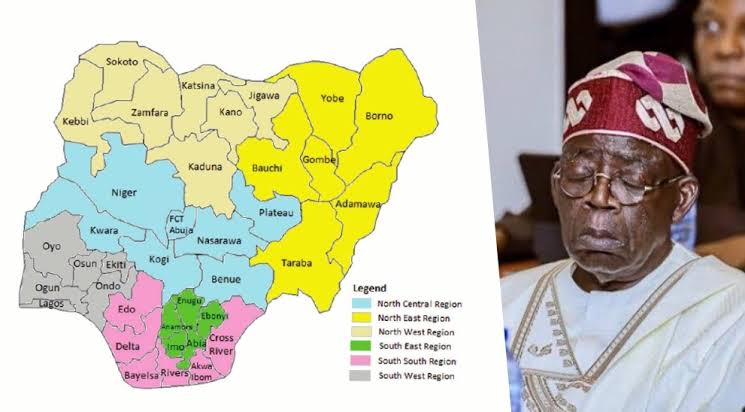
Nigeria’s first quarter of 2025 presented a fiscal snapshot that was both illuminating and unsettling. Across the nation, states were engaged in a silent contest of economic prowess, measured not by political posturing or ceremonial grandeur, but by a number that impacts every public service: Value Added Tax. The VAT figures for Q1 2025 revealed the stark contrasts between the commercial might of Lagos and the quieter, often overlooked contributions of other states.
While the nation collectively generated a staggering sum exceeding ₦1.5 trillion, the distribution of this revenue reflected historical patterns of centralization, regional economic concentration, and systemic inequities.
Lagos stood towering above the rest, a giant whose every corporate transaction, market exchange, and digital payment fed into a massive pool of revenue. Meanwhile, other states traced smaller currents, quieter yet equally significant to the fabric of national finance. Yet the full impact of these numbers remained obscured, waiting for the patient observer to untangle patterns, paradoxes, and the unseen logic behind allocation.
Suspense clings to the very act of collection and redistribution. Behind the ostensibly simple ledger lies a web of governance, policy, and human behavior. The Federal Inland Revenue Service and the Federation Account Allocation Committee operate with rules that dictate how wealth is shared, sometimes amplifying disparities, sometimes narrowing them. As one examines the Q1 2025 figures, questions emerge naturally: who contributes most, who receives most, and why?
Lagos: The Pulse of Commerce
Lagos is not just a state; it is an organism, pulsing with the energy of millions of transactions each day. Q1 2025 VAT collection of ₦819.62 billion is a testament to the metropolis’ commercial vitality. Skyscrapers in Victoria Island, markets in Oshodi, and tech hubs in Yaba collectively form a matrix of taxable activity whose scale is unmatched elsewhere in the country. Every payment processed, every service charged, every retail purchase contributes incrementally to a sum that dwarfs the collections of the next several states combined.
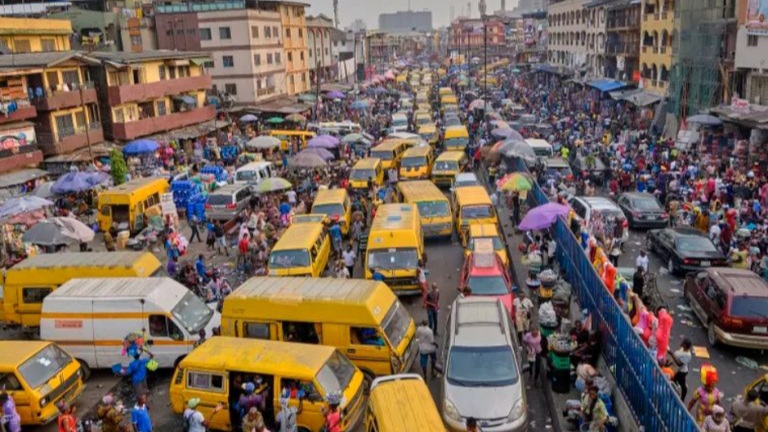
Citizens navigate this ecosystem without often realizing their participation fuels public budgets. Traders selling electronics or fashion items, barbers charging for their craft, companies invoicing services—all participate in a hidden economy whose collective contribution now manifests as a staggering quarterly total. For Lagos, VAT is both a reflection of opportunity and a mirror of social density; the more the population thrives in commerce, the larger the figure grows, creating an intricate feedback loop between economic vitality and fiscal power.
Yet the received figure of ₦138.53 billion illustrates the tension embedded in federal allocations. Redistribution ensures that other states, particularly those with weaker economic bases, gain resources necessary to sustain public services. Citizens of Lagos, despite being major contributors, often perceive the difference between generation and receipt as inequitable. Policymakers, however, see it as an essential mechanism to uphold national cohesion, reduce developmental disparity, and maintain fiscal balance.
Beyond numbers, Lagos’ VAT narrative encompasses governance. The task of monitoring compliance, auditing collections, and reconciling reports is monumental. The city’s infrastructure, human resource capacity, and administrative machinery are tested continuously to ensure that the ₦819.62 billion is collected with accuracy and integrity. The figure thus represents not only economic magnitude but institutional competence, highlighting the synergy between commercial activity and regulatory oversight.
Digital commerce adds another layer to the story. Payment platforms, Fintech services, and e-commerce giants operate in a regulatory grey space where VAT collection can either flourish or lag. Their contributions, however, are now increasingly significant, feeding into the state’s impressive quarterly total. In this context, Lagos emerges not merely as a geographic space but as a living, dynamic engine of fiscal generation whose impact radiates across the nation.
Rivers: Resource Wealth and Economic Diversity
Rivers State recorded ₦278.23 billion in VAT generation, demonstrating the role of resource-rich states in Nigeria’s fiscal map. Oil and gas dominate the economy, yet commercial activity in Port Harcourt and surrounding areas also contributes meaningfully. The juxtaposition of high-value resource transactions with smaller-scale commerce creates a complex VAT landscape.
The state’s received figure, ₦60.27 billion, reflects both redistribution and the broader federal strategy of balancing revenue flows. Policymakers allocate resources to ensure states with lower capacity or smaller populations maintain fiscal viability. Yet the difference between generated and received also invites scrutiny from local stakeholders who perceive a gap between contribution and reward. Understanding these dynamics requires a recognition of both economic output and political design.
Mid-tier states like Oyo, generating ₦79.78 billion and receiving ₦35.34 billion, offer another lens into fiscal patterns. Ibadan’s dense network of educational institutions, small and medium enterprises, and service providers ensures a steady stream of VAT revenue. Allocation mechanisms further modulate these contributions to achieve a semblance of nationwide equity, yet the balancing act often sparks debates about fairness and efficiency.
Bayelsa presents a distinct case. With ₦27.26 billion generated and ₦20.44 billion received, the state exemplifies economies shaped by resource extraction. Despite modest economic diversification, federal redistribution ensures fiscal inflows sufficient to fund development priorities. The interplay of wealth creation, redistribution, and public investment is particularly pronounced here, making the Q1 2025 figures a window into how policy and economic structure intersect to shape lives.
Northern and Smaller States: Redistribution as a Lifeline
Northern states, while contributing less to national VAT totals, demonstrate the impact of redistribution on developmental capacity. Kano State, generating ₦22.97 billion yet receiving ₦35.86 billion, benefits from mechanisms designed to balance regional disparities. The city’s vibrant trade markets, manufacturing hubs, and entrepreneurial energy form the backbone of its contribution, yet the federal transfer amplifies its ability to fund infrastructure and services.
Edo, Akwa Ibom, and Kogi illustrate similar patterns. Edo’s ₦20.73 billion generated against ₦22.71 billion received, Akwa Ibom’s ₦16.08 billion vs ₦23.59 billion, and Kogi’s ₦7.33 billion vs ₦21.12 billion highlight that allocation often outweighs raw collection. For citizens, these figures translate into public service provision: schools, hospitals, road networks—all funded partially through redistributed VAT. The human impact is tangible, shaping everyday life even when the underlying numbers remain abstract.
Imo State, generating ₦2.34 billion yet receiving ₦21.84 billion, embodies the extremes of redistribution. Local economies may be modest, yet federal mechanisms ensure access to essential services and development projects. This system, though sometimes criticized for disincentivizing local revenue growth, underscores the state’s fiscal lifeline and illustrates the social dimension of taxation.
Northern and smaller states’ VAT stories emphasize that fiscal policy in Nigeria is not merely arithmetic. It reflects decisions about equity, development, and national cohesion. Redistribution channels resources to regions with less economic activity, enabling investments that would otherwise be unattainable. The human side of this narrative emerges in classrooms, clinics, and streets, all funded by flows invisible to the casual observer yet critical to social welfare.
Patterns, Paradoxes, and Lessons
Analysis of Q1 2025 VAT figures reveals clear patterns: southern commercial hubs dominate generation, resource-rich states contribute significantly, and redistribution balances developmental inequities. Paradoxes appear when low-generation states receive more than some high-generation states, reflecting policy choices rather than economic performance. These patterns provoke questions about efficiency, equity, and the incentives for economic expansion.
Historical context is critical. VAT has long been a central revenue stream for both federal and state governments. Collection and redistribution mechanisms have evolved to address inequalities, encourage fiscal federalism, and maintain social stability. The Q1 2025 figures, while partially reported and requiring cautious interpretation, illustrate the ongoing tension between local generation capacity and equitable allocation.
The human dimension emerges vividly when connecting figures to everyday life. Roads constructed, hospitals equipped, and social services funded all rely, at least in part, on VAT flows. Citizens experience the outcomes of redistribution directly, though rarely do they witness the numbers themselves. The disconnect between visible public services and invisible revenue streams makes understanding fiscal patterns both challenging and essential for informed civic engagement.
States must balance the dual imperatives of encouraging economic activity and navigating federal allocation structures. High-generation states like Lagos must manage expectations and optimize compliance, while low-generation states rely on redistribution to sustain basic infrastructure. This dynamic creates a complex landscape in which policy, governance, and citizen welfare intersect in ways that are as human as they are numerical.
Conclusion: Numbers as Narratives
VAT generation and receipt in Q1 2025 provide a narrative that is simultaneously abstract and deeply human. Numbers like ₦819.62 billion from Lagos or ₦2.34 billion from Imo encapsulate stories of enterprise, governance, and social policy. Redistribution ensures that even states with modest economic bases maintain fiscal capacity, illustrating both the fairness and complexity of Nigeria’s federal system.
Behind each figure lies human effort, economic activity, and policy choices that shape lives. The Q1 2025 VAT data illuminates the delicate interplay between generation and allocation, revealing patterns of inequality, opportunity, and public investment. Citizens may rarely see these flows, but they feel them in infrastructure, services, and quality of life.
The narrative of VAT in Nigeria is more than a tale of arithmetic. It is a story of people whose daily labor underwrites invisible flows of wealth. It is a story of states grappling with both abundance and scarcity, of policymakers navigating fairness and efficiency, of citizens living the consequences of decisions made in distant offices. Every figure in Q1 2025 has a voice, waiting for those willing to listen carefully.




Discussion about this post