
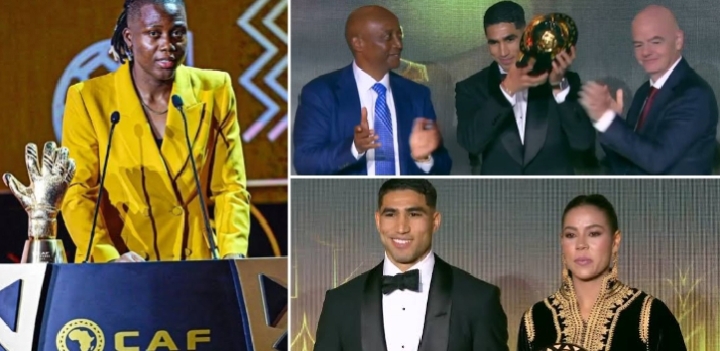
Rabat was alive in a way the city hadn’t felt in years. The streets weren’t just busy; they were buzzing, tense, like the air itself was waiting for something big to drop. The CAF Awards 2025 weren’t some regular ceremony tucked in a corner. No, this was Africa’s football world holding its breath. Fans, journalists, even the players themselves felt the weight of expectation pressing down, that uneasy mix of pride, nerves, and wonder.
People joked, speculated, whispered. Some were sure they knew who’d walk away with the big prizes. Others weren’t so sure. And maybe that’s the magic of it—the night was unpredictable. It didn’t just belong to the stars; it belonged to the fans who had stayed up past midnight watching local leagues, to kids dreaming on dusty pitches, and to the national programs quietly grinding away for decades.
Every handshake, every flash of cameras, every slow clap echoed louder than the applause itself. Morocco had put in the work, Nigeria had history on their side, Egypt was flexing quietly, and then there was Cape Verde—small nation, big dreams. It was a night that would be talked about for years, not because someone scored a goal or wore the fanciest suit, but because Africa, for once, felt like it was winning on its own terms.
Even before the first award was announced, there was tension. You could feel it in the air, like static before a storm. This was more than just football; it was pride, progress, and a hint of chaos all wrapped up in one glittering, nerve-wracking evening.
The Sweep That Shocked the Continent
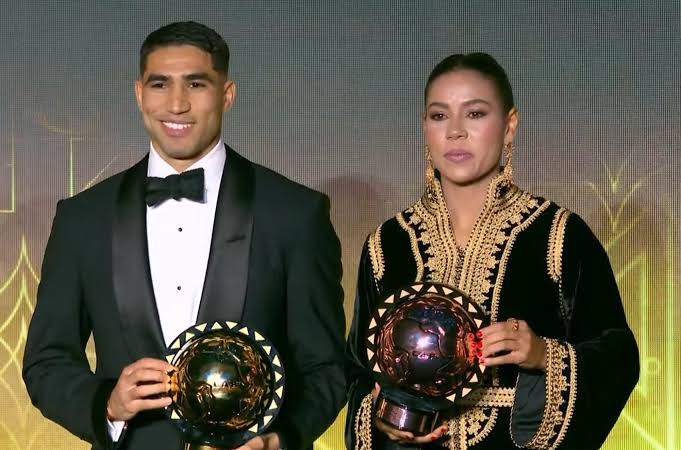
Morocco’s name kept coming up. Not in whispers, not in guesses—but in actual reality. Achraf Hakimi, the Paris Saint-Germain defender whose speed and vision had become a nightmare for opponents at Last Season’s UCL, League games, took home Men’s Player of the Year. A defender, mind you. Not a flashy striker, not the guy scoring hat tricks every weekend—no, a defender. First time since 1973. First Moroccan since 1998. The crowd went wild, but some of it was stunned silence too. Nobody saw that coming, and that’s exactly why it mattered.
Then came Ghizlane Chebbak, Morocco again, first-ever Moroccan woman to win Women’s Player of the Year. Boom. Historic. And just like that, Morocco had two major wins before some people had even finished their champagne. Meanwhile, Nigeria held its ground—Chiamaka Nnadozie bagged Women’s Goalkeeper of the Year for the third straight time, and the Super Falcons were once again crowned Women’s National Team of the Year. If anyone doubted Nigeria’s grip on women’s football, the awards made it clear: that reputation isn’t going anywhere.
But it wasn’t just about individuals. Morocco Under-20? FIFA U-20 World Cup champs, Men’s National Team of the Year. Pyramids FC from Egypt? Men’s Club of the Year. Cape Verde’s Bubista? Men’s Coach of the Year. Tiny nations, rising clubs, tactical geniuses—all recognized in one sweep. The night wasn’t fair, predictable, or polite. It was messy, glorious, and real. And that’s why people couldn’t stop talking about it.
This was Africa saying, “We are not waiting for the world’s permission anymore.” Morocco’s dominance, Egypt’s club power—it all added up to a story bigger than trophies. It was a statement: African football isn’t just growing, it’s rewriting the rules.
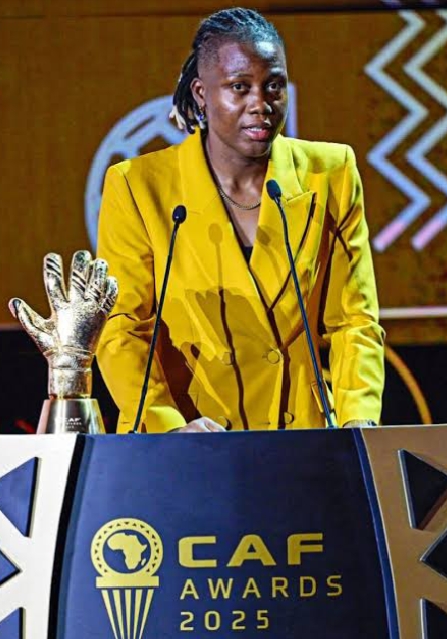
Hakimi, Chebbak, and the History-Making Moments
Let’s not sugarcoat it. Hakimi’s win shook the continent. A defender as the continent’s top player? People laughed, some shook their heads, others clapped slowly like they were realizing the truth hit them sideways. It said a lot about what Africa values now: work ethic, intelligence, vision, not just flair and finishing. It was revolutionary, in a quiet way.
Chebbak’s win carried its own weight. First Moroccan woman ever, that’s historic, that’s cultural. That’s proof that the women’s game, long ignored or sidelined, is finally being taken seriously. Her win didn’t just make headlines; it told every young girl in Rabat, Casablanca, or Marrakech that there’s a path, if you grind, if you believe.
The ripple effect was obvious, Nigeria’s stronghold on women’s football, Morocco’s rise, youth stars coming up—the continent wasn’t just celebrating players, it was celebrating systems. Africa had started producing not only talent, but sustainable talent pipelines, tactical brains, and leaders who could compete on the global stage.
CAF 2025 wasn’t polite, It didn’t just hand out trophies to the usual suspects, It made a point. The awardees were symbolic. Every defender, every goalkeeper, every coach, every youth player represented a shift in priorities, in thinking, in strategy. Africa’s football revolution wasn’t a whisper. It was a roar, echoing out of Rabat and beyond.
North Africa’s Takeover: Morocco’s Football Machine
If you thought Morocco’s wins were flukes, think again. The reality is messier—and way more impressive. Years of careful planning had set the stage. Youth academies humming, coaches grinding behind the scenes, domestic leagues finally looking less like chaotic scrambles and more like serious talent factories. Hakimi, Chebbak, Maamma, El Madani—these names weren’t lucky. They were the outcome of an entire ecosystem designed to produce winners.
The awards showed how Morocco’s investment paid off on every level. The men’s national teams, women’s stars, and youth squads all stepping up at the same time? That’s not coincidence. That’s strategy meeting talent. And it’s not just the flashy names. The system behind them—the scouts, fitness coaches, analysts—was the real hero. North African football suddenly felt like a well-oiled machine, precise but unpredictable, polished but hungry.
Yet, there was humanity in it all. The kids from Casablanca training barefoot, dreaming of the world stage. The small-town coaches staying up nights analyzing tapes. Every award handed to Morocco that night carried their silent, unseen labor. It wasn’t just about glory or trophies. It was about proving that structured support, vision, and perseverance could beat even the most talented individuals from elsewhere.
And let’s be real: the effect wasn’t subtle. The sweep set a new bar for the continent. Sub-Saharan nations were watching, scratching their heads, and thinking: “How do we get that?” It wasn’t envy; it was a wake-up call. Morocco’s night was a blueprint, messy, human, and brutally effective.
Egypt’s Club Power: Pyramids FC Steals the Spotlight
If Morocco dominated the national categories, Egypt was quietly flexing in the club scene. Pyramids FC took Men’s Club of the Year, and it wasn’t just a trophy—it was a statement. Investment in infrastructure, tactical evolution, and international scouting was paying off. Egypt’s clubs were no longer just regional competitors; they were continental forces reshaping the map.
The beauty of Pyramids FC’s rise was in its subtlety. No flashy drama, no one star carrying the team alone. Tactical discipline, strategic transfers, and a culture of professional management created the edge. The award acknowledged more than results; it recognized a vision executed with patience, smarts, and commitment.
For Sub-Saharan teams, the message was clear: talent alone isn’t enough anymore. Clubs need strategy, infrastructure, and planning if they want to compete. Pyramids FC wasn’t just winning matches; it was raising the standard, forcing the continent to adapt, or risk being left behind.
Even the fans noticed. Conversations after the award buzzed with curiosity: How do you build a club that can dominate across a continent without losing its soul? Pyramids FC offered a rough answer: discipline, vision, and the kind of patience that turns potential into dominance.
Cape Verde’s Tactical Genius: Bubista Shows the Underdogs Can Win
Then there was Cape Verde, Tiny country, massive ambition. Bubista walked away with Men’s Coach of the Year, and for many, it was the most shocking yet inspiring win. Leading a small nation to its first FIFA World Cup qualification isn’t about luck. It’s about brains, planning, and reading the game better than anyone else.
Cape Verde’s story was gritty. Limited resources, smaller talent pools, no fancy stadiums. Yet, Bubista turned those “weaknesses” into a kind of freedom. Players moved like a unit, disciplined but unpredictable. Every match was a puzzle solved, and by the time CAF 2025 rolled around, the continent was forced to take notice. Strategy had beaten size and history.
What made it resonate was the relatability. Everyone loves an underdog, a story where smart, persistent work beats the odds. Cape Verde reminded the continent that brilliance doesn’t always come from the biggest leagues or richest federations. Sometimes, it comes from heart, ingenuity, and grit that refuses to bend to expectations.
The lesson? African football is no longer just a game for the usual suspects. Any nation, any club, any player with vision and persistence can shape the narrative. Bubista’s win wasn’t just a trophy—it was proof that the continent’s football revolution is for everyone.
Youth Power: Africa’s Next Generation Is Here
CAF 2025 wasn’t just about celebrating today’s stars; it was a showcase of tomorrow’s legends. Othmane Maamma, Doha El Madani, and the other young talents represented a new wave of African football. They were fast, hungry, and trained in systems that could finally convert raw talent into consistent performance.
Youth awards also highlighted structural divides. Morocco and a few others are producing disciplined, globally-ready stars. Meanwhile, many Sub-Saharan programs still struggle with facilities, coaching, and resources. CAF’s recognition acted as both reward and subtle critique: invest in youth, or risk watching talent go unpolished.
For the continent’s kids watching, these awards were pure inspiration. They saw possibilities: from local dusty pitches to international recognition, from overlooked youth academies to global stardom. It proved that Africa’s revolution isn’t limited to elite clubs or big cities; it’s everywhere talent and support meet opportunity.
The underlying message was simple but profound: Africa’s football future belongs to the young, the brave, and the disciplined. And if CAF 2025 had one clear takeaway for the next decade, it was this—start early, work smart, and be ready when your night comes.
Sub-Saharan Reflections: Lessons, Pressure, and the Road Ahead
CAF 2025 wasn’t all champagne and glory for Sub-Saharan nations, but that was the point. It was a mirror, sometimes uncomfortable, showing where investment, strategy, and infrastructure lagged behind the North African surge. Nigeria, though dominant in women’s football, missed out on the Men’s Player of the Year award—a reminder that systemic issues in talent development and league competitiveness still exist.
The rise of Morocco and Egypt sent a clear signal: talent alone won’t cut it anymore. Clubs, academies, and national programs need vision, discipline, and strategic alignment to compete at the highest level. CAF 2025 spotlighted not just winners, but gaps, challenges, and opportunities for growth. For federations, it was both a wake-up call and a blueprint: adapt or risk being left behind.
Yet, there was hope. The success of youth players like Maamma and El Madani showed that Sub-Saharan nations have what it takes—they just need better structures, more investment, and the kind of mentorship that turns raw talent into continental icons. The awards weren’t a verdict; they were a challenge, daring Sub-Saharan football to evolve, innovate, and compete.
Fans and analysts alike buzzed after the ceremony. Conversations weren’t just about who won; they were about strategy, development, and the future of African football. CAF 2025 made it clear: the revolution is ongoing, messy, exciting, and open to anyone bold enough to embrace it.
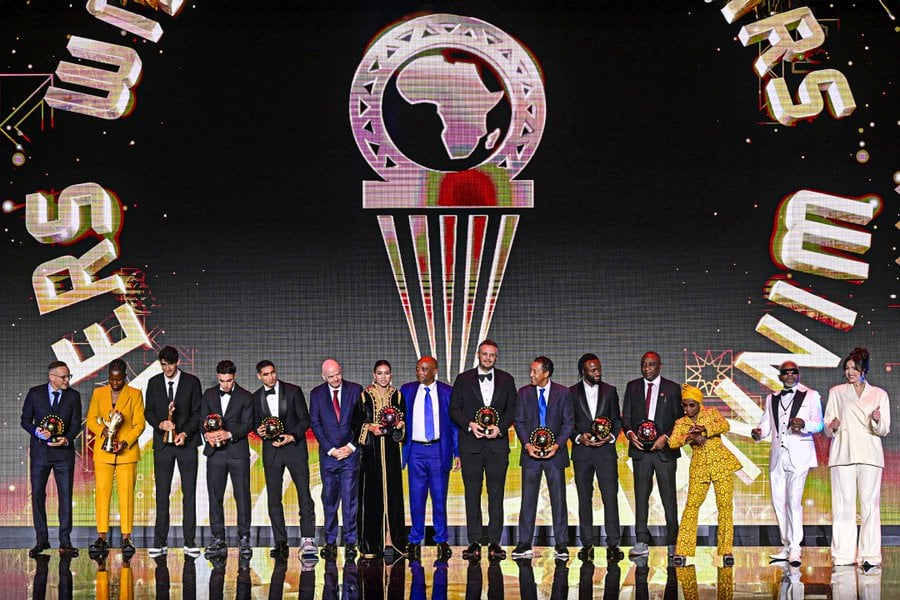
Africa’s Football Revolution in One Night: The Final Reflection
When the lights dimmed and the last applause echoed, CAF 2025 had done more than hand out trophies. It had told a story. A story of Morocco rising, Nigeria defending its legacy, Egypt flexing quietly, and Cape Verde showing brains can beat brawn. A story of youth stepping into the spotlight, of women claiming their rightful place, and of a continent realizing that football is not just a game—it’s identity, pride, and culture.
One night, one ceremony, countless stories. Africa’s football revolution is no longer coming—it’s here, unpredictable, unstoppable. Rabat witnessed it, the continent felt it, and the world took notice. The awards were more than a reflection; they were a declaration: African football has arrived, and it’s rewriting the rules on its own terms.



Discussion about this post