
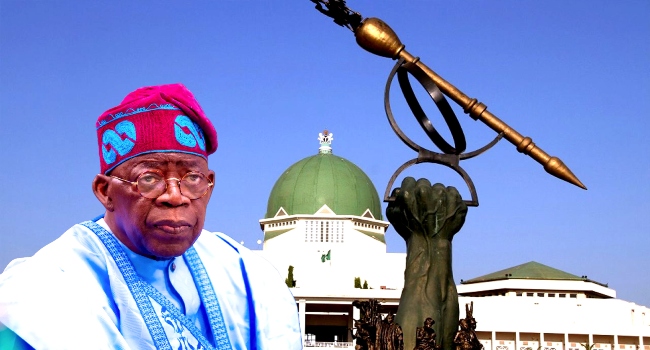
Nigeria entered the last weeks of twenty twenty five in a storm. Kidnappings rising everywhere. Mass abductions in schools. Travellers picked up on highways. Whole communities living with fear like it is air. In that tense moment, President Bola Ahmed Tinubu stepped out with what looked like a strong fist. He declared a nationwide security emergency, ordered massive recruitment of security officers, pushed for legal changes, and activated forest based operations to flush out violent groups.
But the moment his orders landed, something else happened. The National Assembly did not just nod. They did not clap. They looked deeper. They asked questions. They pushed back at the whispers that the government may have been negotiating quietly with bandits. They insisted that the country will not reward violent groups with influence. And with that, a new wave of scrutiny rose around the president hardline strategy.
This is the story of how a bold move collided with political hesitation, public frustration, and deep questions about how Nigeria should fight a growing kidnap economy.
So What Did Tinubu Actually Announce
The president on November 26, 2025, declared a security emergency across the entire nation. The signal was loud. Nigeria was dealing with a sharp increase in kidnappings and violent abductions across several states including Niger State, Kebbi, Kwara and other flashpoint zones.
As part of the emergency, Tinubu ordered a massive boost in manpower. The police were told to recruit twenty thousand new officers which pushes the active intake toward fifty thousand. The army was asked to expand too. The instruction was that the country must quickly build a force that can enter and secure rural spaces where kidnappers operate freely.
Then came another decision that caught public attention. Thousands of police officers who had been used as VIP escorts were told to return to real policing. They would pass through quick training camps and then be deployed into conflict zones where their presence actually matters.
Beyond that, Tinubu authorized the Department of State Services to deploy forest guards trained to trace, track and dislodge violent groups hiding inside forests. New recruitment and field operations were activated to back this directive.
Finally, the president called on the National Assembly to revise the law so that any state willing to create its own state police can do so legally. That request alone opened a huge debate. The security emergency looked big on paper but the politics behind it grew even bigger.
The Talk That Scattered Everywhere The Rumours Of Secret Deals
While the country was still processing the emergency announcement, another fire started rising. Some reports and social media conversations claimed that the government may have used secret negotiations with bandits to secure the release of some abducted victims.
The African Democratic Congress stepped in sharply. The party dismissed any form of negotiation with violent groups and warned that such actions feed into what they called a banditry economy. Their argument was simple. Every time armed groups gain something from abducting people the crime becomes more profitable.
Critics insisted that even quiet talks send the wrong message. It turns criminals into partners. It makes violent groups believe they can force the state to the table. That concern spread fast and the political atmosphere heated up.
Where The National Assembly Entered The Conversation
This is where the new tension formed. As the rumours spread, the National Assembly made its own stand. Lawmakers rejected any idea that the government should negotiate with kidnappers or bandits. They refused to endorse any policy that treats criminals as stakeholders.
Their position was that national security must be restored through force, stronger institutions, deeper intelligence work and legal authority. Not through back channel deals. Not through payments. Not through any system that rewards violence.
This rejection instantly placed extra focus on Tinubu strategy. If negotiations are off the table, does the emergency plan have the strength and structure to truly protect citizens and stop mass abductions
Where The Real Problems Show Up
The clash between a hardline approach and political hesitation exposes deeper realities about Nigeria security struggles. And some of these realities are not pretty.
Trust in the state is very weak
For the president to declare a nationwide emergency, the message is clear. The system has been overwhelmed. Communities are scared. Parents fear sending children to school. Worship centers are on alert. Entire towns feel exposed.
The security forces have been stretched thin for years. Redeploying VIP duty officers shows how badly resources had been misallocated.
Negotiations can create future danger
Critics argue that negotiating with kidnappers opens a path to more kidnappings. Once criminals believe abduction brings negotiation or ransom they will only scale up operations. The moral hazard is huge. Every successful negotiation encourages the next crime.
Pressure for new laws
Tinubu push for state police reflects a truth many leaders avoided for years. The present centralised structure is struggling badly. But a new system comes with risks. State police can be politicised. Governors can weaponise them. Poor coordination between states and the federal system can weaken national response.
Social tension rising
Kidnappings do not just affect security. They affect education, farming, worship and daily life. They push people towards fear and sometimes towards vigilante groups which can create fresh violence. The tension is emotional and psychological. People feel unprotected and frustrated.
The Bigger Picture: What All This Means For Nigeria Future
Whether the emergency works or fails will shape more than security. It will shape trust in government and the country political future.
If the emergency succeeds and new officers are properly trained, communities may breathe easier. If forest operations succeed, violent groups may lose ground. If the new laws are well designed, state policing may give local communities closer protection.
But if the system collapses or gets corrupted then Nigeria may fall deeper into insecurity. Poorly trained recruits can worsen the situation. Poor supervision can allow abuses. Politicised state police can spark regional tension. And if communities lose trust, they may take matters into their own hands and create even more instability.
Final Thoughts: A Hard Push That Opened A Bigger Fight
Tinubu’s announcement looked like a serious attempt to take control of a fast growing crisis. Recruitment, redeployment, forest operations, legal reforms, all sounding strong. But the political reaction, the rumours, the National Assembly rejection of any negotiation with violent groups, all created friction that exposed old wounds.
Nigeria is now standing at a crossroads. The state wants to send a message of strength. Lawmakers want to avoid policies that reward criminals. Citizens want safety that actually works. The next few weeks will reveal whether the hardline strategy becomes a turning point or another political moment that fades away while kidnappers continue their operations.
In the end, what matters most is not the announcement but the results. Nigeria is tired of promises. Nigeria wants proof. And proof will come from forests, communities, roads and schools where people just want to live without fear.



Discussion about this post