
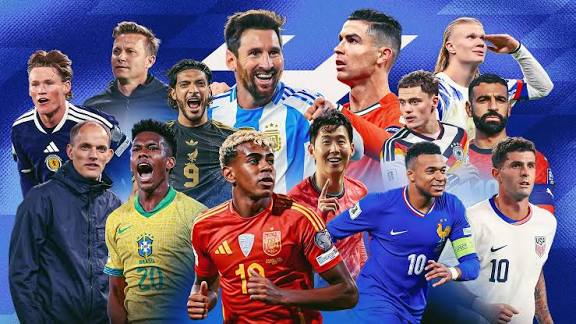
The night of 5 December 2025 at the John F Kennedy Center for the Performing Arts in Washington DC did not look like your usual football ceremony, it had a strange pulse running under it, not formal, not stiff, almost like the entire world showed up with a cotton sweet expectation, a belief that something odd would drop out of those shiny bowls that carried the fates of 48 nations, you could feel it through the screen, the draw stage glowing too clean, the host voices too polished, the audience filled with a mix of nervous smiles and forced ease, it was one of those nights where you just knew a few national teams were about to receive what they did not plan for.
To understand why the surprises hit so loud, you have to look at the simple picture, this is the first World Cup with 48 teams, 12 groups, 4 teams per group, every continent walking in with more representatives than the old 32 team era, and when a football tournament stretches like that, the universe starts throwing curveballs that no analyst can fully predict, you place teams in pots based on rankings, you adjust for confederation collisions, you avoid stacking too many teams from the same continent, you hope the night goes smooth, but draws do not obey hope, they obey chance, and chance does not always act politely.
The procedure itself looked straightforward, pot 1 carried the hosts and the highest ranked teams in the world, pot 2 carried the almost giants and the steady performers, pot 3 carried stubborn middle class teams, pot 4 carried debutants, lower ranked sides, and placeholders for incomplete playoffs, on paper, it sounded tidy, on stage, it unfolded with small jolts that would later shake social media timelines for hours.
The first surprise was not a team, it was how fast the room changed mood once the first 3 groups were announced, the second surprise came from how the heavyweights reacted on camera, not fear, not excitement, something in between, something like cautious amusement, a quiet voice saying these matchups would not be easy, and by the time the final group dropped, the viewers at home had already started arguing about who got punished and who got a smooth ride.
That is the emotional foundation of this entire draw, a feeling that the World Cup suddenly regained the wildness it lost in past tournaments where the top seeds walked through easy groups, this time the universe gave viewers a long table full of complicated food, sweet in some parts, bitter in others, confusing everywhere, and this is where the surprises begin.
The full group-draw results for 2026 FIFA World Cup (Groups A–L)
Group A: Mexico, South Korea, South Africa, UEFA Play-off D winner (Denmark / North Macedonia / Czechia / Republic of Ireland)
Group B: Canada, Switzerland, Qatar, UEFA Play-off A winner (Italy / Northern Ireland / Wales / Bosnia & Herzegovina)
Group C: Brazil, Morocco, Haiti, Scotland
Group D: United States, Paraguay, Australia, UEFA Play-off C winner (Türkiye / Romania / Slovakia / Kosovo)
Group E: Germany, Ecuador, Côte d’Ivoire, Curaçao
Group F: Netherlands, Japan, Tunisia, UEFA Play-off B winner (Ukraine / Poland / Sweden / Albania)
Group G: Belgium, Iran, Egypt, New Zealand
Group H: Spain, Uruguay, Saudi Arabia, Cabo Verde
Group I: France, Senegal, Norway, FIFA/Inter-confederation Play-off 2 winner (Bolivia / Iraq / Suriname)
Group J: Argentina, Algeria, Austria, Jordan
Group K: Portugal, Colombia, Uzbekistan, FIFA/Inter-confederation Play-off 1 winner (DR Congo / Jamaica / New Caledonia)
Group L: England, Croatia, Ghana, Panama
Big teams getting uncomfortable neighbours
One of the first shocks sliding across the football world was how aggressively uncomfortable the top seeds looked in some of their groups, not the kind of discomfort that comes from facing giants, the kind that comes from unpredictable middle tier squads that carry nothing to lose and everything to gain.
Look at Argentina in Group J, the defending champions, a nation with one of the strongest football legacies on the planet, they could have landed in a group filled with familiar European opponents, instead they walked straight into Algeria, Austria and Jordan, teams that play football with completely different rhythms, teams that force you to change gears, teams that can drag even a champion into awkward matchdays, no easy ride, no gentle warm up, just a group that demands full attention from day 1.
Then there is Brazil in Group C, a team that moves into every World Cup with a heavy crown, but this time the crown came with a little sting, they got Morocco, a semifinalist from 2022, they got Haiti, a team with huge emotional energy, they got Scotland returning to the World Cup for the first time since 1998 with fans who have waited nearly 30 years to scream again on the world stage, if Brazil expected a calm group, the draw reminded them that calm does not exist here.
Even the United States as hosts did not escape this energy, they landed in Group D with Paraguay and Australia, 2 countries that play with the kind of grit that ruins easy predictions, add a European playoff winner waiting to join the party and the group suddenly becomes less straightforward than the home fans probably imagined.
These were the early shocks, not knockout level shocks, but enough to make every top seed sit straighter, enough to tell viewers this tournament will not give anybody a gentle runway.
Groups with a strange personality
Some groups from this draw came with flavours that nobody could have seen coming, let us talk about them the street way.
Group A came out looking like a pot of unpredictable stew, Mexico standing tall with South Korea and South Africa mixing right under them, then you add a European playoff winner that could be Denmark or North Macedonia or Czechia or the Republic of Ireland, suddenly the group does not have a clear personality, it is not a power group, it is not a weak group, it is a group that can change shape any minute.
Group E gave viewers one of the biggest eyebrow raisers of the night, Germany, Ecuador, Côte d Ivoire and Curaçao, this is a group that refuses to behave, Germany is rebuilding, Ecuador is energetic, Côte d Ivoire is powerful, Curaçao is the bold newcomer that nobody wants to underestimate, this group felt like a gift from the football gods to chaos lovers.
Group I felt spiritual, France, Senegal, Norway and an inter confederation playoff winner, that is a group where every team arrives with something to prove, France with their history, Senegal with their pride, Norway with their hungry generation, and the playoff winner fighting to shock the world on arrival, a group with too much emotion inside one small space.
Some groups looked predictable, others looked messy, but these 3 stood out with personality, groups that make pundits argue, groups that refuse to sit quietly, groups that tell you this World Cup will have too many unexpected nights.
Europe getting scattered like pieces of broken glass
Another major surprise was how sharply Europe got scattered across the groups, in some previous tournaments, Europe dominated lumps of the draw, but this time the confederation rules forced a spread that ended up creating weird placements.
Some European giants found themselves with African and Asian teams they rarely face, some landed with South American sides they usually avoid until later stages, and the playoff placeholders added even more confusion because nobody knows which European team will drop into certain pot 4 spots.
Group L is a perfect example, England, Croatia, Ghana and Panama, this is not a traditional English group, Croatia brings tactical pain, Ghana brings physical demand, Panama brings stubborn resilience, England fans looked at that group and immediately realised nothing here is familiar ground.
Group F with the Netherlands, Japan, Tunisia and a playoff winner also broke the old European pattern, it forced tactical matchups that analysts do not often get to study.
This was one of the silent surprises of the night, Europe suddenly realised it was not going to command the draw with the old comfort, everything got scattered, everything looked like a long walk.
Africa getting emotional storylines instead of predictable tests
Africa walked away from this draw night with more stories than complaints, but the surprises were heavy.
Morocco getting Brazil and Scotland, Côte d Ivoire facing Germany and Ecuador, Senegal landing France, Ghana falling into England and Croatia, Algeria getting a defending champion, Cabo Verde walking into Spain and Uruguay.
These are not standard African World Cup groups, these are narrative rich matchups.
You have revenge storylines, you have underdog energy, you have emotional fuel, you have big stage opportunities, and you have debutants like Jordan mixing with established African squads in ways nobody saw coming.
Africa usually gets a predictable rhythm in World Cup draws, not this time, this draw gave them a chance to create the loudest group stage highlights, it gave them pressure, but it also gave them opportunity shaped like a sharp tool, if Africa gets bold, this could become their most dramatic tournament.
The returners and the debutants stealing spotlight
One surprising element of the draw was how openly the world reacted to the teams returning after long absences and the teams entering the World Cup for the first time.
Scotland, Jordan, Curaçao, Haiti, Cabo Verde, South Africa returning, Saudi Arabia reappearing under new leadership energy, they did not simply join groups quietly, they arrived with noise.
Jordan in a group with a defending champion, Curaçao with Germany, Haiti with Brazil, Cabo Verde in the same space as Spain and Uruguay, these are the kind of placements that make debutants and returners feel like destiny is calling them to write a shock.
The world did not expect these narratives to align like this, it was one of the soft surprises of the night, the kind that grows louder the more you think about it.
The playoffs becoming the giant unknown
Another unexpected twist was how much influence the incomplete playoff matches had on the draw, it is rare for placeholders to carry this much weight, but here it mattered.
Some groups will dramatically change depending on which playoff teams qualify, in previous tournaments, a late playoff winner would only cause mild adjustments, but here, entire group difficulty levels will shift once the final qualifiers are settled.
Group D could become far tougher if Türkiye or Romania join, Group F will transform if Poland or Sweden drop in, Group A becomes more aggressive if Denmark enters, these possibilities created a weird suspense inside the draw.
It is as if the draw is not fully finished, it is hanging in the air, waiting, building tension, that kind of open ended energy is not normal for World Cup draw nights, and that is a surprise on its own.
Hosts not getting the smooth soft landings everybody expected
A silent assumption before the draw was that the host nations would receive gentle groups, a nice set of early games to keep the home crowd smiling, but football does not worship assumptions.
The United States got physical opponents, Mexico got an unpredictable mix, Canada got a tricky balance.
None of the host teams got a sweet ride, none got an easy entry, and that was not what many expected, the world tends to believe FIFA sprinkles luck on host nations, this time the bowl refused.
The emotional reactions from managers and players were not fake calm
One of the biggest surprises was the honesty in the reactions after the draw, managers did not pretend, players did not pretend, there were no empty claims of confidence, there were no forced lines.
Argentina spoke with caution, Germany showed respect, England looked focused, Morocco looked ready, Australia looked calm but not naive, Senegal looked hungry, everything felt genuine.
The world had gotten used to robotic post draw interviews, but this time the energy was entirely human, you could tell everyone knew how heavy this draw was, you could tell nobody was bluffing.
The rising feeling that this World Cup might be the most unpredictable one ever
The biggest surprise of all is the growing global feeling that this tournament may produce more shocks than any World Cup before it.
The expanded format brings more games, more time, more variables, more emotional swings, the draw amplified that feeling, it scattered giants, it boosted underdogs, it placed debutants where they can cause international earthquakes, it created styles that will clash in strange ways.
Nothing in this draw feels gentle, nothing feels lazy, nothing feels predictable, every group has a twist, every group has a team that can break the table, every group has a giant that can slip.
It is rare for a World Cup draw to carry this level of vibration, this one does.
Final thoughts – wrapped with human edge
If you were to gather the surprises of this draw into one sentence, it would sound simple, this World Cup will punish arrogance and reward courage. That is the truth.
The draw did not favour history, it did not favour big names, it did not favour nostalgia, it favoured those who adapt quickly, those who respect every opponent, those who come ready to suffer and still push forward.
The surprises are not random, they are signs, signs that this World Cup will stretch every nation mentally and physically, signs that new stories will rise, signs that people should watch the group stage with a wide heart because incredible things might happen.
Football loves order but thrives in chaos, and this draw delivered chaos wrapped in a golden frame.
The surprises were loud, but the tournament itself might be louder.



Discussion about this post