
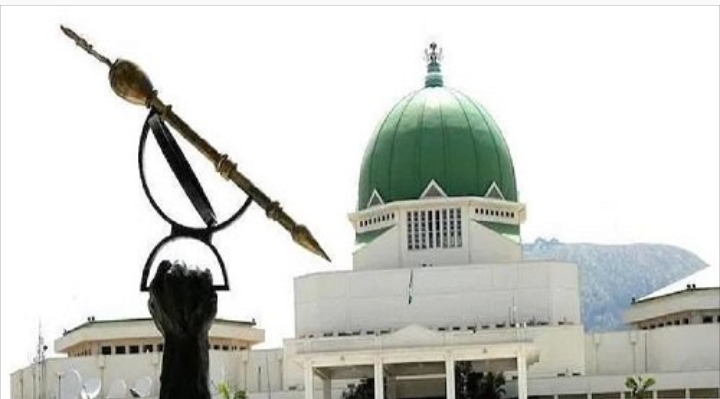
Nigeria’s national assembly is considering constitutional amendments that could alter the level of women’s participation in elected offices.
The debate follows long-standing concerns about the low number of women in Nigeria’s federal and state legislatures.
Available parliamentary records show that women occupy fewer than five per cent of seats in the senate and the house of representatives.
Across the 36 state houses of assembly, female lawmakers also account for a small fraction of total membership.
Several state assemblies currently have no female representation at all.
These figures have placed Nigeria among countries with the lowest rates of women’s political representation globally.
Supporters of reform argue that the imbalance reflects structural and social barriers rather than lack of interest among women.
Political observers note that women seeking elective office often face high nomination fees, limited access to campaign funding, and entrenched party hierarchies.
Cultural expectations around gender roles also continue to shape attitudes towards women in public leadership.
Some female aspirants have reported resistance from party leaders, voters, and community influencers during campaigns.
Security concerns, including electoral violence and intimidation, have been identified as additional deterrents.
Digital harassment and reputational attacks have also emerged as challenges for women active in politics.
In response to these obstacles, lawmakers are considering a reserved seats bill as part of ongoing constitutional review efforts.
The proposed legislation seeks to create additional legislative seats specifically for women at federal and state levels.
Under the proposal, each state and the Federal Capital Territory would have an extra seat for women in the senate and house of representatives.
The bill also provides for additional women-only seats in state houses of assembly.
Proponents say the measure is designed to correct historical imbalances and improve inclusiveness in governance.
They argue that reserved seats could provide a structured entry point for women who are excluded from competitive party politics.
Advocates further state that increased female representation could broaden perspectives in lawmaking and policy development.
International comparisons are often cited in the discussion, as more than 100 countries operate some form of gender quota system.
These systems vary in design, ranging from reserved seats to party-based candidate quotas.
In Africa, countries such as Rwanda and Senegal have used quotas to significantly raise women’s participation in legislatures.
Critics of the proposal, however, question whether reserved seats align with Nigeria’s constitutional principles.
Some lawmakers argue that representation should be based solely on open competition rather than designated positions.
Others raise concerns about the financial and administrative implications of expanding legislative bodies.
There are also fears that reserved seats could be treated as symbolic positions without real influence.
Previous attempts to pass gender-related constitutional amendments have faced resistance in the national assembly.
In 2022, several gender bills were rejected despite advocacy from civil society groups and international partners.
Those bills addressed issues ranging from citizenship rights to affirmative action within political parties.
The rejection highlighted divisions among lawmakers over how best to address gender inequality.
Since the inauguration of the 10th national assembly, legislative leaders have signalled renewed interest in revisiting some of the proposals.
The senate president, Godswill Akpabio, and the speaker of the house of representatives, Tajudeen Abbas, have acknowledged the representation gap.
Both presiding officers have stated publicly that women play important roles in national development.
Civil society organisations continue to engage lawmakers through consultations, public hearings, and advocacy campaigns.
Gender rights groups emphasise that legal reforms alone may not eliminate deeper social and economic barriers.
They argue that political education, party reforms, and enforcement of electoral laws are also necessary.
Some analysts suggest that reserved seats could serve as a transitional measure rather than a permanent solution.
They note that exposure to legislative roles may help build experience, networks, and visibility for female politicians.
Opponents counter that political parties should instead focus on internal reforms to promote women through existing structures.
As the constitutional amendment process progresses, public input is expected to influence legislative outcomes.
The national assembly must secure approval from two-thirds of state assemblies for any constitutional change.
This requirement means that state-level political dynamics will play a key role in the fate of the bill.
Observers say the debate reflects broader questions about equality, representation, and democratic participation in Nigeria.
The decision on reserved seats will indicate how lawmakers interpret inclusion within the country’s political framework.
As discussions continue, attention remains on whether consensus can be built around a proposal that has divided opinion for years.
The outcome may shape not only women’s political participation but also public confidence in the inclusiveness of Nigeria’s democracy.


Discussion about this post