
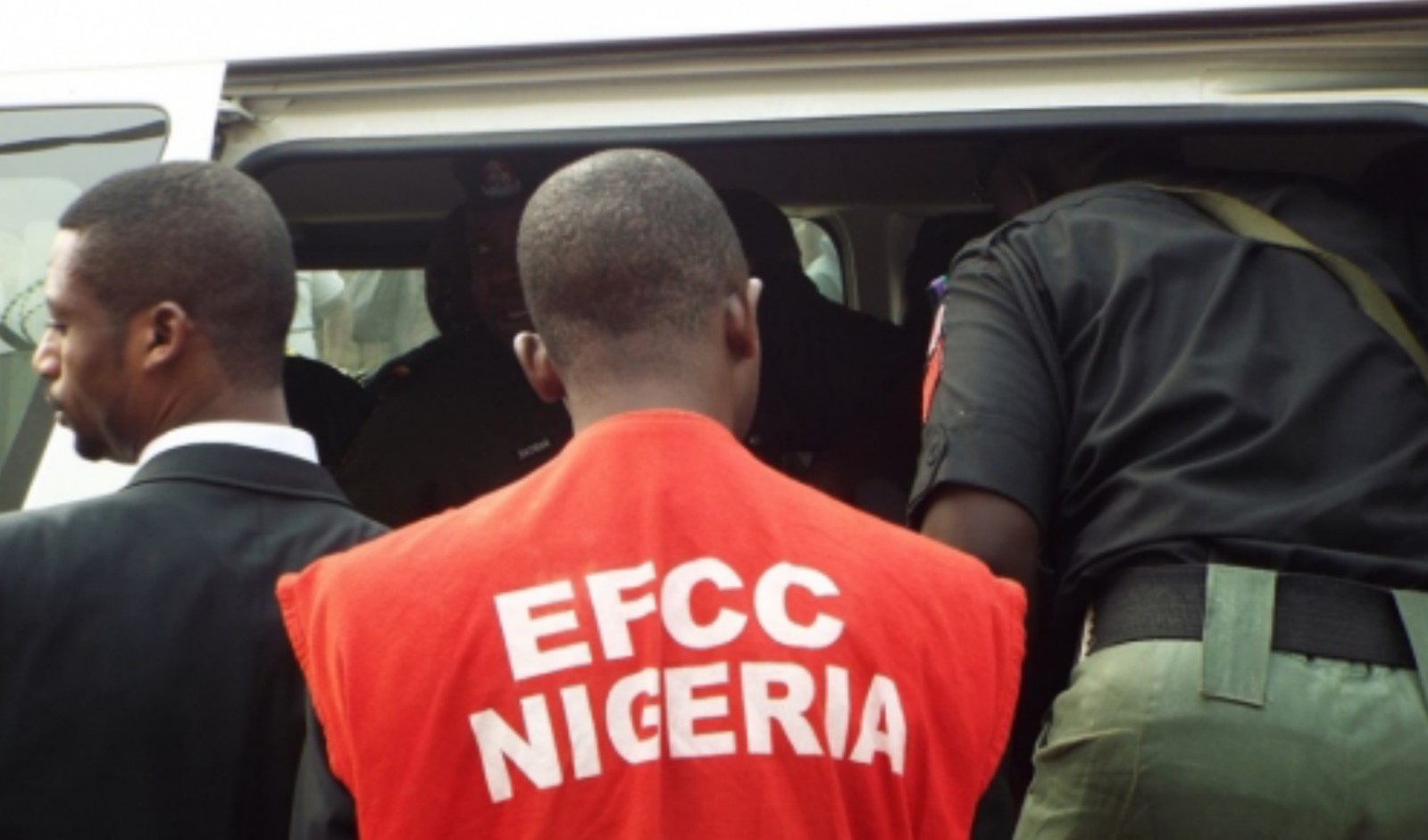
Walk into any street in Lagos, Abuja or Port Harcourt and you hear it, corruption runs deep and it runs fast. It touches everyone, from the smallest market trader to politicians counting billions. In 2025, the EFCC says it has over 7,000 convictions since President Tinubu came in. The number feels huge but the story behind it is more tangled than a plate of jollof rice gone wrong. The numbers look shiny on paper but what do they really mean for ordinary Nigerians who still wait for government money, who still see ghost projects, who still pay bribes to get anything done?
The EFCC’s 7,000 convictions are claimed to be the fruit of two years of work under the Tinubu administration. 4,111 of those were reported in 2024 alone, which is a record nobody can ignore. Asset recoveries were said to total over 365 billion naira in 2024 and 500 billion naira cumulatively by 2025.
The agency says it has been cleaning house, going after fraudsters and scammers and money launderers and cyber criminals. Lagos and Abuja dominate the numbers, and states like Enugu, Rivers and Kaduna also show up in the list. The street hears the stories and wonders if justice really tastes different at the top.
Petitions, Investigations and Court Cases
Let’s break it down. The EFCC reported around 15,724 petitions in 2024. They investigated 12,928 cases across all zonal directorates. About 5,083 cases were filed in court. The numbers show volume and they show work done, but they also leave questions hanging. How many were big fish, and how many were small fry? How many actually paid back, and how many walked away because courts were slow or bribes found their way? The conviction numbers are a headline, not a full story.
You hear of internet fraudsters getting jailed, money launderers paying for their mistakes, politicians with small-time connections taken to court, and cyber crime suspects in detention. It sounds like progress, but on the streets people say wait, there is still so much we don’t see. Top-level corruption seems untouched, ghost contracts still float around, and ministries still spend as if nobody is watching.
The Geography of Justice
The distribution of convictions shows patterns you might expect. Lagos led with about 685 convictions while some zones barely hit 95. It looks lopsided, but maybe that is where fraud is easier to catch. Maybe the bigger markets and denser financial networks make prosecution simpler. Yet what about the north, east and south? Some areas have rich politicians and business tycoons whose cases rarely reach headlines. Is it a matter of capacity, influence or just selective enforcement? Nobody says exactly.
It’s also a story of real estate confiscated, cars, crypto wallets with Bitcoin and Ethereum, duplexes, plots of land, vehicles and cash of course. The recovered assets are supposed to feed the public purse, and sometimes they do, but sometimes the money gets stuck in bureaucratic limbo. The street hears about it and shrugs.
What Remains Hidden
Despite the numbers, so much is hidden. The breakdown of the 7,000 convictions is vague. Nobody can tell you exactly which year got what, which type of crime dominates, or who actually went to jail for how long. It’s all aggregates and reports.
We know the 2024 focus was internet fraud, money laundering and cyber crime. The court system processed thousands of cases, sometimes quickly, sometimes slowly, and sometimes cases linger. Nobody knows how many high-profile politicians or business elites were truly convicted. Most names you hear are small players or lower-level offenders. The big sharks swim free, and the street sees that. The perception gap is wide.
The Human Angle
Walk through Abuja, Kano or Onitsha and you hear it. Corruption hurts people and it is not just numbers. People wait for school funding, for hospitals, for road repairs, for power and water, and some of that is lost to graft. Even with 7,000 convictions and 500 billion recovered naira, the ordinary person is asking if it touches their life or if it just fills government coffers with a story. Justice feels distant, and many traders, students, civil servants still pay bribes, still wait in long lines and still watch the rich get away.
Street human perspective matters here because numbers alone do not feed children, repair schools, or fix roads.
Politics, Messaging and Reality
The government promotes the EFCC numbers proudly through press statements and videos of recovered cash. The president himself highlights it. It is a central claim of legitimacy. It says we are fighting corruption, it says progress is happening and it says we are cleaning the house. But the messaging also blurs reality. Numbers impress, but selective enforcement and lack of transparency mean not everyone gets equal treatment. The big fish are rarely caught, the small fish make headlines and political messaging loves that.
The street notices, Nigerians discuss it over small chops, in markets and in buses. The narrative of success is loud, but the lived experience is mixed. Some feel safer knowing fraudsters are jailed while others shake their heads wondering if elites are truly touched.
Asset Recovery and Public Trust
Let’s talk about the money. The 500 billion naira recovered is huge, but where does it go, and how much is reinvested in hospitals, schools, electricity, water, roads, infrastructure or civic services? Transparency is key. Citizens want to see recovered funds used effectively. If they just vanish into accounts, the trust erodes. Perception matters as much as enforcement. If people think only numbers are moving and not lives, the anti-corruption drive loses credibility.
Recovered assets are complex too. Not all can be liquidated quickly. Some require court approval, auctions, or valuation. Some properties stay empty for years. Vehicles sometimes rust in government lots, and crypto sometimes sits in accounts. All of this contributes to a feeling of distance from tangible impact.
The Legal System and Conviction Quality
Numbers are easy, quality is harder. A conviction does not always equal prison time. Fines or jail sentences vary. Enforcement is uneven. Sometimes appeals drag on for years, sometimes charges are dropped and sometimes plea deals reduce sentences. The street hears about convictions but rarely sees the full story. It is part spectacle, part accountability, part incomplete justice.
The EFCC works hard, but so do lawyers defending powerful clients. Sometimes court delays, procedural loopholes or influence make conviction a headline but not a real outcome. This is why people remain skeptical, because justice is seen through the lens of experience and not just press releases.
Where Anti-Corruption Is Heading
2025 is a turning point. With the EFCC reporting 7,000 convictions over two years, asset recovery in the billions, new policies, cash withdrawal limits to curb laundering, court orders in the energy sector and receiverships in power companies, Nigerians see attempts at reform. They see messaging, and they see recovery.
But street wisdom says real change needs transparency, consistent enforcement, clear outcomes, high-level prosecutions, visible reinvestment and consistency. A narrative where justice actually touches the lives of ordinary people, and where corruption feels riskier for everyone and not just the small fry.
What the Numbers Hide
Aggregate numbers hide nuance. They hide geography, offence types, socio-economic patterns, enforcement gaps, procedural delays, political interference, selective prosecution, quality of convictions, tangible community benefit, perception gaps and public trust.
Numbers like 7,000 are impressive. They create headlines, dominate news cycles and signal effort and momentum. But without open breakdowns, clear reinvestment and structural reforms, they risk being just statistics.
Street Takeaways
For the average Nigerian, 7,000 convictions are a headline, maybe a social media post, maybe a topic at roadside discussions. But the real question is impact. Does it feed families, repair schools, fix hospitals, reduce bribes, improve security, or repair infrastructure? The EFCC has done a lot, but the street knows that numbers alone are not enough.
Trust, transparency, equity, enforcement quality and visible effect on daily life, that is where the anti-corruption drive will be judged.
Leaving With This
EFCC’s 7,000 convictions are historic. They show scale, they show determination, and they show Nigeria trying to tackle a centuries-old problem. But numbers are not everything.
Without detailed breakdown, without high-level enforcement, without tangible impact, the story remains partial. Headlines tell one story, lived experience tells another, street wisdom still asks how much of this actually touches us and how much really reaches the people.
In 2025, Nigeria is fighting corruption visibly and boldly, but the struggle is far from over, and only when numbers meet reality will the fight be fully felt.



Discussion about this post