
There are moments when the world expects spectacle from a man who has spent his life performing strength. Moments when silence feels almost unnatural around a figure built by noise, crowds, and controlled violence.
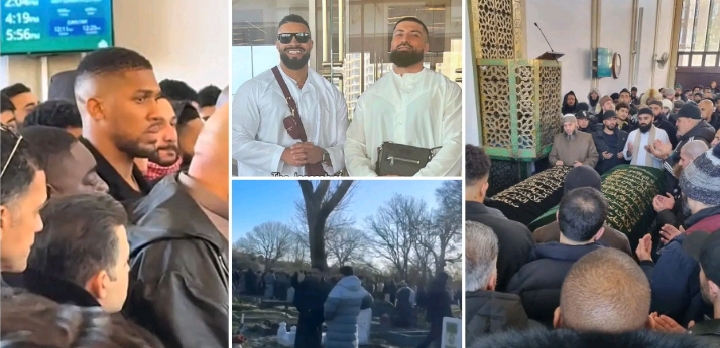
In early January in London, Anthony Joshua entered one such moment. There was no arena, no bell, no choreography of movement and muscle. There was only stillness, grief, and the slow gathering of people who understood that something irreversible had happened far from where they now stood.
This moment did not begin in London. It began days earlier, on a stretch of highway in southwestern Nigeria, under conditions that felt ordinary until they were not. The journey that ended in grief was not planned as a risk, nor framed as an exceptional event. It was movement, routine, familiarity. That is often how loss arrives.
What unfolded between that road in Ogun State and the prayer hall in central London became one of the most sobering chapters of Joshua’s life. Not because of physical injury, but because survival itself can carry consequences that linger far longer than wounds.
The Crash in Ogun State
On Monday, 29 December 2025, at approximately 1 pm West Africa Time, Anthony Joshua was travelling along the Lagos Ibadan Expressway in Ogun State, Nigeria. He was inside a Lexus sport utility vehicle moving through the section of the highway near Makun, close to Sagamu, a route used daily by thousands of vehicles.
According to reports from Nigerian emergency services, the vehicle collided with a stationary truck parked along the expressway. The impact was severe. Inside the vehicle were Joshua and two members of his personal team, Sina Ghami and Latif Ayodele. Emergency responders arrived shortly after the crash, but both Ghami and Ayodele were pronounced dead at the scene.
Joshua sustained injuries but remained conscious and was transported to a nearby medical facility for treatment. Medical sources later described his injuries as non life threatening. By the evening of 29 December 2025, confirmation of the fatalities had begun circulating among close associates and family members.
The location of the crash, the timing, and the suddenness of the loss turned what should have been a routine journey into a dividing line between before and after.
Who Was Lost
Sina Ghami served as Anthony Joshua’s strength and conditioning coach. His role extended beyond physical preparation. He was involved in long term planning, recovery cycles, and performance longevity. His work was embedded in the structure of Joshua’s career.
Latif Ayodele, widely known as Latz, was Joshua’s personal trainer and close confidant. He had been part of Joshua’s team for years, present during camps, travel, and transitional periods. His presence was consistent, personal, and trusted.
Both men were more than staff. They were part of a daily rhythm that defined Joshua’s professional and personal life. Their deaths removed not only individuals, but an entire layer of familiarity and support.
From Nigeria to London
In the days following the crash, arrangements were made to repatriate the bodies of Sina Ghami and Latif Ayodele to the United Kingdom. The process involved coordination between Nigerian authorities, British officials, and the families of the deceased.
By Friday, 2 January 2026, the bodies had arrived in London. Funeral preparations were conducted in accordance with Islamic rites, as both men were Muslims. The London Central Mosque at Regent’s Park was selected for the Janazah prayer, a site known for accommodating large funeral congregations while maintaining religious protocol.
Anthony Joshua returned to the United Kingdom during this period, having received medical clearance to travel. Those close to him described the days leading up to the funeral as quiet and inward, marked by private mourning rather than public statements.
The Funeral in Regent’s Park
On Sunday, 4 January 2026, the Janazah prayer for Sina Ghami and Latif Ayodele was held at the London Central Mosque. The prayer began at approximately 10 am local time following the morning congregation.
Attendees included family members of the deceased, friends, members of the Nigerian and British Muslim communities, and figures connected to the boxing world. The atmosphere inside the mosque was solemn and restrained. There were no speeches, no eulogies, and no media addresses.
Anthony Joshua stood among the mourners throughout the service. Witnesses described him as composed, receiving condolences quietly and remaining present through the prayers. His mother was also in attendance, standing with the families of the deceased.
The service concluded shortly after 10.30 am. Following Islamic tradition, the focus remained on prayer and collective remembrance rather than public expression.
Joshua’s Public Acknowledgment
Later on Sunday, 4 January 2026, Anthony Joshua shared a single post on his verified social media account. The image showed him standing alongside his mother and relatives of the deceased families. The caption referenced brotherhood and responsibility, a brief acknowledgment rather than a statement.
It was his first public communication since the crash on 29 December 2025. The post drew widespread attention but remained restrained in tone. There were no explanations, no reflections, and no commentary on future plans.
After the Farewell
By the afternoon of 4 January 2026, mourners began leaving Regent’s Park, returning to lives altered by absence. The funeral had provided structure, but not resolution. For Anthony Joshua, the return to London marked the end of ceremony and the beginning of adjustment.
The friends who had travelled with him did not make it home. Their absence will follow him into future camps, future journeys, and future moments where familiarity once lived.
What remains is not a public story, but a private reckoning. One shaped by a specific road, a specific time, a specific morning in London, and the enduring weight of survival.
London as a Site of Reflection
London has long been part of Joshua’s life, a city of roots, identity, and scrutiny. Returning after tragedy, the city became a stage for private reckoning rather than public spectacle.
The mosque in Regent’s Park provided a space where communal grief could unfold while maintaining dignity. Public recognition, social media attention, and media presence existed on the periphery but were secondary.
In this setting, loss transcended fame. It emphasized shared humanity, trust, and memory. The mourning process involved both recognition of absence and continuity of life.
For Joshua, London symbolized both homecoming and confrontation with mortality. The city witnessed grief that could not be contained by performance or public image.
Coping with Loss and Survival
Survivor’s guilt and the weight of being present can accompany survival in sudden tragedy. Anthony Joshua’s position as a survivor placed him in a delicate balance between public expectation and personal grief.
The absence of Sina Ghami and Latif Ayodele disrupted routines, travel patterns, and preparation cycles. Grief was structural as well as emotional, affecting the rhythm of daily life.
Mourning did not end with the funeral. It continues in quiet reflection, in training, and in journeys that once included those now gone.
The final farewell in London was a line drawn between who Joshua was before 29 December 2025 and who he would become after experiencing profound loss.
Friends Beyond Titles
Both Ghami and Ayodele were more than professional staff. They were mentors, confidants, and companions in the intense rhythm of elite sport.
Their roles involved long hours, repeated observation, and personal attention. They shaped Joshua’s career in ways invisible to fans and commentators.
Losing them exposed the vulnerability inherent in relationships built on trust. It highlighted the human cost behind public success and the fragility of life even for those surrounded by support.
The funeral allowed acknowledgment of this depth, giving public space to relationships that otherwise exist quietly in private life.
Closing Reflections
By the afternoon of 4 January 2026, attendees left the mosque, carrying grief into their lives. For Joshua, the day marked transition from ceremony to private reckoning.
The friends who never made it home remain present in memory, routines, and future journeys. Their absence is a quiet force, influencing daily life and professional practice.
The funeral did not end grief but provided structure. It allowed recognition, ritual, and presence to coexist with private mourning.
Anthony Joshua’s experience underscores the complexity of human loss, survival, and the intersection of fame with ordinary life. London became a witness to grief as it always is, patient, steady, and unyielding.




Discussion about this post