
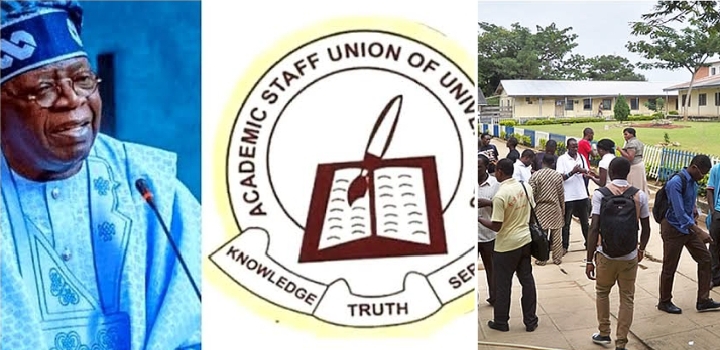
The halls of Nigeria’s universities have echoed with absence for years. Empty lecture theatres, silent laboratories, and the unshuttered libraries tell a story of delay that stretches across nearly two decades. Every academic calendar has been a promise postponed and every graduation a hope deferred. Students have grown up in a rhythm dictated by strikes, their aspirations punctuated by pauses in learning. They have learned patience in a country that often talks of progress yet struggles to deliver it. The announcement that the Federal Government will sign the long-pending 2009 ASUU agreement on January 14, 2026, carries with it both relief and a tension that refuses to dissipate. The moment is charged with expectation, yet skepticism lingers in the air like the stillness before a storm.
The story of the 2009 ASUU agreement is not merely one of bureaucratic delay. It is a saga of unfulfilled promises, of years where words were exchanged in conference rooms, while classrooms remained barren. The agreement was meant to address salaries, pensions, research funding, and academic freedom, yet its implementation faltered under successive administrations. Students and lecturers alike have been forced to navigate the instability it created.
Each strike became a marker of what could have been, a reminder that structural change was perpetually just out of reach. In this context, the forthcoming signing is not just a procedural event but a potential pivot in the history of Nigerian higher education.
Every time an announcement of implementation was made, hope surged and receded like a tide, leaving behind cautious optimism. University campuses have become battlegrounds for policy, where young Nigerians learn not only mathematics, literature, and science but also resilience. Parents and guardians feel the strain as fees are wasted, as time stretches indefinitely, and as futures hang in uncertainty.
The promise of January 14 brings with it the possibility of ending a cycle that has left generations navigating interrupted educations. The country watches, aware that words without action have already shaped the lives of countless students.
The Anatomy of the 2009 Agreement
The 2009 ASUU agreement was forged in a moment of consensus between the union representing academic staff and the Federal Government. Its purpose was to correct structural deficiencies in university funding, staff welfare, and governance. Lecturers had long argued that their compensation, research funding, and autonomy were insufficient to maintain world-class standards. The government responded with promises of adjustments to salaries, pensions, and institutional autonomy. It was a pact designed to stabilize Nigeria’s higher education system and ensure the universities could operate without recurring interruptions.
However, the initial implementation of the agreement failed to materialize fully. Political transitions, competing budgetary priorities, and bureaucratic inertia left the promise largely unfulfilled. Academic staff returned to negotiation tables, strikes resumed, and students continued to face uncertainty. Each administration inherited the agreement, yet the consistency required for enforcement remained elusive. The 2009 agreement became a symbol of a promise deferred, a paper contract whose impact was stifled by the absence of follow-through.
Despite the failures, the agreement’s framework has endured. It provided a clear roadmap for salaries, pensions, and the autonomy of institutions. It included provisions for research funding and the establishment of mechanisms to ensure academic freedom. These components were not merely technical; they represented the aspiration for universities to become spaces of excellence. The renegotiated agreement leading to the January 14 signing incorporates these elements while addressing some of the gaps that have prevented implementation over the past 17 years.
The enduring relevance of the 2009 agreement is seen in the conversations around it today. Lecturers continue to argue for its enforcement, students anticipate its benefits, and education experts scrutinize its potential impact. The agreement is more than a document; it is a benchmark for accountability. It tests the Federal Government’s commitment to education and its ability to resolve protracted conflicts. Each clause reflects years of negotiation, struggle, and hope, and its formal signing has become a moment of national attention.
What the New Deal Promises
The renegotiated ASUU agreement for January 14 incorporates several key components designed to address prior shortcomings. Among them is a 40 percent salary increase for academic staff, effective from January 2026. This adjustment is intended to bring compensation in line with contemporary expectations and to acknowledge the contributions of lecturers who have worked under constraints for years. The increase is not only financial but symbolic, representing recognition of professional dedication.
Pension reforms are also central to the new agreement. Professors and lecturers retiring from public universities will receive pensions equal to their annual salaries at the age of 70. This provision addresses a long-standing concern about post-retirement security and ensures that academics can plan their futures with confidence. Combined with salary increases, pensions form a foundation for stabilizing academic staff welfare.
Funding for universities is another major focus. Research grants, laboratory facilities, and library infrastructure are slated for improvement under the new deal. These provisions aim to restore public universities to functional and competitive status. By enhancing the learning environment, the agreement seeks to attract and retain talented academics, stimulate research output, and enable students to engage fully with their educational experiences.
University autonomy and academic freedom are reinforced. The agreement proposes structural reforms that reduce bureaucratic interference and empower institutions to make decisions about curricula, staffing, and governance. Additionally, a National Research Council with statutory funding from GDP is proposed to support sustainable research programs. Together, these provisions form a comprehensive attempt to modernize Nigerian higher education and create an environment conducive to learning, innovation, and stability.
The Stakes of the January Signing
The January 14 signing carries stakes that extend far beyond ceremonial importance. For students, it represents the possibility of uninterrupted education. For lecturers, it signals recognition and reward for years of dedication under challenging circumstances. For the Federal Government, it is a test of credibility and the ability to follow through on long-standing promises. The agreement’s implementation could define public perception of the administration and set a precedent for future labor negotiations. It is a moment where policy meets lived reality.
Skepticism remains widespread. Past failures to implement agreements fully have created caution among academics and students alike. Each announcement of progress has been met with hope tempered by experience. There is a fear that the signing will be symbolic without tangible follow-up. The Federal Government has acknowledged these concerns and emphasized plans for operationalization. Yet, history cannot be erased, and the memory of delays colors expectations and informs reactions.
The stakes also extend to the country’s broader educational ecosystem. Research, innovation, and global competitiveness are all contingent upon stable, well-funded institutions. Interruptions caused by strikes disrupt not only the learning process but also the nation’s potential for scientific and technological advancement. The ASUU 2009 agreement encompasses these elements and its enforcement could revitalize universities as centers of knowledge, creativity, and national pride.
The day of signing is as much about policy as it is about restoring faith in the system. The January signing is a moment that tests patience and vigilance. Students and lecturers must assess whether the agreement will translate into action or remain a milestone that exists more in promise than practice. Observers, both national and international, will watch closely. The stakes are high because failure has tangible consequences, but the possibility of success offers hope that the cycle of strikes and delays may finally give way to stability.
Why the 2009 ASUU Agreement Matters
The 2009 ASUU agreement is more than a document; it is a mirror reflecting the ambitions and frustrations of Nigeria’s higher education system. For students, it represents a promise that has lingered for nearly two decades, a fragile hope that their academic journey will finally proceed without disruption. Each lecture postponed, each laboratory session skipped, has left a mark on the intellectual development of a generation. The signing of this agreement is not merely administrative; it is the possibility of reclaiming lost time and trust. It embodies a country’s attempt to reconcile with its youth, to ensure that the institutions charged with shaping minds are not themselves crippled by uncertainty.
For lecturers, the agreement is a statement of value and recognition. For years, academics have faced a dual reality: working under conditions that were both financially and structurally challenging, while carrying the weight of shaping future leaders. Salaries delayed, research underfunded, autonomy constrained, and pensions uncertain, the academic staff have endured a system that often celebrated rhetoric over action. The upcoming signing is a chance to reaffirm their dignity and professional worth. It signals a recognition that their work is essential to national progress and that stability in the university sector is a prerequisite for sustainable development.
The 2009 ASUU agreement also matters to the country at large. Public universities are more than educational institutions; they are incubators of innovation, centers for critical thinking, and engines for societal transformation. Interruptions in academic activity ripple through the economy, slowing research, delaying graduates, and reducing Nigeria’s competitiveness on the global stage. The new agreement’s provisions for research funding, infrastructure improvement, and university autonomy are thus investments not only in individual careers but in the country’s intellectual and economic future. A successful implementation could be a turning point in public perception of governance and policy reliability.
Yet, the significance of the agreement extends beyond tangible benefits. It is a test of political will, a measure of whether promises can translate into action. The delays over the past seventeen years have left stakeholders wary, and the hope attached to January 14 is accompanied by the shadow of past disappointment. The day is a symbolic crossroads where ambition meets accountability, and where the consequences of failure or success will be felt across campuses nationwide.
Skepticism and the Weight of History
The story of Nigeria’s public university strikes is written in repetition. Every announcement of progress is met with caution, every pledge is measured against years of unmet promises. Skepticism around the ASUU 2009 agreement is not born from cynicism but from experience. For students, lecturers, and observers, the memory of unfulfilled implementations is vivid. The system has shown that signing alone does not guarantee action. Mechanisms to enforce agreements have historically been weak, and administrative follow-through inconsistent. This history makes January 14 a moment heavy with scrutiny.
Education experts have long warned that without clear timelines, dedicated oversight, and political commitment, even the most comprehensive agreements can collapse into inaction. The patterns of delay have created a culture of expectation tempered by doubt. Lecturers negotiate, students protest, and administrations promise, yet the cycles of disruption persist. The signing of the 2009 agreement is therefore not merely ceremonial; it is a test of the Federal Government’s ability to convert rhetoric into reality. The public watches to see whether this attempt will break the chain of inertia or succumb to familiar bureaucratic pitfalls.
For ASUU, the stakes are personal and professional. The union has historically taken a cautious approach, recognizing that agreements without enforcement mechanisms do not resolve systemic problems. The 2009 agreement was conceived with ambitious reforms in mind, but its partial implementation left lingering frustrations. As the Federal Government prepares to sign the renegotiated deal, ASUU’s leadership is measured in its optimism. They understand that the credibility of their institution depends on both achieving immediate gains for their members and establishing a precedent for effective future negotiations.
This skepticism is not confined to academics and administrators. Students and parents have learned to measure statements against lived reality. They know that the academic calendar has been a battleground, where promises are made in conference halls but classes remain empty. Their anticipation for January 14 is tempered by this awareness. Suspense, hope, and caution converge on that date, turning it into a moment of national significance where education, governance, and public trust intersect.
The Road Ahead: Implementation Challenges
Signing the agreement is only the beginning. For the ASUU 2009 agreement to fulfill its promise, detailed mechanisms for implementation must follow. Salary increases need to be disbursed on schedule, pension reforms operationalized, and infrastructure funding applied efficiently. University autonomy must be respected in policy and practice, and research funding must translate into tangible improvements in laboratories and academic programs. Without effective follow-through, the agreement risks becoming another historical footnote.
The Federal Government faces logistical and political challenges. Budget allocations must be consistent and sufficient to cover promised reforms. Coordination with multiple institutions and oversight bodies is required to ensure compliance. Any lapse in these processes could reignite dissatisfaction and lead to further strikes. The lessons of the past seventeen years are clear: the success of the agreement will be determined not by signing alone, but by the rigor of its implementation.
Lecturers and students will also play a role in shaping outcomes. Vigilance, advocacy, and feedback mechanisms can help monitor compliance and highlight areas of concern. Transparent communication between the Federal Government, ASUU, and university communities is essential. The path from agreement to action is rarely linear, and active participation from stakeholders is necessary to prevent delays or partial execution.
The suspense surrounding January 14 is rooted not only in the act of signing but in what follows. The agreement’s potential to stabilize Nigeria’s university system hinges on translating promises into measurable results. Implementation will test the commitment of all parties, and the months following the signing will reveal whether this moment is a turning point or a continuation of historical patterns.




Discussion about this post