
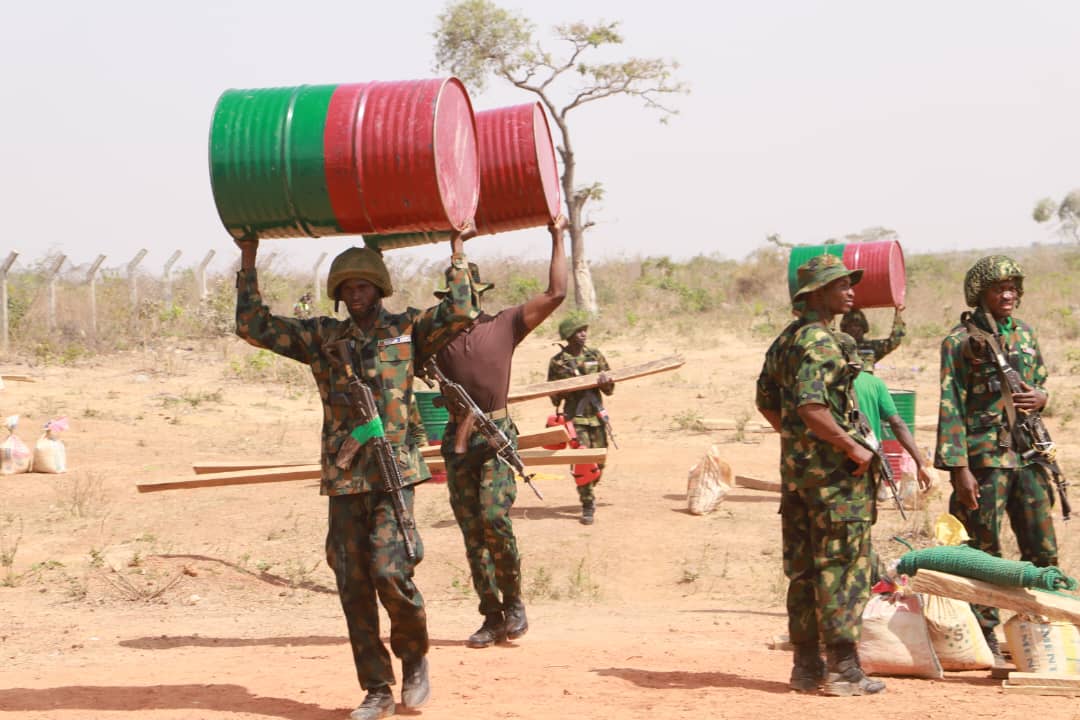
The Nigerian Army on Tuesday, January 6, launched recruitment for the Direct Short Service Commission and declared free applications open from Wednesday, January 7, to Wednesday, February 4.
According to the notice, eligibility criteria include age, education, medical fitness, and being open to civilians and serving military personnel.
It further added that various professional fields such as engineering, signals, medical corps, and education corps are available via online application.
However, some young Nigerians have reacted to the army recruitment, expressing their concerns about the development. These concerns are primarily about the poor welfare of soldiers, lack of modern and technology-driven equipment, quality training, and poor salary structure, among others.
Tijani Usman, a 25-year-old Nigerian, told WITHIN NIGERIA that he is not going to apply for the army recruitment exercise despite being unemployed.
Tijani, who met all requirements, disclosed that the salary structure in the Nigerian Army does not correspond with efforts and sacrifices put in place by soldiers to secure and protect the country.
According to Tijani, the Nigerian Army is in need of deliberate attention and genuine reforms in order to attract and accommodate young citizens of the country who want to serve, secure, and protect their motherland.
He added that improving soldiers’ welfare, providing quality equipment, technological advancement, and modernizing infrastructure are major areas of concern that have been poorly addressed by the authorities.
Jimoh Taofik, another Nigerian youth who appears disillusioned about the army’s recruitment, told WITHIN NIGERIA that he is not willing to sacrifice his life because joining the Nigerian Army is like a death sentence.
Taofik, who had always admired the Nigerian Army, believing it was one of the best in Africa, stated that recent events have shattered his illusion.
“I used to think the Nigerian Army was unbeatable,” a worried publisher said. “But now, I’m not so sure.”
When engaged, Taofik’s concerns and fears arise from the ongoing insecurity in Nigeria, particularly the frequent attacks on military personnel.
“It feels like the top hierarchy is sabotaging the Army, putting lives at risk,” he alleged. “Joining the Army now feels like a death sentence—I’m not willing to sacrifice my life.”
Yusuf Olatunji, a graduate from the prestigious Federal University of Technology, Akure, told WITHIN NIGERIA that he is hesitant to join the Nigerian Army despite his willingness to serve.
“I’m within the youth bracket, but I’m not joining the Army until they’re better equipped. The ongoing internal war demands more resources, planning, and preparation, and the Nigerian Army lacks all, Yusuf said.
“They need to be honest about the challenges and notify us when recruiting,” he suggested. “I want assurance they’ll prioritize soldiers’ safety and welfare.”
Adejoorin Adegbenga, another Nigerian youth, told WITHIN NIGERIA that he will not join the Nigerian Army because he values his life and personal freedom, literally claiming that soldiers are thrown into the fire.
According to Gbenga, insurgency and banditry are great risks that are handled with kid gloves, and those fighting insecurity are not given quality support.
He highlighted harsh realities bedeviling soldiers at the war front, such as inadequate equipment, poor life insurance, delayed allowances, weak medical care, and no clear support for injured soldiers, among others.
He also argued that the lifestyle of Nigerian soldiers is not for everyone, citing strict discipline, mental health strain due to violence, marital separation, and others.
If you value personal safety, freedom, and family stability, the Nigerian Army is a high-cost choice, he added.


Discussion about this post