
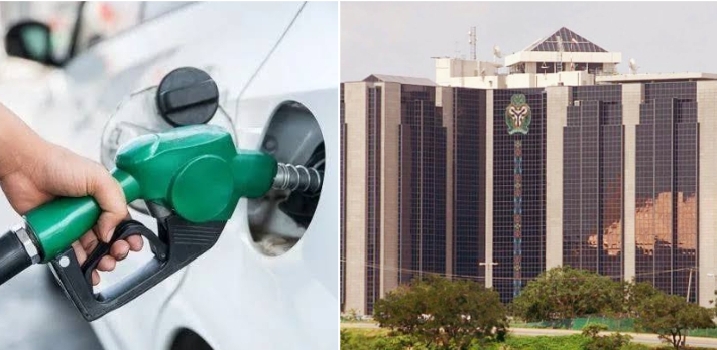
In a nation where fuel has long been both lifeblood and lightning rod, the mere whisper of ₦950 per litre stirs unease that spreads like wildfire through crowded markets and quiet offices alike. Petrol is more than liquid it is a barometer of daily survival and national rhythm. From Lagos highways to remote villages along the Niger Delta, every litre dictates how families plan their days, how businesses move goods, and how the economy hums beneath the surface.
The Central Bank of Nigeria has projected this figure not as policy but as a forecast an attempt to predict how global markets, domestic production, and currency flows will collide. Suspense lies not only in the number but in the chain reaction it might set off.
The forecast is anchored in complex calculations that ripple through every sector of the Nigerian economy. Global crude benchmarks, exchange rates, and domestic production levels intersect in a lattice of assumptions each vulnerable to fluctuation.
The narrative unfolding is as much about what Nigerians might do in response as about the number itself. Every prediction is a potential story, every forecast a prelude to consequences that will be written in real time across the nation.
How Numbers Shape Lives
The CBN’s assumptions are mathematical scaffolds that support a vision of 2026. A crude oil price around $55 per barrel forms 1 pillar of this projection. Currency expectations predict a naira trading near ₦1,400 per dollar. Domestic oil production is forecast to hover around 1.5 million barrels daily. Private-sector investments in refining are considered a stabilizing force. Each figure carries weight far beyond spreadsheets reaching into homes, shops, and streets across Nigeria.
Inflation projections are intertwined with fuel forecasts. The CBN estimates headline inflation will moderate to roughly 12.9% in 2026, a decline from higher rates in prior years. Petrol pricing is a dominant variable in this trajectory. When fuel becomes more expensive everything from transportation costs to food prices can rise in tandem. This interplay between energy and cost of living is a silent force shaping consumer behavior. Families and businesses alike anticipate adjustments in spending habits in response to shifting petrol realities.
Foreign exchange market efficiency is another unseen hand influencing the ₦950 figure. Stronger capital inflows and improved FX operations may buffer consumers from extreme volatility. Currency strength impacts import costs, especially for refined fuels, and directly influences retail pump prices. The CBN’s projection incorporates this balance attempting to forecast a median rather than an outlier scenario. Yet, as markets fluctuate daily, every projection contains uncertainty. Each naira’s value against the dollar affects how close the nation comes to the forecast.
Petrol consumption itself is a silent protagonist in the unfolding drama. Nigeria’s roads teem with millions of vehicles from motorcycles to heavy-duty trucks each contributing to aggregate demand. Any surge in fuel prices is not abstract it is experienced directly as queues at petrol stations and rising transport fares. The forecasted ₦950 per litre is a nexus where global economic currents meet local realities shaping the rhythm of daily life and determining how citizens plan, work, and survive.
Inflation, Cost of Living, and the Ripple Effect
The ₦950 petrol forecast does not exist in isolation it is a thread woven into the larger tapestry of Nigeria’s economic fabric. Inflation, measured at 12.9% in 2026 by the CBN, is projected to decelerate but remains sensitive to fuel prices. Petrol is a primary driver of transportation costs, which cascade into food distribution, commodity pricing, and service delivery. Every litre reaching ₦950 amplifies these pressures, impacting the day-to-day budgets of households and the operating costs of businesses.
Food prices are particularly susceptible. Transporting goods from farms to markets consumes significant fuel. An increase in petrol costs can translate into higher food prices almost immediately. Urban consumers feel it at the markets while rural producers face higher input costs for logistics. The interplay between fuel prices and inflation creates a feedback loop, where each spike in petrol intensifies pressure on other sectors, potentially slowing the anticipated easing of inflation.
Households respond to rising costs in measurable ways. Commuters may seek alternatives, families might reduce discretionary spending, and savings could be redirected to cover basic transportation. The ₦950 forecast forces forward planning even before it becomes reality. These anticipatory behaviors themselves influence demand and consumption patterns, shaping the very market the CBN is attempting to model.
Businesses mirror these adjustments. Manufacturing costs rise, distribution expenses increase, and service providers recalculate pricing. Petrol price fluctuations affect profit margins directly and indirectly. Analysts warn that the ripple effect of ₦950 per litre is broader than individual households; it touches every sector of the economy, emphasizing that petrol is not merely a commodity but a foundational element of national economic stability.
Exchange Rate Dynamics and Market Sensitivity
Currency value plays a critical role in fuel pricing. The naira is projected at ₦1,400 per dollar in 2026, but any deviation influences import costs. Nigeria imports refined petrol to supplement domestic supply, and the exchange rate dictates the naira equivalent of these purchases. Even modest fluctuations in currency strength can push retail prices upward or provide temporary relief. Forecasts must account for these dynamics, yet markets remain unpredictable.
Capital inflows and foreign investment are stabilizing forces. A stronger naira can reduce reliance on imports, mitigate price pressures, and support market confidence. Conversely, weaker currency values heighten exposure to global price swings. The CBN’s ₦950 projection assumes a delicate balance between domestic currency stability and global crude trends, but this equilibrium is fragile and sensitive to external shocks.
Consumer sentiment is influenced by perceived exchange rate trends. A declining naira may cause panic buying or fuel stockpiling, further stressing supply chains. Businesses adjust contracts, logistics, and pricing strategies in anticipation of currency movements. The ₦950 forecast is therefore as much about psychological preparedness as it is about arithmetic; it anticipates human behavior reacting to numerical signals in real time.
Petrol consumption habits are intertwined with currency perception. When consumers expect higher naira costs for imported fuel, they alter transportation decisions, sometimes opting for carpooling or reduced travel. These shifts affect overall demand, which feeds back into price dynamics. Understanding the relationship between exchange rates and fuel pricing is essential to contextualize why the CBN’s forecast carries weight beyond mere projection.
Domestic Refining Capacity as a Stabilizer
The Dangote refinery dominates discussions on domestic mitigation of fuel prices. With capacity to refine millions of litres per day, it is expected to reduce Nigeria’s dependence on imported PMS. Investments in other private refineries reinforce this stabilizing potential. By increasing local output, the nation can moderate fluctuations in pump prices caused by external market shocks, potentially limiting how high petrol climbs toward the ₦950 projection.
Operational efficiency is key. Maintenance schedules, pipeline reliability, and supply logistics determine how effectively refined fuel reaches stations. Even a single disruption can create temporary scarcity, which may push prices beyond projected levels. The forecast assumes smooth operations across refineries, a best-case scenario that relies on meticulous planning and risk management.
Domestic refining is also a strategic buffer against global volatility. When crude prices surge or the dollar strengthens against the naira, local refining capacity can offset the cost impact, protecting consumers to some degree. This dynamic highlights the dual role of domestic infrastructure: producing fuel and acting as an economic shock absorber in a highly interconnected global market.
Distribution networks complement refining capacity. Without effective pipelines, storage, and transport logistics, refined fuel cannot reach consumers efficiently. Bottlenecks in this system introduce risk and potential for temporary price spikes. The ₦950 forecast reflects assumptions about both production and distribution, underscoring that fuel prices are shaped by complex, multi-layered systems rather than simple market forces.
The Psychological Weight of Forecasts
Numbers like ₦950 carry more than financial significance; they influence behavior. Households anticipate higher expenses, adjusting budgets and consumption patterns preemptively. Businesses recalibrate pricing, logistics, and profit strategies in response to projected costs. The forecast becomes a mental framework through which citizens and enterprises navigate potential realities, shaping economic and social behavior even before prices change.
Expectations influence markets. If consumers believe fuel will reach ₦950, demand for alternate transport methods may increase. Panic buying or stockpiling can occur. Retailers adjust pump prices based on projected demand, creating a feedback loop where forecasts influence the very outcome they predict. In this sense, the CBN projection operates as both an economic tool and a social signal.
The perception of risk matters. Citizens and businesses alike must consider not just the numerical projection but its implications for livelihoods, planning, and investment. Petrol pricing forecasts act as a lens through which broader economic stability is interpreted. ₦950 per litre symbolizes potential hardship but also preparedness, forcing stakeholders to consider contingencies in advance.
Policy responses intersect with psychological effects. Governments and regulators monitor reactions to fuel forecasts, considering interventions, subsidies, or strategic releases from reserves. The psychological weight of a forecast shapes both behavior and policy, highlighting the multidimensional influence of numbers in a real economy.
Scenario Analysis: Best Case, Worst Case
The ₦950 petrol forecast is a fulcrum on which multiple economic scenarios pivot. In the best-case scenario, global crude prices remain near $55 per barrel, domestic oil production sustains around 1.5 million barrels daily, and refineries like Dangote operate efficiently with minimal downtime. The naira holds near ₦1,400 per dollar, reducing import pressures. Under these conditions, pump prices might stabilize slightly below ₦950, offering a manageable transition for consumers and businesses. Supply chains remain uninterrupted and inflationary pressures moderate as anticipated.
Households experience limited disruption in this best-case scenario. Commuters adjust with minor lifestyle changes, businesses maintain profit margins, and daily costs rise incrementally rather than exponentially. The psychological impact of the forecast is tempered by actual affordability, which allows forward planning and continued confidence in the economy. Citizens perceive the forecast as a warning rather than a crisis, giving time for adaptation. Transportation networks and logistics maintain predictable costs, reducing ripple effects on essential goods and services.
From a policy perspective, the government can respond with targeted interventions rather than broad subsidies. Strategic fuel reserves can be deployed for temporary relief, and regulatory oversight ensures fair pricing. Domestic refining capacity absorbs much of the volatility from global crude fluctuations. In this scenario, ₦950 is a ceiling rather than an inevitable point, a measure of economic resilience rather than a harbinger of hardship. The forecast reinforces preparedness while the actual outcome remains contained.
Conversely, the worst-case scenario unfolds when crude prices rise above $55 per barrel due to geopolitical tensions or OPEC production shifts. Currency depreciation beyond ₦1,400 per dollar amplifies import costs, and refinery operations face delays or maintenance challenges. Under these conditions, pump prices could surpass ₦950 per litre, triggering widespread inflationary pressures. Transportation costs spike, supply chains buckle under added strain, and households are forced to allocate larger portions of income to fuel, affecting discretionary spending and basic living expenses. The psychological effect intensifies as expectation and reality converge, creating a climate of economic stress and uncertainty.
Closing Reflections and Forward-Looking Insights
The ₦950 petrol forecast reflects the complex interplay between global oil markets, domestic production, and currency stability. It is not a fixed price but a plausible scenario under current assumptions. For consumers and businesses, it signals the need for awareness and preparation rather than immediate alarm.
While the figure may appear daunting, investments in domestic refining, logistical improvements, and strategic planning offer pathways to mitigate the potential impact.
Looking ahead, monitoring crude oil trends, exchange rates, and refining efficiency will remain essential. Policymakers and market actors must remain vigilant to emerging risks and opportunities. The ₦950 figure highlights potential challenges but also underscores the importance of informed decision-making and adaptive strategies.
Nigeria’s ability to navigate these dynamics will determine how closely reality aligns with the forecast and how citizens experience its consequences.




Discussion about this post