
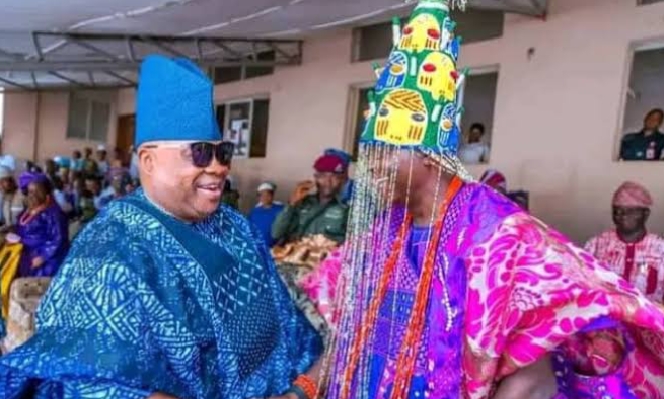
A subtle tension now runs through Boluwaduro, felt in palace walls, whispered conversations, and the careful movements of community leaders. The Owa of Igbajo, Oba Ademola Makinde, has issued a warning to the Osun State Government regarding plans to demote certain traditional rulers. Demotion carries weight beyond administration, touching lineage, culture, and the delicate balance of authority between state and tradition. The warning is not just a statement but a signal that the actions of the government may disrupt centuries of leadership continuity. Citizens, scholars, and local authorities are watching closely, aware that the outcome could redefine the relationship between elected power and hereditary leadership.
Every elevation of a Part Two Oba was intended to honor lineage, service, and cultural continuity. The possibility of reversing these titles introduces uncertainty, threatens respect for traditional structures, and tests the limits of governmental authority. Chiefs serve as mediators, cultural custodians, and community anchors, and any challenge to their authority resonates far beyond ceremonial titles. The Owa’s warning captures the tension at this intersection of culture, law, and governance, presenting a complex narrative of stakes that reach deep into the social fabric of Osun State.
Communities have long viewed traditional rulers as central to identity, governance, and conflict resolution. Elevation to Part Two Oba is both a public recognition and a functional assignment of responsibility. To demote such figures is to question lineage and authority, potentially destabilizing local governance and communal trust. The warning from Oba Makinde highlights that this is a matter of timing, method, and respect for established processes, emphasizing that abrupt action could ignite broader unrest.
This article examines the unfolding situation, tracing its origins, the cultural and political stakes, the legal dimensions, and the potential consequences for communities and governance. It offers an immersive, fact-based analysis of the Osun State dispute over Part Two Obas, interpreting the warning issued by Oba Makinde, and situating it within the larger context of traditional authority in Nigeria.
What Triggered the Controversy Around Part Two Obas
Last year, several leaders within Boluwaduro Local Government Area were elevated to Part Two Oba status. They received staffs of office and certificates from the state government, signaling official recognition and authority. For the chiefs, this was a formal acknowledgment of lineage, service, and legitimacy, reinforcing their roles in local governance and community cohesion. Citizens and community members recognized these elevations as validations of leadership and custodianship of tradition.
The title of Part Two Oba carries functional weight. Chiefs mediate disputes, oversee local projects, and maintain cultural continuity. Their recognition by the state strengthens trust between citizens and leadership, creating a balance that supports governance and social harmony. Any reversal of this recognition threatens that balance, challenging both authority and legitimacy. Communities that rely on these chiefs for guidance and conflict resolution would feel the consequences directly.
Reports indicate that the state government is considering reviewing the elevations due to procedural concerns and fears of title proliferation. While the government may view this as regulatory oversight, to chiefs and citizens it appears as a challenge to authority and tradition. The potential demotion transforms an administrative exercise into a high-stakes matter, combining legal, cultural, and political dimensions that cannot be ignored.
Oba Makinde has stressed that this matter requires careful handling within the Boluwaduro Local Government Traditional Council. He believes dialogue, not unilateral decision-making, should guide any review process. The warning emphasizes that the government must respect cultural protocols and the social significance of these titles to prevent unrest, loss of trust, and erosion of authority.
The Monarch’s Concerns and Cultural Stakes
Oba Ademola Makinde’s caution is grounded in both cultural knowledge and historical understanding. Traditional rulers in Osun are not symbolic figures; they are active participants in governance, mediators in disputes, and custodians of community identity. Demotion is not just a change of title; it questions the authority, lineage, and legitimacy of leaders who play central roles in maintaining social cohesion.
Within the Boluwaduro Local Government Traditional Council, the debate is intense. Some members see government oversight as necessary to maintain order and prevent title inflation, while others warn that reversing elevations without consultation risks destabilizing communities. Chiefs’ authority is intertwined with respect from their citizens, and undermining that respect can create tension, uncertainty, and conflict.
The warning also highlights the balance of power between state authority and cultural legitimacy. While the government holds legal power, monarchs command influence that extends into the daily lives of citizens. Oba Makinde’s message is that any disruption to the established hierarchy must be managed with careful consultation and cultural sensitivity to prevent alienation and unrest.
The stakes also touch on the broader perception of governance in Osun. Part Two Obas serve as bridges between the government and communities, and their demotion could weaken trust, erode participation in local governance, and diminish the symbolic authority of traditional institutions. Oba Makinde’s caution is therefore both a strategic and protective measure, aiming to safeguard the social fabric while respecting governmental prerogatives.
Legal Pushback and Court Action
The warning has evolved into formal legal action. Chiefs including Oba Adebisi Mukaila Michael and Oba Ogundele Olasunkanmi Mathew have reportedly taken the matter to court. By doing so, they assert that their recognition cannot be revoked arbitrarily and that any demotion must comply with both customary procedures and statutory regulations. The court now serves as a crucial space where law and tradition intersect, and the outcome may have far-reaching implications for other councils and communities in Osun State.
The legal process underscores the tension between cultural authority and administrative oversight. Traditional rulers occupy a space where community legitimacy and state recognition overlap. Courts provide a venue to ensure fairness, verify procedural correctness, and mediate disputes. The chiefs’ legal action is a clear message that challenges to their authority will be contested, emphasizing that governance cannot disregard cultural structures without consequence.
Legal proceedings are expected to focus on historical recognition, procedural documentation, and the intentions behind the original elevations. The government may present arguments about administrative oversight and regulatory necessity, while the chiefs will emphasize cultural protocols, community impact, and the risks of unilateral demotion. The interaction between law and tradition in this dispute exemplifies the complexity of managing traditional authority within a modern legal framework.
Community observers are watching closely. Citizens are aware that the ruling could set a precedent, not only for Boluwaduro but for traditional governance across Osun. Supporters of the chiefs argue that any arbitrary reversal undermines legitimacy, weakens community cohesion, and diminishes trust in both traditional and state institutions. The stakes are high, and the legal dimension adds suspense to an already sensitive situation.
Who Is Directly Affected
The most immediate stakeholders are Oba Adebisi Mukaila Michael of Okeolooru Obalufon and Oba Ogundele Olasunkanmi Mathew of Irante. Both were elevated to Part Two Oba status last year and granted official recognition through certificates and staffs of office. Their leadership roles extend into conflict mediation, cultural preservation, and community governance. Any demotion directly impacts their authority, legitimacy, and ability to serve as anchors of social stability.
Demotion carries symbolic and practical consequences. In communities where respect for lineage and service forms the basis of authority, even the threat of reversal generates uncertainty. Citizens rely on these rulers for dispute resolution, cultural leadership, and ceremonial guidance. A demotion could challenge the trust communities place in their chiefs and create friction between citizens and governmental institutions.
The two chiefs’ legal action highlights the intersection of individual rights, cultural authority, and administrative oversight. By seeking judicial protection, they assert that their offices cannot be diminished without adherence to established protocols and recognition of communal trust. The case illustrates the importance of balancing administrative objectives with cultural legitimacy and social stability.
Other members of the Boluwaduro Local Government Traditional Council are also affected indirectly. The warning from Oba Makinde serves as a reminder that unilateral action could erode collective authority, disrupt council cohesion, and weaken the social framework upon which traditional governance relies. The resolution of this dispute will influence not only the two chiefs but the broader traditional structure in the local government area.
The Cultural and Historical Stakes
Traditional rulers in Osun State are custodians of centuries of history, lineage, and culture. Demoting Part Two Obas challenges not only individual authority but the social structures that maintain harmony and continuity within communities. Chiefs oversee festivals, mediate disputes, and guide social norms, making their roles essential to both cultural preservation and civic governance.
Oba Makinde has emphasized the delicacy of this situation. The warning underscores that any reversal must be approached with consultation, transparency, and respect for established customs. Monarchs are not passive observers; their authority is interwoven with the collective memory, identity, and stability of communities. Ignoring this balance could lead to distrust, discontent, and social friction.
Historically, chieftaincy disputes have often escalated when procedural fairness is perceived to be absent. In Osun, the elevation of Part Two Obas represented continuity with tradition and recognition of service. Reversing these elevations risks unsettling both hierarchical structures and community confidence, creating a precedent that may influence disputes in other local government areas.
The cultural consequences extend to rituals, ceremonies, and community participation. Chiefs are central to organizing events that define collective identity. Weakening their authority may reduce participation, diminish respect for leadership, and create a sense of alienation. Oba Makinde’s warning reflects awareness of these high-stakes implications, advocating for careful, measured, and culturally sensitive resolution.
How the Government’s Role Intersects With Tradition
The Osun State Government wields legal authority to regulate traditional titles, yet this power intersects with centuries of cultural expectations. Chiefs function as mediators, advisers, and symbols of continuity. Administrative action must consider the social, historical, and cultural dimensions of leadership to prevent alienation and unrest.
Reviewing the elevation of Part Two Obas is framed as an administrative necessity to ensure procedural correctness. However, abrupt demotion challenges legitimacy and may provoke public dissatisfaction. Chiefs’ authority derives both from community recognition and state acknowledgment, and undermining either could weaken governance structures.
Oba Makinde stresses dialogue and consultation within the council as essential. The government must balance administrative prerogatives with the social legitimacy of chiefs, recognizing that abrupt action could destabilize local governance and erode trust. The stakes involve both the functioning of councils and the perception of fairness among citizens.
Part Two Obas symbolize continuity, authority, and legitimacy. Reversing these titles sends signals beyond individual cases, influencing how communities perceive state respect for tradition. Oba Makinde’s warning highlights the need for prudence, cultural sensitivity, and awareness of long-term consequences for governance and social cohesion.
Potential Political Implications
Demotion of Part Two Obas carries political weight. Chiefs historically serve as intermediaries between communities and governments, influencing local perceptions and supporting policy implementation. Undermining their authority risks weakening this link, potentially complicating governance and community relations.
Political leaders must consider public perception, as challenging cultural authority may generate discontent and reduce trust. Chiefs often wield influence in local elections, and diminishing their status may create friction with influential community figures. Oba Makinde’s warning emphasizes the importance of balancing administrative decisions with political and cultural realities.
At the community level, citizens closely monitor fairness, respect for tradition, and the handling of leadership disputes. Any perceived violation can provoke dissatisfaction, debates, or protests. Chiefs are critical in maintaining stability, and undermining them may weaken the social order.
The legal, cultural, and political dimensions are intertwined. Courts, public opinion, and government actions collectively determine the outcome. Oba Makinde’s caution reflects awareness of this complexity, signaling that the government’s next steps will have lasting consequences for governance, trust, and traditional authority.
Community Reactions and Perspectives
Communities in Boluwaduro are attentive to developments. Citizens understand that traditional rulers influence local governance, conflict resolution, and cultural continuity. The warning has heightened awareness that demotion could disrupt social structures and challenge trust in leadership.
Residents express concern over potential demotion. Some view it as a threat to respected leaders, while others acknowledge the need for oversight but insist it must be executed carefully. These discussions reveal the tension between bureaucratic control and lived cultural experience.
The dispute has implications beyond Boluwaduro. Citizens note that the handling of this case may set a precedent for other councils and influence perceptions of fairness and government respect for tradition across Osun State.
Supporters of the chiefs emphasize stability, cultural preservation, and community trust. Oba Makinde’s warning reflects not just defense of titles but the safeguarding of social cohesion and the authority of traditional structures that guide everyday life.
Broader Implications for Traditional Authority in Nigeria
The Osun dispute mirrors challenges across Nigeria. Traditional rulers operate within a complex landscape of cultural expectations, legal frameworks, and administrative oversight. Mismanagement of title demotion risks undermining social order and setting precedents that affect other states.
Monarchs across Nigeria observe the Osun case as an example of balancing respect for tradition with government authority. Successful resolution through dialogue and consultation could reinforce legitimacy, while abrupt action may provoke unrest and erode cultural confidence.
The warning highlights the need for clear procedures, cultural sensitivity, and community involvement. Chiefs are vital for local governance, mediating disputes, and preserving heritage. Weakening their authority has consequences that extend to community participation, conflict resolution, and social stability.
The Osun case underscores that traditional leadership is more than ceremonial. It is a framework for societal cohesion, intergenerational continuity, and civic guidance. How the government responds will influence perceptions of governance, cultural respect, and the future role of monarchs in Nigeria.
Legal and Administrative Precedents
The Part Two Obas dispute raises questions about administrative oversight and legal authority. Courts will examine elevation procedures, documentation, and compliance with cultural protocols. The ruling will likely influence future title recognition and demotion processes in Osun and beyond.
Legal intervention demonstrates the limits of unilateral state power. Traditional rulers are asserting their rights, emphasizing fairness, and requiring adherence to customary law. The judiciary acts as a mediator between statutory authority and cultural legitimacy.
This case may set precedent for councils and governments throughout Nigeria. It highlights the importance of procedural transparency, cultural awareness, and consultation in decisions affecting traditional leadership.
The outcome will influence both government policy and community trust. Ensuring procedural integrity and respect for cultural authority is essential to prevent conflict, maintain legitimacy, and support stable governance across local government areas.
Possible Scenarios and Outcomes
Several outcomes are possible in the Part Two Obas dispute. The government may reverse elevations following consultation and legal review, maintaining legitimacy while preserving cultural respect. Alternatively, courts could block demotion, reinforcing the authority of chiefs and council processes.
Each scenario carries implications for governance, social cohesion, and public perception. Reversals without consultation may provoke unrest, legal challenges, and distrust. Protection of titles through courts could reinforce cultural respect but may limit government flexibility in future oversight.
Dialogue between government and monarchs remains critical. Negotiation and mediation can balance administrative concerns with traditional authority, creating a model for conflict resolution in other local government areas.
The dispute exemplifies the delicate balance between state power, community trust, and cultural preservation. The warning from Oba Makinde highlights the stakes, emphasizing that careful management is essential to safeguard both authority and harmony.
Concluding Reflections on Governance and Culture
The Osun State dispute over Part Two Obas demonstrates the intertwined nature of governance, law, and culture. Traditional rulers serve as anchors of continuity, cultural preservation, and community stability. Government intervention must respect these roles to maintain legitimacy and social cohesion.
Oba Makinde’s warning is a call for prudence, dialogue, and measured action. It reflects awareness that abrupt decisions could provoke unrest, weaken councils, and erode trust between citizens and both traditional and governmental institutions.
The legal and political dimensions of the dispute reinforce the need for clarity, procedural integrity, and cultural sensitivity. How this matter unfolds will influence perceptions of government respect for tradition, the authority of monarchs, and the framework for resolving chieftaincy disputes in Nigeria.




Discussion about this post