
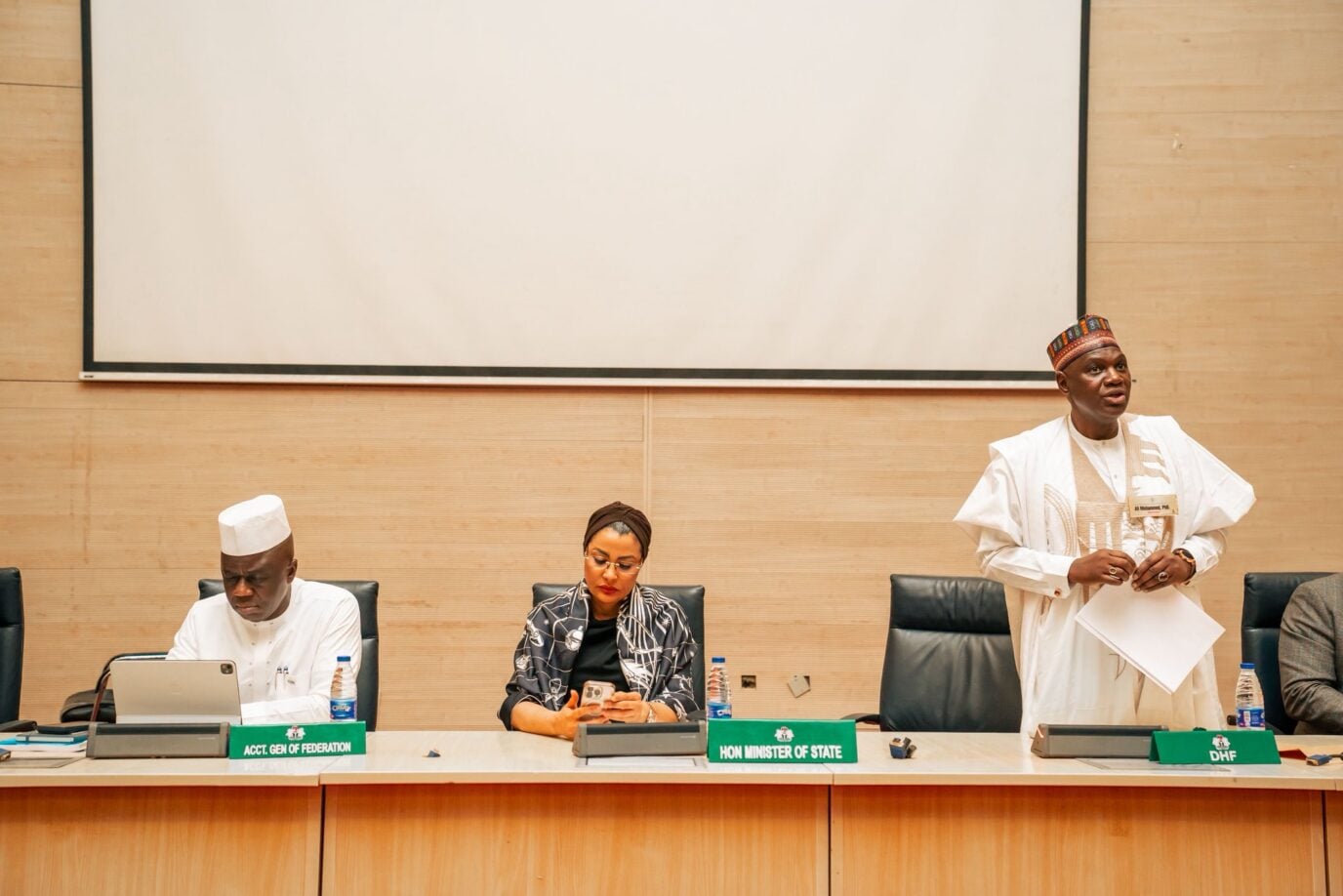
The communique from the January meeting of the federation account allocation committee has yet to be released, eight days after Doris Uzoka-Anite, the minister of state for finance, confirmed that the meeting had taken place.
Uzoka-Anite disclosed the development in a post on X on January 21, where she shared photographs from the gathering and stated, “Chairing the first FAAC Meeting of 2026.”
Traditionally, the FAAC communique contains a detailed breakdown of revenue shared among the federal government, state governments and local government councils from funds generated within the month.
Under the existing revenue-sharing arrangement, 52.68 per cent of distributable revenue is allocated to the federal government, while states receive 26.72 per cent and local governments take 20.6 per cent.
Oil-producing states are also entitled to an additional 13 per cent derivation fund from revenues derived from natural resources.
Each month, FAAC disburses funds to the 36 states and 774 local government councils, with the allocation figures usually made public immediately after the meeting concludes.
However, the absence of the January 2026 communique has drawn attention, as the document remains unavailable despite confirmation that deliberations were held.
The delay has prompted questions from analysts and stakeholders, given the central role FAAC allocations play in sub-national budgeting, salary payments and project execution.
Ayokunle Olubunmi, head of financial institutions ratings at Agusto & Co., said such delays can arise from disagreements over specific components of the revenue-sharing process.
“Oftentimes, what might likely happen could be whether there are some areas that they didn’t agree on or some things that they need to reconcile, but it’s strange given as that may be,” Olubunmi said.
He added that it was unusual for a FAAC meeting to conclude without the issuance of a formal communique to inform the public of the outcome.
Olubunmi said clearer communication from the relevant authorities would help reduce uncertainty surrounding the status of revenue distribution for the month.
Without official clarification, he noted that it remains unclear whether funds have already been shared or if further discussions are still ongoing among the three tiers of government.
“Although there are some concerns now that it might delay salary payment, that’s if they have not shared it,” he said.
“But we don’t know if they’ve shared or when they plan to reconvene or probably they’ve already agreed on what three tiers of government will get, or they are still expecting one or two things.”
He said transparency around the federation’s financial position was important for public confidence and fiscal planning.
Olubunmi added that the implications of the delay could not be fully assessed until the authorities explained the cause and outlined steps to prevent a recurrence.
Also commenting on the matter, Ken Ife, a professor and lead consultant on private sector development to the ECOWAS Commission, said the delay could create fiscal pressures for states and local governments.
Ife said the postponement of revenue sharing often triggers a chain reaction that affects salary payments, contractor obligations and economic activity at the sub-national level.
“The postponement of revenue sharing creates a ripple effect, delaying the payment of salaries for workers and hindering payments to contractors, which, in turn, reduces productivity and overall economic activity at the state level,” he said.
He noted that many states depend heavily on FAAC inflows to finance development projects and meet recurrent expenditure obligations.
According to Ife, disagreements over remittances to the federation account, especially from the Nigerian National Petroleum Company Limited, could be a contributing factor to the delay.
“It could also be due to administrative bottlenecks in implementing new fiscal Reform Act 2025 and ongoing fiscal policies issues such as implementation of Supreme Court decision on Local Govt fiscal autonomy,” he said.
Ife explained that challenges faced by local governments in meeting requirements for direct disbursement, including the provision of designated bank accounts, have complicated the implementation of fiscal autonomy.
He said these gaps have sometimes resulted in funds being routed through state governments, contrary to the intended framework.
The professor also pointed to unresolved financial reconciliations on platforms such as the government integrated financial management information system by the Office of the Accountant-General of the Federation.
Additionally, Ife cited recurring disputes between state governments and the NNPC over oil revenue remittances, particularly during periods of reduced production or elevated operational costs.
He added that waivers granted on outstanding NNPC obligations without extensive consultation could also affect consensus within FAAC.
On December 29, 2025, President Bola Tinubu approved the cancellation of about $1.42bn and N5.57tn in outstanding obligations owed by the NNPC to FAAC, a decision that continues to shape revenue discussions.



Discussion about this post