
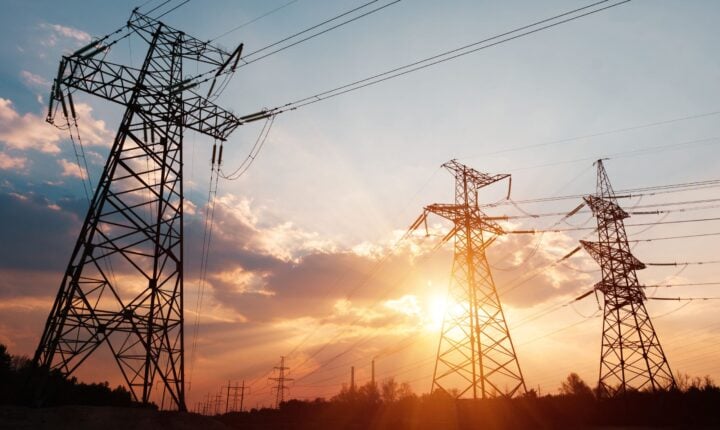
In September 2025, Nigeria submitted its revised nationally determined contributions to the United Nations Framework Convention on Climate Change, committing to achieve full electricity access for its population by 2030.
The nationally determined contributions, commonly referred to as NDCs, outline how countries plan to reduce emissions while expanding access to affordable, reliable and clean energy under the Paris Agreement framework.
Nigeria’s latest submission, known as NDC 3.0, followed its previous update in 2021 and aligns with the requirement for countries to strengthen climate commitments every five years.
“The NDC 3.0 targets also contribute to the achievements of the Mission 300 Compact. The major targets are: 100% electricity access by 2030,” the document stated.
If achieved, the target would represent a significant shift for a country where millions of households continue to rely on candles, generators and alternative fuels for basic energy needs.
Nigeria currently ranks among the countries with the highest electricity access deficit globally, with about 88.5 million people living without power, according to the Alliance for Rural Electrification.
Data from the National Bureau of Statistics shows that only 53.6 percent of households nationwide have access to electricity, highlighting persistent gaps between urban and rural communities.
The bureau reported that the south-east has the highest electrification rate at 74.6 percent, while the north-east records the lowest at 29.5 percent.
According to the NBS, 82.2 percent of urban households are connected to electricity, compared to 40.4 percent in rural areas, with Nigerian households experiencing an average of 6.7 blackouts weekly.
Behind these figures are communities such as Aworin in Ikoyi ward of Isokan local government area in Osun state, where electricity supply remains largely absent.
Opeyemi Koffi, a petty trader in the community, said residents have lived without public electricity for as long as she can recall.
“If there were electricity here, I would be able to cool my drinks and make more profit,” Koffi said.
“Now, I sell them warm. Customers prefer cold drinks, but I have no choice.”
Residents of Aworin often travel several kilometres to nearby towns to charge phones or access services powered by fuel-driven generators.
The experience mirrors conditions in many rural settlements across the country that have remained off the grid for years.
Nigeria’s 2030 electricity access pledge has therefore renewed debate about feasibility given long-standing challenges in the power sector.
A key issue is how electricity “access” is defined, whether through grid connection, decentralised systems, or minimal supply regardless of quality and duration.
Despite growth in installed generation capacity, actual power delivered to consumers remains far below demand due to gas shortages, ageing infrastructure and vandalism.
These challenges have contributed to repeated grid disruptions, with at least four major system disturbances recorded in 2025 alone.
The Transmission Company of Nigeria acknowledged that the national grid collapsed at least twice in 2025, following 11 collapses recorded in 2024.
The minister of power, Adebayo Adelabu, attributed the frequent failures to deteriorating infrastructure.
“The infrastructure is in deplorable conditions, so why won’t you have trip-offs? Why won’t you have collapses, either total or partial? It will continue to remain like this until we can overhaul the entire infrastructure. What we do now is to make sure that we manage it,” Adelabu said.
Global development institutions note that achieving universal access will require a mix of grid expansion, mini-grids and standalone solar solutions.
The World Bank estimates that Africa will need hundreds of billions of dollars in investment to close its electricity gap by 2030.
David Arinze, an energy expert, said decentralised solutions must play a central role in reaching underserved areas.
“I approach this conversation from a place of hope, not pessimism,” Arinze said.
“A lot needs to happen within a very short time. Financing remains a major challenge, and while decentralised solutions like mini-grids and solar home systems offer real opportunities, they can only scale if we mobilise meaningful financial resources and put the right policies in place.”
Nigeria’s NDC also targets a 50 percent renewable energy share in electricity generation by 2030 and a 9 percent annual increase in new connections.
These ambitions align with Mission 300, a World Bank and African Development Bank initiative launched in 2024 to connect 300 million people in sub-Saharan Africa to electricity by 2030.
Despite Africa’s vast renewable potential, the continent attracts only about 3 percent of global clean energy investment, according to international data.
Nigeria’s renewable energy capacity stood at about 3 gigawatts as of 2023, compared with Africa’s total of 62.1 gigawatts.
Adetoyi Adedeji, an energy specialist, said the targets are technically achievable but depend on resolving structural weaknesses across generation, transmission and distribution.
“Technically, it is possible — but not from where we currently stand. A lot has to change,” Adedeji said.
Policy decisions, including plans announced in March to halt solar panel imports, have also generated debate among industry stakeholders.
Adedeji said building local manufacturing capacity is important but warned that restrictions without adequate domestic production could slow progress.
“If we want to build a sustainable renewable energy ecosystem, we must support local industry — not just close the door on imports without having adequate domestic production in place,” he said.
Experts agree that meeting Nigeria’s electricity pledge will require coordinated planning, clear data on underserved populations and stronger collaboration between the public and private sectors.
Without sustained investment, policy clarity and sector-wide reforms, analysts warn that Nigeria’s ambitious power promise may remain difficult to fulfil within the proposed timeline.


Discussion about this post