
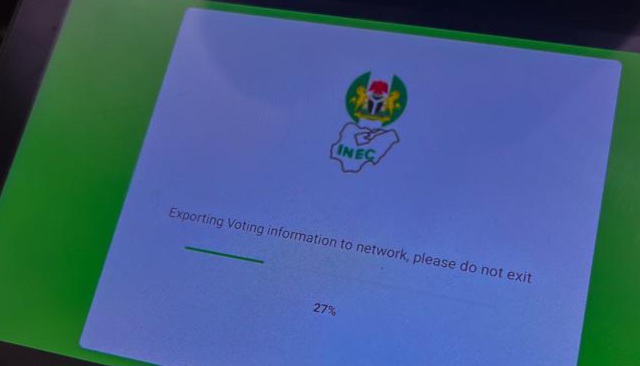
The decision by the senate to retain discretionary powers for the transmission of election results has renewed national debate about transparency, trust and the conduct of future elections.
Lawmakers passed amendments to the Electoral Act that many Nigerians had expected would close gaps observed during the 2023 general elections, particularly in relation to the collation and transfer of results.
A central proposal before the senate was a clause that would have made real-time electronic transmission of polling unit results compulsory, with uploads tied directly to the INEC Result Viewing portal immediately after the signing of official result sheets.
The senate, however, declined to adopt that clause and instead retained provisions that allow the electoral commission to determine the method of transmitting results.
This decision has triggered varied reactions among political actors, civil society groups and election observers, with each group assessing possible outcomes for the 2027 general elections.
Supporters of the senate’s position argue that the existing law already accommodates electronic transmission and that flexibility is necessary in areas with weak telecommunications coverage.
They also maintain that leaving the decision to the electoral body ensures that operational realities on election day can be properly managed without legal constraints.
The senate president, Godswill Akpabio, stated that the chamber did not remove electronic transmission from the law and insisted that the intention was to retain the same framework used during the last general election.
He said, “This senate under my watch has not rejected the electronic transmission of results,” adding that the current law still permits the use of technology where the commission considers it practicable.
Legal provisions cited by the senate indicate that the commission is empowered to determine procedures for voting and result transmission, including maintaining an electronic database of polling unit outcomes.
Judicial pronouncements before and after the 2023 elections have also affirmed that the commission retains discretion on how to transmit results, and that the absence of electronic uploads alone cannot invalidate an election.
Civil society organisations, however, contend that the refusal to make real-time transmission mandatory preserves a legal gap that contributed to disputes in the last election cycle.
The executive director of Yiaga Africa, Samson Itodo, said, “What the senate has done is to betray the trust of Nigerians and to make a mess of all the gains that we have made.”
He added that courts had previously ruled that electronic transmission is not expressly required by law, which is why many reform advocates sought a clear statutory provision.
Election observers note that disputes in Nigeria’s elections often arise during collation stages rather than at polling units, making the handling of results a critical issue for credibility.
Technological tools introduced in recent elections, including voter accreditation devices and online result portals, were intended to improve transparency and allow citizens to verify outcomes independently.
However, the absence of a mandatory legal framework for real-time uploads meant that these tools could be applied unevenly, which became a subject of litigation after the presidential election.
The house of representatives, in its own version of the amendment bill, adopted the clause mandating real-time transmission, thereby setting up a divergence that must now be reconciled by a joint conference committee.
Political analysts say the final outcome of that harmonisation process will determine whether the next election cycle operates under a compulsory digital reporting system or a discretionary one.
For electoral administrators, the senate’s position provides operational flexibility and shields the commission from potential litigation tied to network failures or technical disruptions.
For political parties and candidates, the implications vary depending on their confidence in the collation process and their access to independent monitoring mechanisms.
For voters, the central concern remains the credibility of results and the ability to independently verify outcomes as they are announced.
The controversy reflects a broader tension between technological reform and logistical realities in a country with uneven infrastructure and varying levels of digital connectivity.
As preparations for the 2027 elections begin to take shape, the debate over real-time transmission is expected to remain a focal point in discussions on electoral integrity.
The conference committee set up by both chambers of the national assembly will ultimately determine whether the final law mandates instant electronic uploads or preserves the existing discretionary framework.
Until that decision is reached, the question of who gains or loses from the senate’s rejection of compulsory real-time transmission remains open, with its impact likely to be tested in the next general election cycle.




Discussion about this post