

As Nigeria approaches the 2027 general elections, questions about who can vote, how votes are cast, and the inclusivity of the electoral process are increasingly in the spotlight. One of the most pressing and widely discussed issues is whether Nigerians living abroad will be able to participate in these elections without physically returning to the country. This question has generated debate among policymakers, civil society actors, and Nigerians living in the diaspora who want to exercise their civic rights. While the idea of diaspora voting is not new, it has gained renewed attention due to the growth of Nigeria’s global population and increasing demands for inclusive democratic processes.
The discussion involves several key institutions including the National Assembly, the Independent National Electoral Commission (INEC), and various advocacy groups that argue for a voting system capable of engaging citizens abroad. At present, however, there remains a critical distinction between political will and legal reality, as constitutional and legislative barriers continue to determine who is eligible to vote in Nigeria’s elections.
Current Legal Framework for Nigerians Abroad
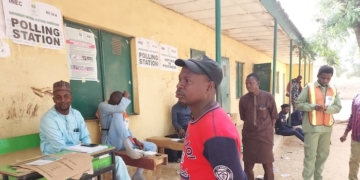
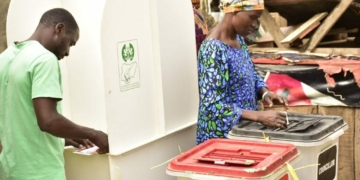
Under the current provisions of the Nigerian Constitution and the Electoral Act, citizens must be physically present at their registered polling units to cast a ballot. This requirement applies to all elections, whether local, state, or federal, including the upcoming 2027 general elections. Nigerians living abroad are therefore not automatically entitled to vote unless they travel back to their designated polling units in Nigeria. This restriction has remained consistent across successive election cycles and continues to limit the practical participation of the Nigerian diaspora.
The legal framework assumes physical presence because election management in Nigeria has traditionally relied on paper ballots and, more recently, electronic card readers, both of which are designed for domestic use. For overseas citizens, logistical challenges related to verifying identity, ensuring ballot security, and preventing electoral malpractice make remote voting complex under current law. Therefore, the law effectively obliges any diaspora citizen wishing to vote to plan in advance, ensure proper registration, and travel back to Nigeria, sometimes months ahead of the elections. The absence of legal provisions for diaspora voting reflects both historical precedence and ongoing debates about the costs and feasibility of extending voting rights beyond Nigeria’s territorial borders.
National Assembly Initiatives
In both the House of Representatives and the Senate, discussions about diaspora voting have intensified in recent years, particularly in the wake of 2023 election observations and civil society advocacy. Legislators have explored introducing bills to amend the Electoral Act and relevant constitutional provisions to allow citizens living outside Nigeria to vote. These efforts have included public hearings, committee consultations, and the involvement of diaspora representatives who have shared their experiences and the barriers they face under the current system.
A notable development in this regard is the launch of the NiDRes App and website, an initiative that aims to enhance engagement with Nigerians abroad. This platform is designed to support diaspora citizens in voter registration and election information access, laying the groundwork for eventual legal diaspora participation. While the app itself does not confer voting rights, it demonstrates governmental acknowledgment of the need to integrate overseas citizens into Nigeria’s democratic process. It also signals political recognition that, with proper legal reform, the diaspora could become a significant and engaged voting bloc.
Federal Government Endorsement
High-ranking government officials have also contributed to the discourse on diaspora voting. As of late 2025, the Speaker of the Nigerian House of Representatives, Rt. Hon. Abbas Tajudeen (Ph.D.) publicly advocated for a “diaspora voting bill,” emphasizing that Nigerians abroad should have the opportunity to participate in national elections. Such statements from federal leadership are significant because they indicate alignment between legislative and executive awareness regarding electoral inclusivity.
At the same time, these statements are often cautious, reflecting the reality that any diaspora voting initiative must navigate legal, technical, and logistical hurdles before becoming actionable. The involvement of civil society and advocacy groups adds pressure for reform while also ensuring that proposed solutions remain transparent and accountable to the public.
Legal and Constitutional Barriers
While the political will for diaspora voting is present, legal and constitutional barriers remain the most significant obstacles. The Nigerian Constitution, along with the Electoral Act, specifies that voters must be registered at a physical polling unit and cast their votes in person. These provisions were established decades ago and were not designed to accommodate citizens residing outside the country.
Any attempt to enable overseas voting requires a constitutional amendment, a process that is complex and time-consuming. Amending the constitution in Nigeria involves multiple stages including legislative approval by both chambers of the National Assembly, ratification by two-thirds of state assemblies, and eventual presidential assent. Historically, constitutional amendments related to electoral reform have faced delays due to political disagreements, logistical concerns, and debates over national priorities. Consequently, even with strong advocacy, it is not guaranteed that diaspora voting will be legally possible in time for the 2027 general elections unless all procedural steps are fast-tracked and successfully completed.
Past attempts to introduce diaspora voting provisions have failed or stalled, largely because of concerns over ballot security, the cost of implementing overseas voting, and the ability of INEC to manage the process effectively. These historical precedents underscore the difficulty of translating political intent into actionable law and highlight why, despite vocal support from lawmakers and advocacy groups, Nigerians abroad cannot yet vote without returning to their home polling units.
International Comparisons and Lessons
Globally, diaspora voting is far from unusual. Over 140 countries allow citizens living abroad to participate in national elections, employing a variety of methods such as postal ballots, online voting, or voting at embassies and consulates. Countries such as France, the United States, and India provide models of overseas voting mechanisms that balance accessibility, security, and verification of voter identity.
For Nigeria, these international examples provide both inspiration and cautionary lessons. While other nations have successfully implemented diaspora voting, they often rely on substantial institutional capacity and robust security protocols. Nigeria would need to invest in similar mechanisms, including secure electronic voter identification, ballot transport, and real-time verification systems, to ensure that diaspora voting is credible and resistant to fraud. Civil society and advocacy groups argue that such investments are worthwhile because they increase political inclusion, strengthen democratic legitimacy, and acknowledge the contributions of Nigerians living outside the country.
The INEC Position
INEC has publicly expressed support for the idea of diaspora voting in principle, acknowledging that it is fair for citizens abroad to have a voice in the democratic process. The commission recognizes that Nigerians living abroad continue to contribute economically, socially, and politically to the country and that their participation could enhance the inclusiveness of elections.
However, INEC also stresses that relevant constitutional amendments are a prerequisite for legal enforcement. Without changes to the Constitution and the Electoral Act, the commission cannot facilitate overseas voting. INEC has also noted that logistical planning would need to be rigorous, requiring technological infrastructure, verification systems, and clear procedures to avoid disenfranchisement or electoral irregularities. The commission’s position demonstrates a willingness to modernize electoral participation while adhering strictly to the legal framework that currently governs elections in Nigeria.
Direct Effects on Nigerians Abroad
For Nigerians living abroad who wish to participate in the 2027 general elections, the practical implications are clear. Unless constitutional amendments and electoral reforms are completed in time, diaspora citizens will need to return to Nigeria to vote. This requirement involves careful planning, including ensuring voter registration at the correct polling unit, securing travel arrangements, and complying with election protocols.
For the diaspora community, this situation can be both challenging and frustrating. Many Nigerians living abroad maintain strong ties to the country and wish to contribute to the democratic process, but the current legal framework limits their participation. This restriction has led to advocacy campaigns and public discourse aimed at demonstrating the feasibility and fairness of overseas voting. It has also heightened awareness of the need for Nigeria to modernize its electoral system to reflect the realities of a globalized population.
Personal Diaspora Experiences and Perspectives
Beyond legal and policy debates, the question of diaspora voting resonates strongly with Nigerians living abroad, many of whom feel a persistent connection to their homeland. Take, for example, a young professional based in London who has been sending remittances home for years to support his extended family and local community projects. He often follows Nigerian politics closely through news outlets and social media, feeling the impact of government policies on both his relatives and his own sense of identity. The inability to participate directly in elections leaves him frustrated, as he contributes to the country financially, culturally, and socially, yet lacks formal influence over the leaders and decisions shaping Nigeria’s future.
Similarly, a Nigerian entrepreneur residing in Toronto has established small businesses that employ other diaspora Nigerians and even support suppliers in Lagos and Abuja. She emphasizes that voting from abroad would allow her to better reflect the interests of those she supports, bridging the gap between her economic contributions and political voice. For her, diaspora voting is not a privilege but a matter of fairness and democratic inclusion, ensuring that Nigerians outside the country are recognized as full participants in national life.
In addition, students pursuing higher education in the United States often express a desire to vote but face logistical barriers. Many attend Nigerian universities virtually or maintain active involvement in local community initiatives back home. The thought of having to travel thousands of miles just to cast a ballot discourages many, and they view diaspora voting as a practical way to maintain engagement while pursuing opportunities abroad. These personal experiences illustrate the human dimension of the debate: diaspora citizens are not detached observers but active contributors whose lives, careers, and families remain intricately linked to Nigeria.
Through these narratives, whether real or representative, it becomes clear why policymakers and civil society advocates argue for reforms. Enabling diaspora voting would not only expand democratic participation but also strengthen national cohesion, acknowledging that Nigerian identity and civic responsibility extend far beyond geographical borders. For many Nigerians abroad, voting is both a right and a symbolic affirmation of their ongoing connection to home, and its absence represents a tangible gap in Nigeria’s democratic framework.
The Road to Diaspora Voting
The prospects for diaspora voting in Nigeria depend on several factors. First, the National Assembly must successfully pass the diaspora voting bill, which requires careful drafting, negotiation, and consensus among lawmakers. Second, the bill must include technical provisions that allow INEC to securely manage voting from multiple countries. Third, civil society, media, and public advocacy must maintain pressure to ensure that reforms are prioritized and implemented effectively.
If these steps are achieved, Nigeria could join the ranks of countries that empower their diaspora populations to vote, enhancing democratic inclusivity and participation. However, any delays or procedural failures could result in Nigerians abroad remaining unable to vote in the 2027 elections. This makes the next twelve to eighteen months critical for legal and institutional action if diaspora voting is to become a reality.
Takeaway: What This Means for 2027
As of now, Nigerians living abroad cannot legally vote in the 2027 general elections without returning home to their registered polling units. The legal framework under the Constitution and Electoral Act maintains this requirement, despite ongoing political advocacy, civil society campaigns, and INEC support in principle for diaspora inclusion. The National Assembly and federal leaders have signaled interest in reforming electoral laws to accommodate overseas citizens, but these efforts remain contingent on legislative processes, constitutional amendments, and practical implementation measures.
For the Nigerian diaspora, this situation highlights the importance of political engagement, advocacy, and preparedness to navigate current legal constraints. It also underscores the significance of constitutional and electoral reforms that could enable full participation in future elections. While the conversation about diaspora voting continues, Nigerians abroad must, for the moment, plan to return home to exercise their franchise if they wish to participate in 2027, even as political, technological, and civil society efforts push toward eventual inclusion.


Discussion about this post