
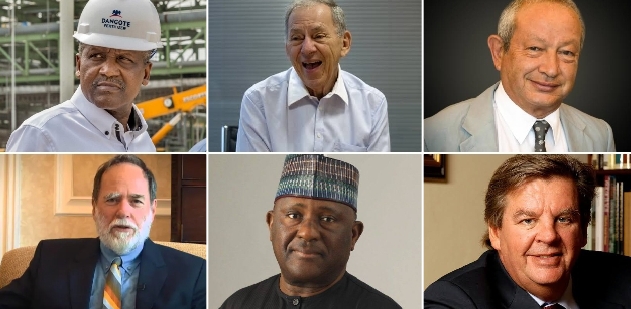
The continent of Africa has always held a fascinating mix of natural resources, entrepreneurial talent, and emerging markets that continue to draw attention from economists, investors, and the global media. In 2026, the billionaire landscape in Africa is particularly notable for the impressive wealth gains of key figures from Nigeria, South Africa, and Egypt.
While the official Forbes Africa list for 2025 remains a cornerstone for understanding baseline wealth levels, the early months of 2026 have seen rapid movements in the net worth of some of the continent’s most influential business leaders.
These gains are especially visible among figures such as Aliko Dangote and Abdulsamad Rabiu, whose fortunes have surged thanks to market dynamics and strategic business expansions. By examining their profiles, the general ranking of African billionaires, and the broader continental context, a clearer picture emerges of how wealth is distributed and generated in Africa today.
Africa’s Top Billionaires: Baseline Wealth in 2025
To understand the current billionaire landscape, it is important to first examine the most recent comprehensive data available, which comes from the 2025 Forbes Africa rankings. These figures give insight into the largest fortunes before the early 2026 wealth surge. The top African billionaires in 2025, along with approximate net worth in US dollars, include:
Aliko Dangote (Nigeria) – around 23.9 billion. Dangote has long been the standard bearer for African wealth and continues to influence multiple sectors of the economy.
Johann Rupert (South Africa) – roughly 14 billion. His holdings in luxury goods, particularly through Compagnie Financière Richemont, have kept him among the continent’s elite.
Nicky Oppenheimer (South Africa) – approximately 10.4 billion. His fortune originates primarily from diamond and mining interests, reflecting South Africa’s historical position in global mineral wealth.
Nassef Sawiris (Egypt) – close to 9.6 billion. Sawiris has diversified investments spanning construction, chemicals, and telecommunications.
Mike Adenuga (Nigeria) – 6.8 billion. His wealth stems from telecom ventures such as Globacom and energy interests through Conoil.
Abdulsamad Rabiu (Nigeria) – around 5.1 billion. The founder of BUA Group, his holdings cover cement, food processing, and other industrial operations.
Naguib Sawiris (Egypt) – roughly 5 billion. His industrial conglomerate includes telecommunications and technology services.
Femi Otedola (Nigeria) – about 1.5 billion. Otedola’s energy and investment portfolios have allowed him to remain influential in the financial and power sectors.
Other billionaires, mainly from Morocco and South Africa, hold net worths in the range of 1.2 to 3.4 billion, reflecting growing diversification across North and Southern Africa.
From these figures, it is evident that Nigeria, South Africa, Egypt, and Morocco dominate in terms of billionaire numbers and aggregate wealth. Nigeria’s entrepreneurs are particularly prominent, benefiting from a combination of local market growth and international business operations.
Wealth Gains in 2026: Early Year Surge
While 2025 provides a snapshot, the first two months of 2026 have revealed a remarkable shift in the billionaire hierarchy due to market performance, especially in Nigeria. Data compiled by the Bloomberg Billionaires Index and reported by BusinessDay highlight the most significant early-year gains, which include:
Aliko Dangote – increase of approximately 2.79 billion. Dangote’s strategic investments, including the expansion of Dangote Cement and the commissioning of his oil refinery, have propelled his net worth to an estimated 30 billion in early 2026
Abdulsamad Rabiu – increase of around 2.18 billion. Strong performance in BUA Foods and other publicly listed companies have positioned him as the second-largest gainer on the continent
Naguib Sawiris – approximately 688 million. Industrial and telecom holdings have allowed consistent growth, albeit at a smaller scale compared to Nigerian counterparts
Nathan Kirsh (Eswatini) – roughly 663 million. His retail and property investments across Africa have steadily appreciated
Nicky Oppenheimer and family – about 250 million. Diamonds and mining remain profitable, though less explosive than Nigerian equities
Nassef Sawiris – 126 million. Industrial diversification ensures stability with incremental growth
Johann Rupert and family – decline of around 644 million. Currency fluctuations and stock market corrections impacted South Africa’s luxury goods market
This sequence illustrates a clear trend: the surge of Nigerian billionaires in 2026, fueled by the strong rally in Nigerian equities and business expansions, has reshaped the leaderboard and brought renewed focus to the continent’s economic potential.
Deep Dive: Profiles of Key Figures
Understanding wealth growth requires more than numbers. It demands a closer look at the human stories, strategic moves, and business ecosystems behind these fortunes.
Aliko Dangote stands as a living testament to African industrial ingenuity. Born in Kano in 1957, Dangote leveraged early exposure to trading into a sprawling conglomerate covering cement, sugar, salt, and fertiliser. His most ambitious project, the Dangote Oil Refinery, began operations in 2022 and has dramatically expanded his influence in the energy sector. The early 2026 net worth jump reflects both business performance and rising stock valuations. His story is one of consistent vision, risk-taking, and market adaptation, making him the richest individual in Africa and one of the top globally.
Abdulsamad Rabiu represents another strand of Nigerian entrepreneurial brilliance. Founder of BUA Group, he has focused on cement and food processing to meet the continent’s growing infrastructure and nutritional needs. His ascent in early 2026 signals a well-executed strategy of market penetration and capitalization on listed company performance. Rabiu embodies the modern African industrialist, whose success is tightly linked to both domestic growth and global market trends.
Other Notable Billionaires also contribute significantly to Africa’s economic story. Johann Rupert’s luxury goods empire, Nicky Oppenheimer’s mining and diamond heritage, and the Sawiris family’s industrial and telecom ventures highlight the continent’s diversified wealth generation. Mike Adenuga and Femi Otedola exemplify Nigeria’s ability to produce influential players in telecommunications, oil, and energy, reinforcing the multi-sectoral nature of billionaire wealth. Each of these individuals demonstrates how African billionaires navigate both domestic markets and international capital flows, with wealth often concentrated in industrial, resource, and luxury sectors.
Continental Wealth Context and Trends
The broader African wealth context reveals the forces shaping billionaire fortunes. Nigeria, with its fast-growing equities and industrial expansion, now hosts some of the continent’s most dynamic billionaire wealth growth. In contrast, South Africa and Egypt maintain their historical prominence through diversified investments in luxury goods, mining, construction, and telecom. Morocco, Eswatini, and other nations contribute to the aggregate number of billionaires, showing that wealth is increasingly spread across multiple economic hubs.
Key trends are evident in 2026:
Market-driven wealth gains – Nigerian equities have surged, amplifying net worth for Dangote, Rabiu, and others
Industrial expansion – Strategic investments in cement, food, energy, and oil underpin the largest gains
Diversification across sectors – Successful billionaires balance mining, telecom, construction, and consumer goods to hedge risk
Regional influence – Nigeria, South Africa, and Egypt dominate in both wealth and the number of billionaires, but emerging markets in other countries are slowly rising
The combination of strategic foresight, sectoral diversification, and market dynamics explains why the Nigerian billionaire surge is particularly pronounced this year. It also reflects broader capital-market trends and economic resilience, with a growing number of billionaires capturing opportunities created by expanding domestic consumption and infrastructural investments.
Sequence of African Billionaire Wealth in 2026
In terms of net worth and gains, the sequence of Africa’s billionaire landscape can be summarized as follows:
Aliko Dangote remains the wealthiest African in early 2026, his net worth estimated near 30 billion, driven by cement, sugar, and oil refinery expansions
Abdulsamad Rabiu is the second-largest gainer, largely propelled by BUA Foods’ performance and broader industrial strategy
Naguib Sawiris and Nassef Sawiris hold solid positions in Egypt, their wealth growing steadily due to diversified industrial and telecom portfolios.
Nicky Oppenheimer and family maintain substantial diamond and mining fortunes, reflecting South Africa’s enduring mineral wealth.
Johann Rupert experienced a slight decline in early 2026, highlighting volatility in luxury goods markets amid global economic adjustments.
Mike Adenuga and Femi Otedola continue to hold significant wealth in telecom and energy sectors, benefiting from stable cash flows and strategic investments.
Other billionaires across Morocco, Eswatini, and South Africa remain important but have relatively smaller gains in early 2026, reflecting a mix of market exposure and industrial focus.
This sequence underscores the reshaping of Africa’s billionaire leaderboard in 2026, particularly highlighting the rapid rise of Nigerian industrialists, who are benefiting from local market surges, corporate profitability, and strategic diversification.
Observations and Implications
The early 2026 wealth movements among African billionaires offer important insights:
Nigeria’s equity rally is not only generating wealth but also reinforcing the country’s status as a key economic hub in Africa.
Industrial and market-driven wealth growth continues to be a primary source of large gains, particularly in cement, oil, telecom, and food processing.
Long-standing African billionaires such as Dangote, Oppenheimer, and Rupert show that sustained vision, diversification, and global integration remain central to enduring wealth.
The concentration of billionaire wealth in a few countries highlights regional economic disparities but also underscores the potential for other emerging markets to foster billionaire creation in the coming years.
These patterns emphasize both the human and structural factors shaping African wealth, highlighting that billionaire status is rarely accidental but the product of strategic planning, resilience, and capitalization on both domestic and global trends.
Closing Thoughts
Africa’s billionaire landscape in 2026 is defined by strong gains in Nigeria, steady growth in Egypt, and more nuanced performance in South Africa. Aliko Dangote remains the uncontested wealth leader, while Abdulsamad Rabiu has emerged as the continent’s most impressive early-year gainer. Naguib Sawiris, Nassef Sawiris, Oppenheimer, Adenuga, and Otedola continue to maintain prominence through diversified holdings and industrial foresight.
The combination of market performance, strategic expansion, and sectoral diversification ensures that the continent’s billionaires remain influential forces in Africa’s economic development. As the year unfolds, continued tracking of equity markets, industrial growth, and individual company performance will likely determine shifts in Africa’s billionaire rankings, making 2026 a remarkable year for observing wealth creation in action.
Africa’s billionaire story is ultimately a story of vision, strategy, and timing, reflecting both the human ambition of its key players and the economic dynamism of the continent.



Discussion about this post