
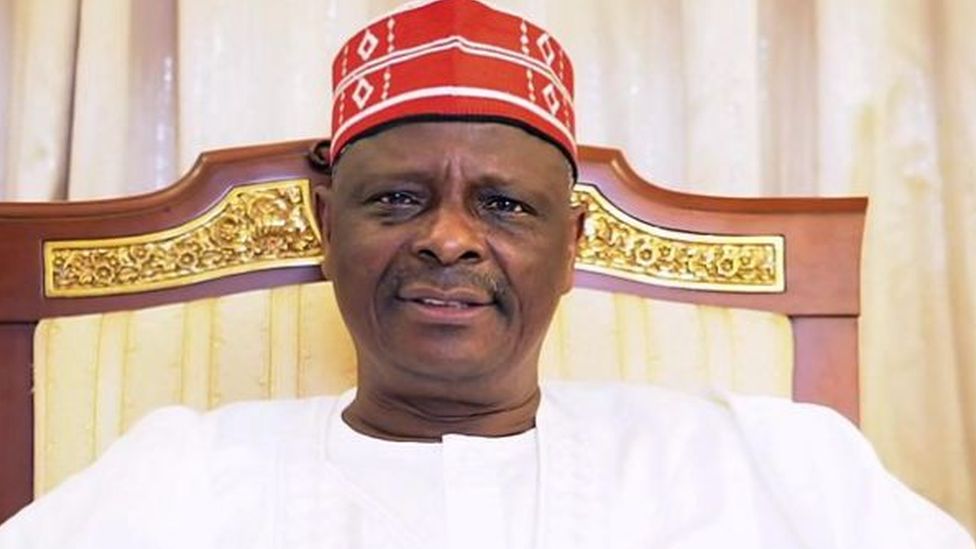
News that a former Kano State governor and presidential candidate of the New Nigeria Peoples Party in the 2023 general election, Senator Rabiu Kwankwaso, was referenced in a proposed United States bill prescribing visa restrictions and asset freezes drew measured reactions across political circles in Nigeria.
The proposed legislation, titled the Nigeria Religious Freedom and Accountability Act of 2026, seeks to address concerns around religious persecution, and it listed certain Nigerian figures for possible sanctions.
For some observers, the development appeared surprising given Kwankwaso’s long public record within Northern Nigerian politics and his identity as a Muslim politician whose career has largely revolved around governance, party competition and federal engagement.
A closer look at the sequence of events shows that the reference to him followed comments he made on November 2, 2025, after the United States designated Nigeria as a Country of Particular Concern over alleged religious persecution.
While several public officials adopted cautious or muted responses, Kwankwaso issued a statement urging a broader understanding of Nigeria’s security challenges and warning against interpretations framed strictly along religious lines.
“I have noted with increasing concern the heightened pronouncements on Nigeria by President Donald Trump,” he said.
“It is important to emphasise that our country is a sovereign nation whose people face different threats from outlaws across the country.
“The insecurity we face does not distinguish based on religious, ethnic, or political beliefs.”
He further called for practical collaboration rather than punitive measures, stating, “the United States should assist the Nigerian authorities with better, cutting-edge technology to tackle these problems, rather than posing a threat that could further polarise our country.”
“This is an important moment where we should emphasise unity of belonging over division. God bless Nigeria.”
Following that intervention, one of the sponsors of the U.S. proposal responded publicly, alleging complicity in religious repression and referencing the introduction of Sharia law in Kano State during Kwankwaso’s first term in office.
“Governor, do you care to comment on your own complicity in the death of Christians? You instituted Sharia law. You signed the law that makes so-called blasphemy punishable by death.”
The exchange brought renewed attention to events in Kano State in 2000, when agitation for the adoption of Sharia law intensified across several northern states.
Historical records from that period show that the Kano State House of Assembly considered a Sharia bill amid significant public mobilisation and clerical advocacy.
Accounts from that time indicate that the bill was introduced as a legislative initiative rather than an executive proposal, although it ultimately received gubernatorial assent.
During the period of debate, public pressure was high, and the atmosphere across parts of northern Nigeria was charged, with large gatherings and demonstrations organised in support of Sharia implementation.
Reports from the era suggest that the governor at the time emphasised that enforcement must remain within the framework of state authority and cautioned against vigilantism.
Public statements attributed to him stressed that non-Muslims should not be coerced and that penalties must follow due process under established legal structures.
Despite those assurances, the Sharia introduction remained politically consequential and became a defining issue in subsequent elections within the state.
In 2003, Kwankwaso lost his re-election bid to a rival widely regarded as enjoying stronger backing from influential clerical networks.
Political analysts at the time interpreted the outcome as reflecting internal divisions within the political elite and differing expectations over the depth and pace of Sharia implementation.
Years later, the resurfacing of the Sharia episode within an international legislative debate illustrates how earlier domestic decisions can acquire new meanings in foreign policy contexts.
The proposed U.S. bill remains within the legislative process, which involves committee reviews, debates and possible amendments before any final enactment.
Comparative legislative data show that many country-specific bills introduced in foreign parliaments do not proceed beyond preliminary stages.
Within Nigeria, reactions to the development have varied, with some viewing it as an external overreach and others describing it as part of broader diplomatic exchanges.
Security experts frequently note that Nigeria’s conflict landscape includes insurgency, banditry, communal clashes and criminal violence, affecting communities across religious and ethnic lines.
Human rights groups, on the other hand, have documented incidents they describe as involving religious dimensions, urging greater protection for vulnerable populations.
Against this backdrop, the controversy surrounding Kwankwaso highlights the intersection between domestic political history and international human rights advocacy.
It also reflects how public criticism of foreign policy decisions can influence bilateral perceptions, particularly when statements are widely circulated.
Observers say that in contemporary politics, expressions of dissent, even when framed in diplomatic language, can attract scrutiny beyond national borders.
For Kwankwaso, the episode adds another layer to a career that has included state leadership, federal appointments and presidential ambition.
Whether the proposed sanctions advance or lapse within the U.S. legislative system, the discussion has already underscored the sensitivity of issues touching on religion, sovereignty and security.
As Nigeria approaches future electoral cycles and continues to grapple with complex security challenges, debates over accountability and national image are likely to persist.
In that context, the situation presents a case study in how constructive dissent, particularly on matters of foreign designation and domestic policy, can carry consequences that extend beyond the original statement.
The unfolding developments therefore remain a subject of political and diplomatic observation, both within Nigeria and abroad.



Discussion about this post