
Across several international airports and border checkpoints, law enforcement agencies continue to uncover drug trafficking routes linking Nigerian couriers to wider global narcotics networks.
Despite repeated arrests and seizures, investigators say the pipeline moving drugs across borders remains active, driven by organised networks that operate through layered supply chains.
Recent incidents across Asian cities have again highlighted the scale and complexity of these cross-border operations involving Nigerian nationals.
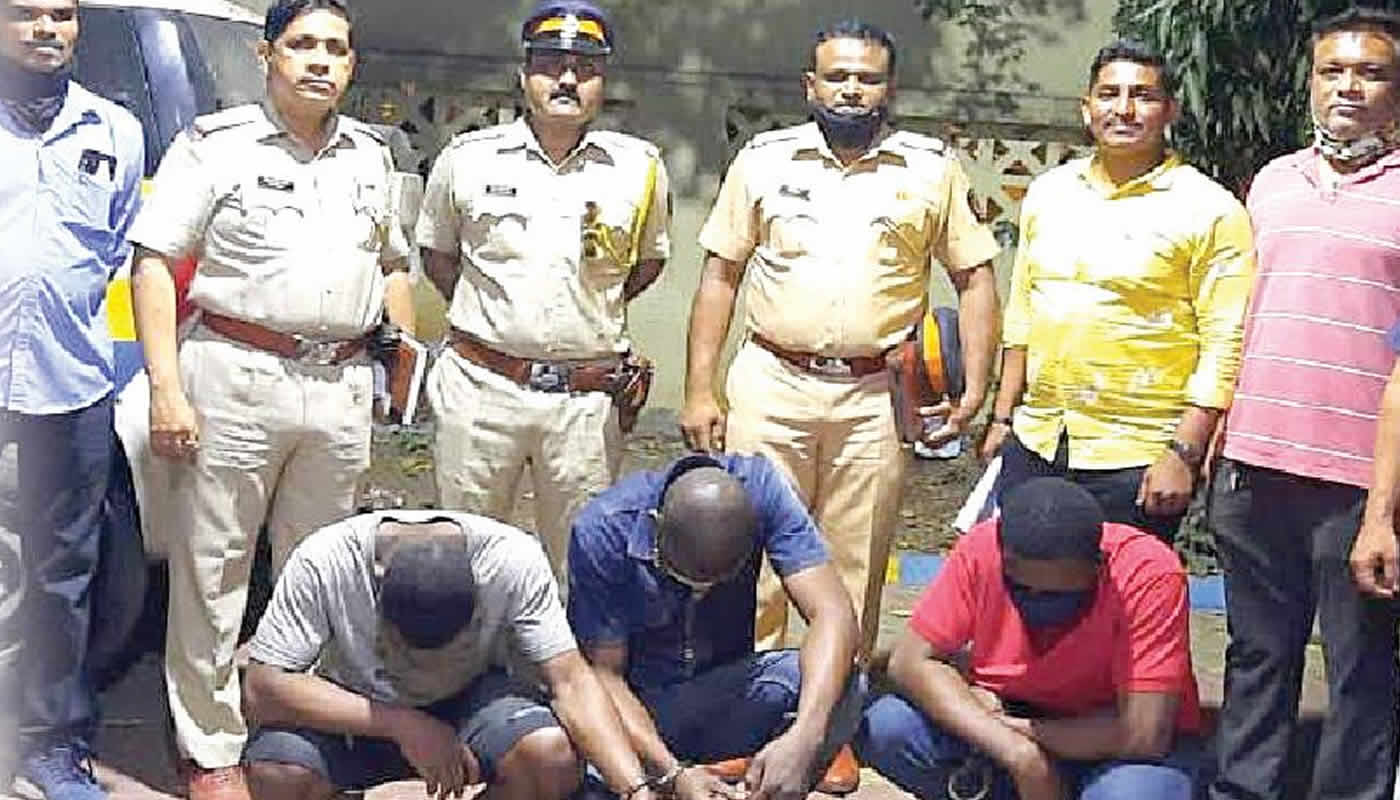
One such incident occurred in Delhi, India’s capital territory, where officers from the Crime Branch concluded a surveillance operation that had been ongoing for several months.
The investigation ended with the arrest of two Nigerian nationals and the seizure of cocaine and 3,4-Methylenedioxymethamphetamine tablets estimated to be worth nearly Rs 5 crore.
Authorities said the operation followed the movements of a suspect who frequently changed locations in order to avoid detection.
Investigators later disclosed that the network operated through a structured system where couriers rarely interacted directly with the organisers coordinating shipments.
“This was an intelligence-led operation,” said the deputy commissioner of police (crime), Harsh Indora.
According to police reports, communications within the network were conducted using foreign phone numbers while delivery points were frequently altered to avoid tracking.
Authorities believe that the arrangement allowed senior members of the network to remain insulated from direct involvement in the physical movement of narcotics.
The Delhi arrest was not the only development pointing to the scale of the network.
Earlier in November 2025, Indian authorities announced a major crackdown on drug syndicates operating across multiple states.
The operation led to the arrest of 50 Nigerian nationals in Delhi following months of surveillance that extended to Hyderabad, Bengaluru, Goa and Kerala.
Investigators deployed more than 100 officers to track suspected traffickers who were believed to be distributing methamphetamine and cocaine through encrypted messaging platforms.
Authorities reported that the syndicate used courier services and drop-off points designed to resemble routine delivery operations.
Records obtained during the investigation suggested that nearly 2,000 individuals had received drugs through the network.
Investigators also traced financial transactions linked to the operations.
Police sources said proceeds from drug sales were transferred through informal money transfer systems before being converted into commercial goods such as garments and shipped abroad.
Officials estimated that a single network operator had moved about Rs 15 crore through these channels.
Law enforcement agencies say such cases demonstrate how trafficking networks operate beyond the level of individual couriers.
Earlier convictions also illustrate the long legal trail associated with international drug crimes.
In September 2025, an Indian court sentenced a Nigerian national to 10 years in prison in connection with a heroin trafficking case that dated back more than a decade.
Authorities said the narcotics were concealed in everyday items including handbags and cardboard packaging.
Officials described the conviction as an important enforcement outcome but noted that dismantling the entire network remained a continuing challenge.
Another arrest during the same period involved a Nigerian woman travelling from Delhi to Mumbai.
Investigators said narcotics were concealed inside common food packages including oat cartons and beverage containers.
Officers tracked the suspect for nearly 50 kilometres before carrying out the arrest.
“Acting on specific intelligence, officers mounted surveillance late at night,” officials of the Directorate of Revenue Intelligence confirmed.
Separate investigations have also taken place in Bengaluru.
Police in the city arrested a Nigerian national identified as Uche Ndudi following a tip-off that he was allegedly distributing cocaine in parts of the city.
Authorities said cocaine valued at about 50.6 lakh was recovered during the arrest.
“Further investigation is underway to ascertain the source of the drugs and identify possible links to a wider drug network,” police said.
Beyond the arrests, analysts say the persistence of such cases reflects broader structural issues.
A global drug use and prevention advocate, Aliyu Usman, explained that many individuals drawn into drug trafficking networks begin their exposure to drugs at a young age.
“There is no doubt that young people are the most vulnerable,” he said.
According to him, experimentation and peer influence often begin during teenage years and continue into early adulthood.
“It is very rare to see someone start using drugs for the first time at 35. They usually start much earlier,” Usman stated.
He added that economic conditions can also influence the decisions of individuals who agree to transport drugs.
“If you ask a commercial driver to move a carton of tramadol from Abuja to Kano and you pay him N100,000, that is more than what he would earn transporting passengers in a day,” he said.
Usman noted that many trafficking routes overlap with corridors used for other illicit activities.
“These are areas where the government has little or no control,” he explained.
Law enforcement authorities in India also confirmed that deportations have followed some of the arrests.
Reports indicated that 32 Nigerian nationals were deported after investigations into drug peddling operations in Delhi.
Investigators later revealed that several suspects were linked to a network allegedly coordinated by an individual known as Nick.
Officials said the organiser was believed to have more than 100 associates working within Delhi alone.
Analysis of electronic devices recovered from suspects indicated that the network had thousands of clients.
Authorities said payment records suggested that more than 3,000 buyers were linked to the network.
Investigators also discovered that legitimate businesses were sometimes used to disguise the movement of illegal funds.
In one case, a publishing company was reportedly linked to money transfers connected to drug transactions.
Officials also found that a garment company registered on paper had processed large financial transfers believed to be related to drug sales.
Experts say these cases reveal how drug networks operate through multiple layers.
The executive director of the Reformed Drug and Substance Abuse Initiative, Bello Bolyam, said research shows that drug use in Nigeria is concentrated among younger populations.
“Most drug use starts between the ages of 15 and 25,” Bolyam explained.
He noted that the period between the mid-twenties and early thirties often records the highest level of active drug consumption.
According to him, this age group also overlaps with sections of the population facing economic pressure and unemployment.
“When youth unemployment is over 30 per cent, drug use becomes both an escape and, for some, a survival strategy,” he said.
Bolyam added that recruitment into trafficking networks often happens gradually rather than through direct cartel contact.
“People are usually introduced to drugs by friends or family members,” he said.
He explained that some individuals eventually become couriers or small-scale distributors as part of a cycle linked to addiction or financial need.
“There is a clear user-to-courier pipeline,” Bolyam said.
Authorities in Nigeria say enforcement efforts continue alongside preventive strategies.
The chairman of the National Drug Law Enforcement Agency, Brigadier General Mohamed Marwa (retd.), recently highlighted the need for broader interventions.
“This approach goes far beyond crop substitution,” Marwa said.
According to him, development programmes in vulnerable communities are part of efforts aimed at reducing the economic conditions that allow drug production and trafficking to thrive.
“Alternative development is not just a drug control initiative; it is a people-centred development intervention designed to uplift communities, strengthen national security, and secure Nigeria’s future,” he said.
Security analysts say that without coordinated economic and enforcement strategies, the global drug economy will remain resilient.
A criminologist, Isreal Ereola, said deeper intelligence and financial investigations are necessary to disrupt the networks.
“Arrests and seizures have not significantly reduced involvement because the big shots are often insulated,” he said.
According to him, enforcement strategies must focus on identifying the organisers and financial controllers behind drug operations.
“Financial crime investigation must also take centre stage, because once you disrupt money flow, operations stall,” Ereola said.
Across continents, investigators say the pattern remains similar.
While couriers are often the most visible actors in trafficking cases, the larger networks coordinating supply and finance frequently remain hidden behind complex operational layers.
For authorities tracking the trade, the challenge lies not only in intercepting drugs but also in dismantling the structures that sustain the global flow.




Discussion about this post