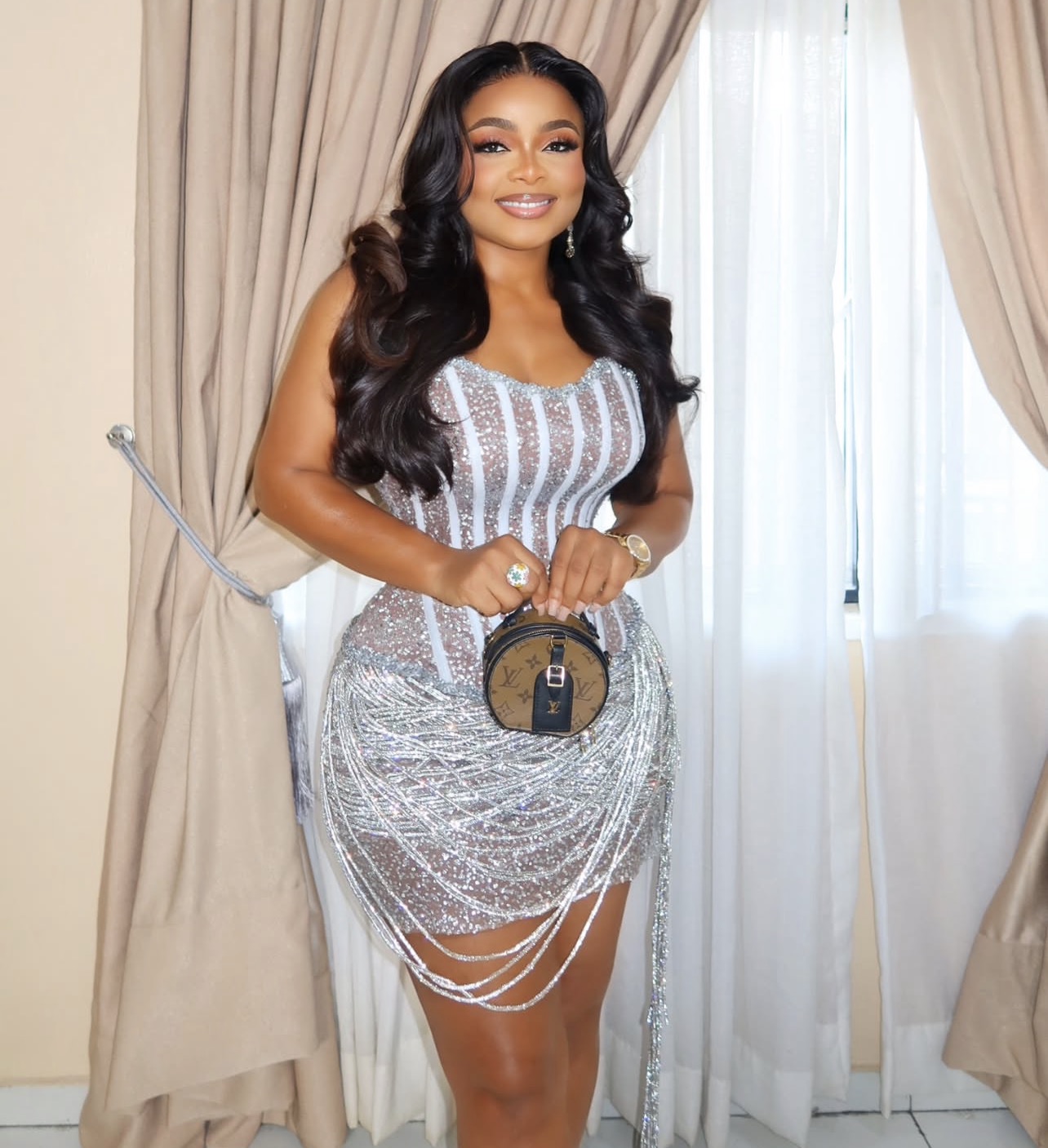
The success of a creative project can sometimes come with challenges that extend far beyond the work itself. For filmmakers who share their productions online, protecting what they have created can become just as demanding as making the project in the first place. And for Nollywood actress and filmmaker Bimbo Ademoye, the past few days have brought another reminder of how complicated things can get when ownership, recognition and earnings come into question.
Bimbo Ademoye’s Frustration Boils Over, Offers ₦1m Reward

On November 9, 2026, Bimbo Ademoye took to Instagram to express her frustration after YouTube flagged her movie, My 30th Wedding, over a copyright claim involving its soundtrack. A screenshot shared by the actress showed that YouTube had detected copyright-protected audio in the movie. The disputed track was identified as We Can Take It (My 30th Wedding), and the copyright notice rendered the video ineligible to earn revenue.
Bimbo, however, disputed the claim, insisting that she owned the song, which was produced for her by musician Progress. Clearly unhappy with the development, the actress offered a ₦1 million reward to anyone who could help her identify and locate the person behind the claim. She wrote:
“I’m sick and tired of this. I have 1 MILLION NAIRA FOR ANYONE WHO CAN LOCATE THIS PERSON FOR ME. I will not rest until I catch this one. A movie I spent my blood on.”
She questioned why someone would attempt to claim ownership of a song she had paid for and accused the individual of trying to benefit from her hard work. Bimbo also alleged that the song had been uploaded about three weeks earlier, suggesting that the move was targeted at her production.
She called on her followers to report the account across different platforms and appealed to YouTube and YouTube Africa to intervene. The actress further made it clear that she was determined to find the person, insisting that she would not allow anyone to claim the earnings from a project she had worked hard to produce.
Relief As Bimbo Announces Restoration Of Movie’s Monetisation


The situation took a positive turn shortly after Bimbo’s public complaint. In another Instagram update, the actress announced that monetisation had been restored on My 30th Wedding. She announced:
“We’re back on guys. God is good. Thank you Jesus. Our monetisation is back on.”
Bimbo expressed gratitude to those who supported her during the dispute, particularly her industry godmother, Uduak Isong, whom she credited with immediately stepping in to help. She also appreciated Sir Fela and Progress for their assistance, thanking the musician for taking swift action.
However, getting her movie’s monetisation back did not mean she intended to let the matter go. In the same update, Bimbo maintained that the ₦1 million reward was still available to anyone who could provide information that would help her physically locate the person involved. She explained that allowing the incident to slide could encourage similar actions against other filmmakers.
For Bimbo, the issue was no longer just about getting her movie back to earning revenue. She wanted to make it clear that such actions should not be treated as acceptable.
Bimbo Rejects Apology Over Copyright

On November 10, the person at the centre of Bimbo’s ₦1 million reward announcement finally reached out to the actress with an apology.
Identified as Mr Enemuo, he addressed the actress in an Instagram post, expressing regret over the situation involving the song We Can Take It (My 30th Wedding), which had triggered the copyright claim on her movie.
In his apology, Enemuo admitted uploading the song and explained that his intention was to promote the sound and help it reach a wider audience, rather than infringe on Bimbo’s rights or cause her financial loss. He wrote:
“My intention in uploading the song was to help share and promote the beautiful sound with a wider audience, not to infringe on your rights or cause you any distress.”
He further explained that the upload had triggered a YouTube Content ID claim through the music distribution platform responsible for releasing the song. Taking responsibility for the situation, Enemuo said he had taken the song down from streaming platforms and expected it to be completely removed within 24 to 48 hours. He also promised to contact the distributor to ensure that no trace of the sound’s Content ID remained.
However, his apology did little to calm Bimbo’s anger. In her response, the actress dismissed his explanation that he only wanted to help her reach a wider audience, questioning the logic behind the claim. She questioned:
“You claimed you wanted to help me reach a wider audience, I’m not sure you thought that statement through, you wanted to use your 250 subscribers to help me reach a wider audience with my almost 2 million subscribers?.”
Bimbo also questioned why he chose that particular song when another track from the movie, which she considered more popular, could have attracted even more attention. She stated:
“You specifically took the sing [sic] i didn’t properly copyright. Of all the songs in the movie, why didn’t you take hammerboi’s song, if anything that’s the viral one I’d have loved to go even more viral song, let me guess, because you know say Edo boy go show you sege abi.”
More importantly, she wanted to know why an action supposedly intended to promote her work ended with someone attempting to claim her earnings. She queried:
“OK After you ‘helped me reach a wider audience’ why did you try to claim my earnings? Why did you monetise it and have me demonitised?.”
The actress admitted that she had taken several breaths and counted from one to ten in an attempt to calm herself before responding, but maintained that she was still angry. She also warned Enemuo against mistaking her silence for weakness, particularly when it came to protecting her creative work. “I’m on you son! It’s not a threat, it’s a promise,” she declared.
Beyond addressing Enemuo, Bimbo also used the post to respond to people who had questioned her approach to copyright protection, suggesting that she was careless about securing her productions. She included screenshots of separate apology messages from individuals whose YouTube channels had faced consequences after she took copyright action over the use of her content.
One of the messages involved an unauthorised upload of her movie Broken Hallelujah on a channel called Stars Updates and Gist Hub. The person behind that upload apologised, admitting that the action had resulted in a copyright strike and the termination of the channel.
Another message came from someone who acknowledged using one of her short movie clips as a voice-over and apologised for the impact of the action. Making it clear why she included the screenshots, Bimbo wrote that they were for those accusing her of using the controversy for attention or failing to copyright her work.
According to her, the messages showed that she had taken steps to protect her productions and had previously acted against people who used her content without permission. She warned critics against making assumptions about her efforts to safeguard her intellectual property, insisting that she was not careless with the work she had invested so much in.
Bimbo Ademoye’s Previous Copyright Battles


The latest incidents are not the first time Bimbo has spoken publicly about copyright issues affecting her YouTube productions. In August 2025, the actress announced that her movie To Be a Friend had been removed from YouTube following a copyright issue involving its soundtrack.
At the time, the film had reportedly attracted nearly six million views before it was taken down. Bimbo expressed disappointment over the development and asked her supporters to help when the movie was eventually reuploaded.
A few months later, another copyright dispute emerged involving her film Where Love Lives, which was released on YouTube on December 24, 2025. On January 24, 2026, Bimbo raised an alarm after discovering that the movie’s monetisation had been affected by a copyright claim involving a song she said she fully owned with the artiste’s approval.
The film had already amassed more than 18 million views at the time, making the situation particularly frustrating for the filmmaker. She threatened legal action over the incident and called for the removal of the disputed content. However, on January 29, she announced that monetisation had been fully restored, revealing that the movie had reached 19 million views.
Her latest experience with My 30th Wedding therefore comes after previous encounters with similar problems involving her productions.
Conclusion
For filmmakers, completing a movie is only one part of the journey. There is also the task of ensuring that the work remains protected long after it reaches its audience.
And as the entertainment industry continues to depend on digital platforms, questions about ownership, recognition and the value of creative labour remain difficult to ignore. For Bimbo Ademoye, the conversation is clearly not one she intends to walk away from quietly.