

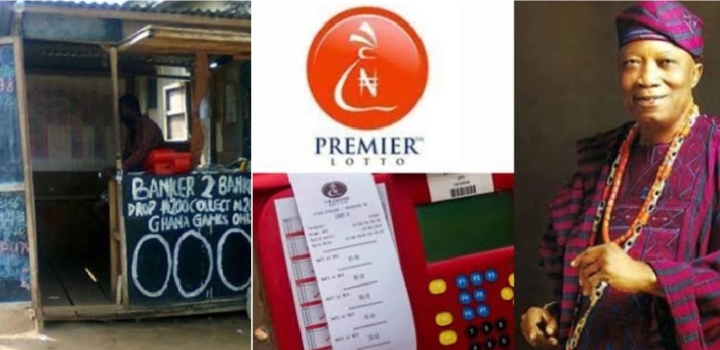
The year was 1971, and Lagos throbbed with contradictions. The city had just begun recovering from the Nigerian Civil War (1967–1970), but its streets already carried the restless pulse of ambition. The air smelled of petrol fumes, roasted corn, and the sea. Traders at Balogun Market haggled with the precision of drummers, while danfo buses, painted in yellow and black, rattled across bridges that connected old Lagos Island to its sprawling mainland.
In this vibrant chaos, luck became a language. Workers earning meagre salaries in the new oil-rich economy searched for shortcuts to fortune. Bars echoed with stories of sudden wealth. Pools betting slips circulated in smoky corners, offering the promise that, with the right numbers, tomorrow could be different.
It was into this restless atmosphere that Kessington Adebukunola Adebutu placed his audacious gamble. A wooden table, a handful of slips, and the trust of his neighbors — nothing in that moment suggested empire. Yet, in hindsight, the decision he made in 1971 would not only transform his own life, but engrave his nickname, Baba Ijebu, into the lexicon of Nigerian culture.
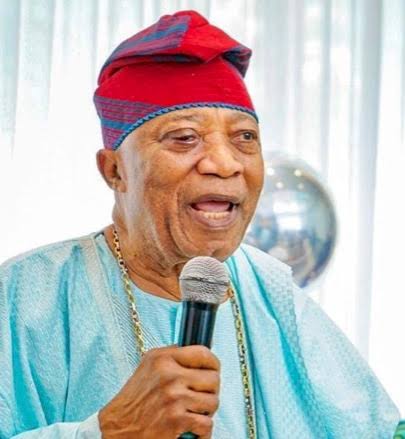
The Early Life of Kessington Adebutu
Born on October 24, 1935, in Iperu-Remo, Ogun State, Adebutu’s upbringing was as humble as it was formative. His Ijebu roots carried a long tradition of entrepreneurial ingenuity — the Ijebu were known across Nigeria for their thrift, enterprise, and communal solidarity. These cultural values would later form the foundation of his risk-taking in the gambling business.
As a child, Adebutu learned the art of small trading and customer relations. He worked in menial roles, including as a sales boy, long before the glimmer of pools betting ever crossed his path. His father was a disciplinarian, and his mother, a woman of quiet resilience, instilled in him a sense of endurance.
By the 1950s and ’60s, Lagos had become the magnet for ambitious young men like Adebutu. The oil boom was starting, and with it came both opportunity and inequality. Adebutu drifted through jobs, first learning from established businessmen, then venturing into trading on his own. He absorbed lessons about trust, word of mouth, and credibility — intangible assets that would later define his rise.
The 1971 Pools Betting Gamble
The defining moment came in 1971. Alongside his close ally, Chief Adebayo Ayoku, Adebutu co-founded Face-to-Face Pools Betting. The name itself hinted at its philosophy: no hidden dealings, no elaborate structures, just direct interaction between bettor and bookmaker.
Imagine it: a small corner of Lagos, a crowd of curious faces, and Adebutu’s table stacked with slips of paper. Men in office shirts rolled up their sleeves; women returning from markets leaned in curiously. Bets were modest — a few naira, often the equivalent of bus fare or a market purchase. Yet the hope attached to each slip was immense.
Adebutu’s gamble was not only financial but social. Betting was still stigmatized, viewed by elites as a pastime of the desperate. Yet he wagered on two things: that Nigerians would embrace pools betting as both entertainment and aspiration, and that his personal reputation for fairness would keep them coming back.
It worked. Winners were paid swiftly and publicly. Skepticism melted into loyalty. People began to speak of him as a different kind of bookmaker — one who could be trusted. In a city where scams were plentiful, trust was revolutionary.
Lagos Society of the 1970s
To understand why Adebutu’s gamble succeeded, one must step into the soul of Lagos in the 1970s. The civil war had just ended, and Nigeria was entering the oil boom. A new middle class emerged — clerks, civil servants, and factory workers — but inflation and inequality gnawed at their salaries. For many, the future seemed uncertain, yet tantalizingly full of possibility.
Politics was unstable. The military still ruled, and power shifted in barracks more than in ballot boxes. Yet Lagos remained the cultural heartbeat of Nigeria. Highlife music blared from radios, and nightclubs pulsed with Fela Kuti’s Afrobeat. In this atmosphere, the idea of sudden, miraculous wealth carried irresistible appeal.
Pools betting fit perfectly into this milieu. It was cheap enough for anyone to try, but the winnings could change lives. Adebutu’s decision to make betting accessible — even to the low-income classes — was an act of market genius. He gave ordinary Lagosians a taste of chance, and in a city that never slept, chance was intoxicating.
Evolution of Face-to-Face Pools Betting
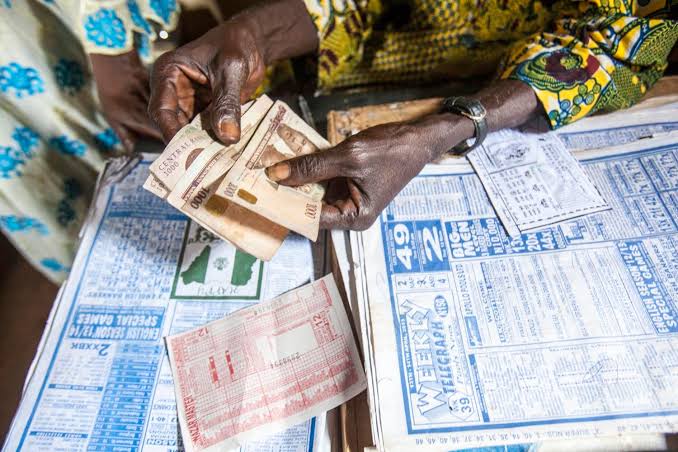
What began as a table operation grew steadily. Face-to-Face Pools Betting became a network. Agents popped up in neighborhoods, running small betting shops with chalkboards, slips, and eager crowds.
Adebutu insisted on discipline: agents must pay out winnings immediately, and no bet could be “lost” in the system. This transparency earned him fierce loyalty. Lagosians began to regard the brand not as a faceless enterprise, but as an extension of Adebutu himself — a man whose word was as good as money.
By the late 1970s, Face-to-Face had evolved into a small institution. Its growth paralleled the city’s own expansion, weaving itself into the fabric of daily life.
The Birth of “Baba Ijebu”
Nicknames in Lagos are rarely accidental. Adebutu’s Ijebu heritage soon became the shorthand by which his enterprise was known. Patrons affectionately called him “Baba Ijebu” — the fatherly figure from Ijebu who dispensed fortune.
The name stuck, not because of branding, but because it resonated with the way Nigerians personalize institutions. Banks, buses, even football clubs acquire human names in Lagos slang. Baba Ijebu became less a business name and more a cultural archetype — the wise elder who gives you a chance at luck.
By the 1980s, the nickname had eclipsed the official brand. The people had spoken, and a cultural icon was born.
Expansion, Competition, and Survival in the ’80s and ’90s
The 1980s brought turbulence. Military coups, economic recessions, and the collapse of the oil boom created hardship. Yet hardship only fueled demand for pools betting. For many, Baba Ijebu was not merely a game but a survival strategy — a slim shot at escaping poverty.
Competition emerged as other betting companies tried to replicate the model. Some flourished briefly but lacked the trust and discipline that Adebutu had ingrained. Corruption and unpaid winnings tarnished rivals, while Baba Ijebu thrived on consistency.
By the 1990s, as Nigeria navigated dictatorship under General Sani Abacha, the betting empire had become resilient. Even in times of political darkness, Nigerians still gathered in shops and corners to play their numbers. Hope, it seemed, could not be silenced.
Incorporation of Premier Lotto Limited in 2001
After decades of informal dominance, Adebutu formalized his empire. In 2001, he incorporated Premier Lotto Limited — the official company behind the name everyone already knew: Baba Ijebu.
This move professionalized operations, giving structure to a business that had long thrived on grassroots networks. By then, the company commanded 200 principal agents and over 16,000 sales representatives, covering nearly every corner of western Nigeria.
Premier Lotto wasn’t just a company; it was an institution. For millions, the sight of its slips and kiosks was as familiar as that of buses or markets. Adebutu, the man who once stood behind a wooden table in 1971, had built an empire of chance.
Cultural Symbolism of Baba Ijebu

Few Nigerian institutions have infiltrated popular culture the way Baba Ijebu has. In music, from Fuji to Afrobeats, artists reference it as shorthand for luck, risk, or sudden wealth. In slang, “to play Baba Ijebu” became synonymous with gambling itself.
Politically, its reach was undeniable. Politicians, especially in Lagos and Ogun, understood that Baba Ijebu was more than a company; it was a network of ordinary Nigerians. Betting slips became part of street politics, part of everyday conversations about fortune and fate.
For many families, Baba Ijebu symbolized both aspiration and addiction. It was the place where dreams collided with reality. Sometimes those dreams paid off; often they didn’t. But its presence was constant, woven into the rhythm of Nigerian urban life.
The Legacy of the 1971 Gamble
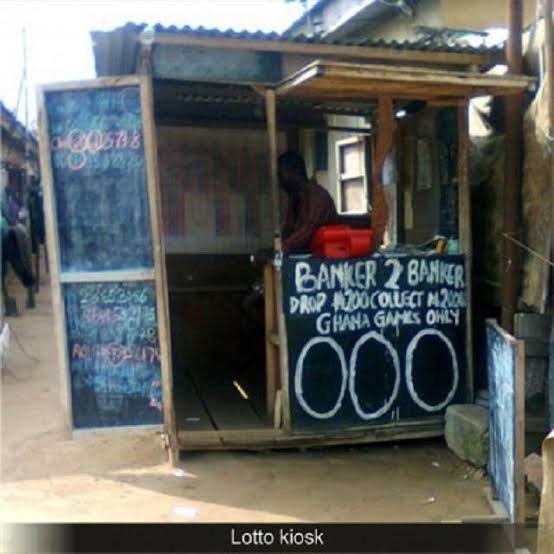
Looking back, the gamble of 1971 was deceptively small. A few slips, a wooden table, and the courage to trust strangers. Yet from that gamble emerged one of Nigeria’s most enduring cultural icons.
Kessington Adebutu, now revered not only as a businessman but also as a philanthropist, proved that fortune in Nigeria is rarely the product of chance alone. It is the marriage of risk, timing, and integrity.
Today, Baba Ijebu remains a household name — whispered in markets, blasted from radios, etched into songs, and scribbled on slips of hope. It is more than a lottery; it is a metaphor for the Nigerian spirit itself: resilient, restless, and forever chasing possibility.
Discussion about this post