

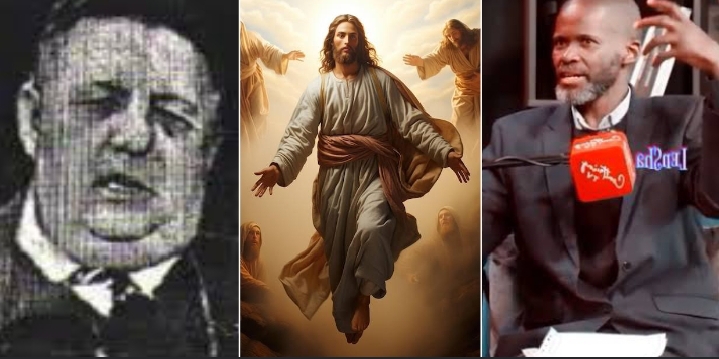
It began as a whisper, a small rumor in Lagos’ sprawling Ikorodu district. By morning, it had erupted across WhatsApp groups in Abuja, Port Harcourt, and beyond. Pastor Joshua Mhlakela, a South African preacher, claimed that Jesus would return on September 23–24, 2025.
He did not whisper this prediction into a pulpit; he recorded it for millions to see. In his video, Mhlakela’s eyes shone with urgency as he described visions of angels and celestial judgment, insisting the end of days was near.
Across Nigeria, the video sparked heated debates. Some believers abandoned social media and retreated into their homes, spending hours in prayer and fasting. Others scrolled through feeds in disbelief, laughing at what they called “yet another apocalypse hype.” And yet, beneath both fear and skepticism, a common pulse ran through the nation—a collective reckoning with mortality, faith, and the unknown.
For those who remember 1988, the parallels are uncanny. That year, Edgar C. Whisenant, a former NASA engineer, predicted the Rapture between September 11 and 13.
This article traces the echoes of these events, contrasting 1988 with 2025, exploring human responses, societal conditions, and the ways in which prophecy continues to capture Nigeria’s imagination.
1988—Faith in a Time of Uncertainty
The Nigeria of 1988 was turbulent. Military rule under General Ibrahim Babangida dictated political life, and the country wrestled with economic challenges spurred by structural adjustment programs. Hyperinflation, widespread corruption, and frequent fuel shortages made daily life precarious.
Amid this unrest, religion became a source of stability. Pentecostalism was on the rise, evangelical movements were gaining ground, and prophecy-driven teachings were drawing large congregations. Enter Edgar C. Whisenant. A NASA engineer turned religious author, he calculated that the Rapture would occur between September 11 and 13, 1988. His reasoning involved numerology, interpretations of biblical prophecy, and an intricate chronology of world events.

In Lagos, Pastor Sunday Okoro, who ran a medium-sized church in Yaba, recalls the time vividly. “People came from all over the city,” he said. “We had special prayers every night. Families fasted. The anticipation was like nothing I’d ever seen. Even those who were usually skeptical joined in, just to be sure.”
Bookstores in Lagos, Ibadan, and Port Harcourt reported unexpected spikes in demand for Whisenant’s book. Copies were sold alongside Bibles and devotional texts, often read aloud in church gatherings. The discourse was not only religious; it spilled into homes, marketplaces, and schools. Even high school students debated the Rapture during breaks, comparing signs in the news to biblical prophecy.
Yet when September 13 passed, the world remained unchanged. Lagos was still Lagos; Abuja was still bustling with traffic; families sat down for dinner as usual. Reactions varied: some wept quietly, others laughed nervously, while a few quietly shelved their faith in date-setting forever. This failure did not eradicate belief but reshaped it, embedding lessons about human interpretation of divine timing.
The Seeds of Skepticism and Reflection
In the aftermath of 1988, Nigerian churches grappled with questions: How could so many have misinterpreted scripture? Was prophecy itself flawed, or were humans simply reading it incorrectly? Theological discussions intensified. Scholars and pastors began emphasizing scriptural warnings that “no one knows the day or hour” (Matthew 24:36), stressing preparedness over prediction.
For ordinary Nigerians, the experience had a profound cultural impact. Discussions about the Rapture became part of communal memory. Families passed stories from generation to generation: how their parents fasted, prayed, or anxiously counted the days. Even in jest, the 1988 Rapture shaped humor, literature, and storytelling.
Yet some, particularly younger believers, found renewed purpose. “It wasn’t the failure that mattered,” says Chinedu, a Lagos businessman who was 14 at the time. “It was the hope, the reflection, the questions about life, faith, and what we were doing with our time.”
2025—The Digital Prophecy
The Nigeria of 2025 is unrecognizable compared to 1988. Democracy, digital connectivity, and global engagement define the era. Yet human anxieties endure: inflation, insecurity, social inequality, and political unrest remain constant sources of tension.
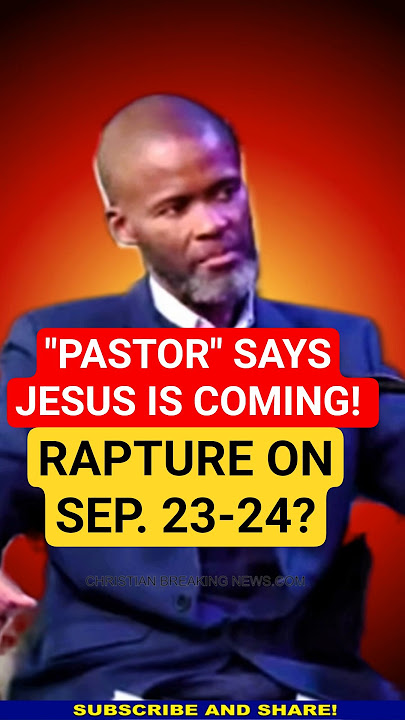
Pastor Joshua Mhlakela’s prediction spread instantly via WhatsApp, Facebook, Instagram, TikTok, and YouTube. The speed of dissemination created unprecedented visibility. Unlike in 1988, there were no geographic limits; Nigerian diasporans in London, Toronto, and New York joined the conversation simultaneously. Hashtags like #Rapture2025 and #JesusIsComing trended within hours.
Religious leaders responded quickly. Some endorsed the message, warning congregations to repent. Others publicly rejected it as unfounded, emphasizing faith over speculation. Media outlets covered the debate, interviewing theologians, skeptics, and lay believers. Online forums became battlegrounds of belief and skepticism, and memes mocking the prediction proliferated as rapidly as messages of devotion.
The Social Context—Then and Now
The 1988 Rapture and 2025 predictions share an essential trait: they emerge during periods of national tension. In 1988, military rule, economic instability, and civil unrest created fertile ground for apocalyptic anticipation. Whisenant’s predictions offered not only spiritual hope but also a psychological respite—a framework to understand chaos.
In 2025, the context has shifted but remains charged. Democracy, social media, and global awareness shape public engagement. Nigerians are more informed but also more exposed to misinformation. The proliferation of prophecy across platforms mirrors the acceleration of anxiety: digital virality amplifies both devotion and skepticism, creating real-time societal experiments in belief.
Churches and community leaders now contend with a dual challenge: nurturing faith while mediating the risks of misinformation and panic. The public discussion has moved beyond pulpits into tweets, TikTok clips, and viral YouTube sermons, transforming prophecy into a participatory, nationwide event.
Cultural and Psychological Implications
Rapture predictions do more than test faith—they illuminate cultural and psychological patterns. Anthropologists note that societies under stress often gravitate toward eschatological narratives. In Nigeria, this tendency is amplified by the interplay of religion, communal life, and historical memory.
1988 left a generational imprint. Children who witnessed Whisenant’s failed prophecy carry nuanced lessons: faith is important, but certainty is illusory. Communities learned to navigate disappointment, finding spiritual resilience in continued worship rather than predictive precision.
In 2025, the stakes feel different. Technology allows instantaneous collective experience, merging global anxieties with local belief. Fear and hope are magnified, yet so is critical discourse. The public is not merely passive; debates about scripture, legitimacy, and motivation unfold in real-time. Psychologically, this suggests a modernized ritual: a communal rehearsal for ultimate judgment, simultaneously virtual and tangible.
Comparing 1988 and 2025—A Nation’s Spiritual Mirror
Looking across decades, patterns emerge. The medium has shifted from printed books and church sermons to viral videos and social media. Yet the core human response remains: a search for meaning in the face of uncertainty, a desire for moral and spiritual clarity, and a hope for intervention when the world feels beyond control.
Both eras reveal the tension between human desire for certainty and theological admonition that divine timing is unknowable. They also expose the ways society adapts to prophecy. In 1988, physical gatherings and communal reading structured belief. In 2025, digital networks expand both belief and skepticism, allowing simultaneous validation and ridicule.
In essence, the Rapture—whether in 1988 or 2025—is less an event and more a lens through which Nigerians examine mortality, morality, and the social fabric. It is an opportunity for collective introspection, a societal mirror reflecting hopes, fears, and the enduring quest for meaning.
The Lessons of Recurring Prophecy
Repeated Rapture predictions underscore enduring truths about Nigerian society:
1. Faith persists, even after failure. 1988 showed that disappointment does not erase belief; it recalibrates it. 2025 shows that faith now intertwines with technology, creating a new form of participatory devotion.
2. Society reflects prophecy. Economic and political stress amplify the appeal of apocalyptic messages. When daily life feels chaotic, divine narratives offer order and explanation.
3. Digital culture transforms engagement. The immediacy of 2025 predictions accelerates emotional response and communal participation. Viral dissemination means that anticipation, fear, and hope are now simultaneously national and global.
4. The human need for meaning is constant. Across decades, Nigerians demonstrate a profound desire to interpret events through the lens of faith, whether in physical congregations or online forums.
Conclusion: Beyond the Prediction
As September 23- 24, 2025 approaches, millions are watching, praying, and debating. When the dates ostensibly passes without incident—as history would predict—the cycle of reflection and discourse will definitely resume. This is not failure; it is ritual, a national meditation on mortality, purpose, and spiritual readiness.
From Whisenant in 1988 to Mhlakela in 2025, Nigeria’s engagement with Rapture predictions reveals a society negotiating faith and doubt, past and present, individual belief and collective consciousness. The real Rapture lies not in celestial events but in the ongoing human journey: a journey of hope, introspection, and the search for meaning in an uncertain world.
Discussion about this post