


For as long as humans have gazed upward, the Moon has held an almost mystical grip on our imagination. A silent sentinel in the night sky, it has been a calendar, a compass, a deity, and a storyteller. From the earliest civilizations of Mesopotamia to the kingdoms of West Africa, the Moon shaped rituals, agricultural cycles, and myths. And yet, when it occasionally transforms into a deep crimson sphere—a blood moon—this familiar companion takes on an unfamiliar, almost ominous persona.
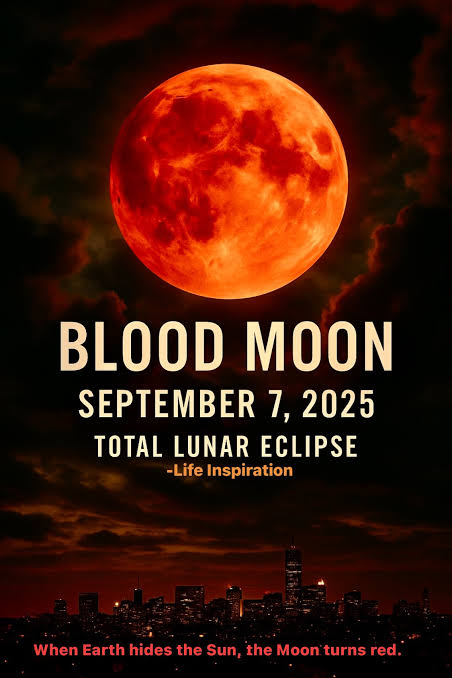
On the night of September 7–8, 2025, millions across continents witnessed one of nature’s most breathtaking spectacles: a total lunar eclipse. Unlike the fleeting magic of a solar eclipse, which lasts only minutes, a total lunar eclipse offers hours of dramatic celestial theatre. The Moon slowly slipped into the Earth’s shadow, and, in a cosmic alchemy, sunlight filtered through Earth’s atmosphere painted its surface in shades of red and copper.
This was not just a visual spectacle; it was a historical moment in an ongoing story billions of years in the making. Lunar eclipses have been recorded for millennia. Ancient Chinese astronomers documented them with meticulous detail, associating them with celestial warnings. Babylonian records from the first millennium BCE describe eclipses with such precision that modern astronomers have used them to verify historical timelines. The September 2025 eclipse, although entirely predictable in scientific terms, is part of this ancient continuum—a modern link to humanity’s earliest stargazers.
The Mechanics of the Red Moon
At its core, a lunar eclipse is simple: Earth passes directly between the Sun and the Moon. But the simplicity belies a stunning complexity. As the Moon enters Earth’s umbra, or shadow, it does not vanish entirely. Instead, sunlight that has been bent and filtered through Earth’s atmosphere bathes the lunar surface in red hues—a phenomenon called Rayleigh scattering. Shorter wavelengths of light, such as blue and green, scatter away, leaving the longer red and orange wavelengths to illuminate the Moon. The result is a blood moon, a phenomenon as predictable as it is poetic.
The September 2025 eclipse was notable not only for its timing but for its duration. Totality—the period when the Moon was completely engulfed in Earth’s shadow—lasted approximately 82 minutes, one of the longest in recent memory. In many locations, including Africa, Europe, and parts of Asia, the Moon was high in the sky, offering a panoramic view that stretched from horizon to horizon. Amateur astronomers and professional observatories alike prepared months in advance, aligning telescopes, cameras, and observation stations to capture the event in its full glory.
Historical Echoes of Lunar Eclipses
To understand the deeper resonance of a blood moon, one must consider the human relationship with lunar eclipses throughout history. Ancient civilizations often interpreted these events as portents. In Mesopotamia, eclipses were linked to the fate of kings; a total lunar eclipse was thought to signal danger or upheaval. In ancient Greece, the philosopher Aristotle correctly described the Earth’s round shadow on the Moon, yet even so, myths persisted: eclipses were viewed as signs of angered gods or cosmic imbalance.
In West Africa, the Moon’s phases and eclipses have been intricately woven into cultural narratives. Among the Yoruba, celestial phenomena often carry symbolic weight. Stories of the Moon, Sun, and stars intersect with moral lessons and human behavior, blending astronomy with philosophy. For centuries, Yoruba astronomers—often priests and scholars—observed lunar eclipses, using them to regulate calendars and advise rulers. Though modern science has replaced superstition with understanding, the cultural memory of these events persists.
Similarly, the Inca of South America viewed eclipses as manifestations of divine intervention, while in India, eclipses were associated with Rahu and Ketu, shadowy entities swallowing the Moon. Across continents and cultures, the blood moon was a symbol of cosmic drama, a moment when the ordinary sky revealed extraordinary truths.
The Eclipse Timeline
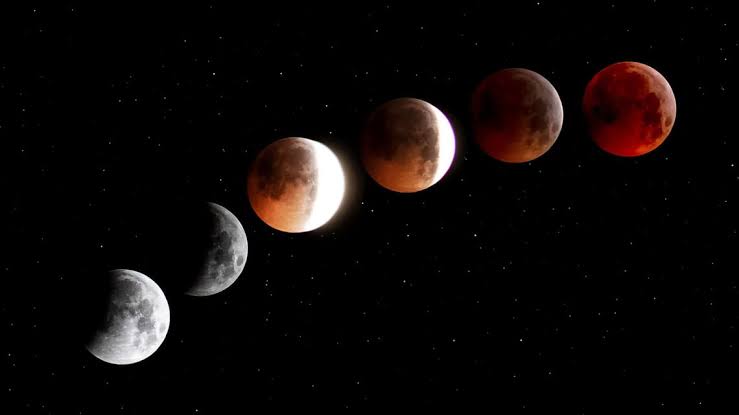
The sequence of the eclipse unfolds in stages:
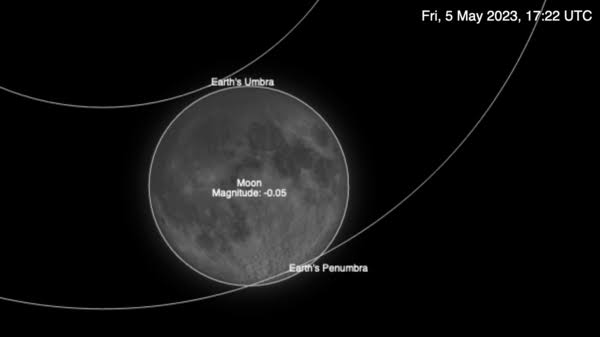
1. Penumbral Phase: The Moon enters Earth’s penumbra, a faint outer shadow. This phase is subtle; observers may notice only a slight dimming.
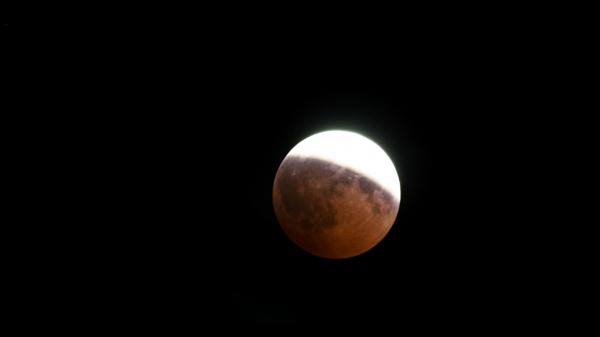
2. Partial Phase: The Moon begins entering the umbra, Earth’s darker, central shadow. A distinct curve of darkness becomes visible.
3. Totality: The Moon is fully within the umbra. Its surface turns red or copper, creating the iconic blood moon appearance.
4. Maximum Eclipse: Midpoint of totality. The Moon is deepest in shadow, its color often richest.
5. Ending Phases: The Moon gradually exits the umbra, returning to its familiar silvery glow.
For September 2025, totality lasted 82 minutes, beginning shortly after 9:10 PM UTC and ending near 10:32 PM UTC. The precision of these times allowed astronomers and enthusiasts to plan observations and broadcasts, further democratizing access to the celestial event.
Global Visibility of the September 2025 Blood Moon
The total lunar eclipse on September 7–8, 2025, was a celestial event visible across vast regions of the Earth. Approximately 85% of the world’s population had the opportunity to witness this awe-inspiring phenomenon. The eclipse’s visibility spanned several continents:
Asia: The eclipse was fully visible across much of Asia, including countries like India, China, Indonesia, and parts of the Middle East. Observers in these regions experienced the Moon’s gradual transition into the Earth’s shadow, culminating in the deep red hue characteristic of a blood moon.
Africa: In Africa, the eclipse was visible across a significant portion of the continent. From Egypt in the north to South Africa in the south, people gathered to witness the Moon’s transformation, with many viewing the event in the early hours of the morning.
Europe: The eclipse was observable in parts of Europe, particularly in the eastern regions. Countries like Greece, Turkey, and parts of Eastern Europe had clear skies to enjoy the spectacle, while other areas experienced partial views due to the timing of moonrise and moonset.
Australia: In Australia, the eclipse was visible in its entirety. Observers across the country, from Sydney to Perth, enjoyed a clear view of the blood moon, with many taking to beaches and open fields to witness the event.
Pacific Islands: Various Pacific islands, including parts of Oceania, had the opportunity to view the eclipse. The timing allowed for a full view as the Moon rose above the horizon.
However, the eclipse was not visible in the Americas, particularly in North and South America, due to the timing of the event and the position of the Moon relative to the Earth and Sun.
The Eclipse in Historical Context
While the September 2025 blood moon was remarkable for its duration and visibility, it is part of a long lineage of eclipses that have shaped human understanding. The saros cycle, a period of approximately 18 years, 11 days, and 8 hours, allows astronomers to predict eclipses with uncanny accuracy. This cycle has been used for centuries, from Babylonian astronomers to modern observatories, bridging ancient knowledge and contemporary science.
Beyond Observation: Scientific Insights
Lunar eclipses also provide valuable scientific data. By analyzing the color and brightness of the Moon during totality, scientists can infer properties of Earth’s atmosphere, including particulate density and pollution levels. The September 2025 eclipse offered a snapshot of global atmospheric conditions, complementing satellite observations and climate models.
Additionally, eclipses facilitate public engagement with astronomy, sparking interest in STEM fields. Observatories report spikes in telescope usage and online searches around such events. The September 2025 blood moon, widely shared through social media, inspired a new generation to look skyward, combining curiosity with empirical observation.
Metaphor and Meaning
The blood moon has always been rich in symbolic meaning. It represents cycles—birth, death, and rebirth—and serves as a mirror for human introspection. As the Moon passed into shadow, it reminded observers that darkness is temporary, that change is inevitable, and that perspective transforms perception. Just as sunlight filtering through Earth’s atmosphere paints the Moon red, our own experiences filter reality, creating meaning unique to each observer.
Conclusion: A Shared Human Legacy
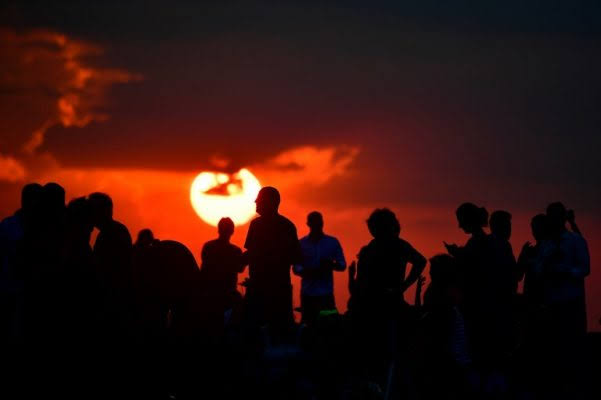
The September 2025 total lunar eclipse was more than an astronomical event; it was a cultural, historical, and human moment. Across continents, millions witnessed a cosmic transformation that has echoed through human history for millennia. From Babylonian astronomers recording eclipses on clay tablets to modern observers sharing images online, the blood moon links past and present, science and myth, observation and reflection.
It reminded us that despite advances in technology, despite the vastness of the universe, the act of looking up—simply witnessing the cosmos—remains profoundly human. The red Moon, hanging in the night sky, was both a spectacle and a mirror: a celestial reminder of awe, curiosity, and the enduring power of shared experience.
Discussion about this post