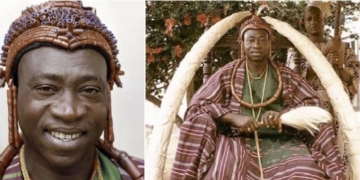


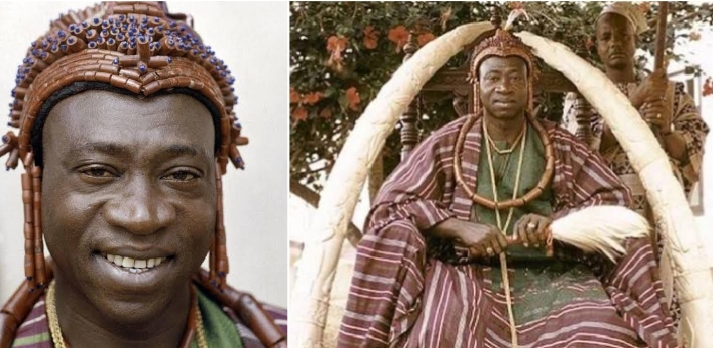
In the heart of Yorubaland, where the weight of history lingers in every drumbeat and the voice of tradition whispers through palace courtyards, there once lived a king whose crown seemed forever bound to both destiny and betrayal. Oba Olateru Olagbegi II of Owo was no ordinary monarch; he was a ruler whose reign stretched across some of the most turbulent years in Nigeria’s journey from colonial rule into fragile independence.
Yet, his story was never one of steady glory. Twice, the throne was pulled from beneath him. Twice, he returned to reclaim it.
To the outsider, the tale might read like folklore — a legend of a king fated to fall and rise again. But in Owo, a town where royal politics intertwine with family rivalries and the larger theatre of Nigerian power struggles, it was all too real. Olagbegi’s crown was not just a symbol of ancestral authority; it became a pawn in the hands of colonial administrators, politicians, and even his own people. His dethronement was not merely about tradition but about the collision of monarchy and modernity, of loyalty and betrayal, of the fragile balance between palace walls and political corridors.
In his lifetime, Olagbegi walked through fire: colonial manipulations, the rise of regional politics in the Western Region, bitter rivalries among Yoruba leaders, and the thundering chaos of military coups. Each phase of his kingship bore scars — scars that mirrored Nigeria’s own turbulent search for identity.
And yet, what makes his story unforgettable is not just that he lost his crown — but that he wore it again. Not once, but twice.
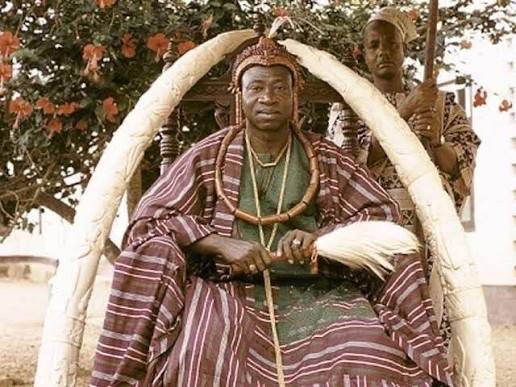
This is not the tale of a man who ruled without challenge. It is the story of a monarch who lived through dethronement, exile, and humiliation — only to taste restoration in ways that defied the very logic of palace politics. A king dethroned twice, restored twice. A story that asks us: what does it truly mean to be a monarch when the throne itself becomes a battlefield?
The Palace and the Paradox of Power
The palace of Owo was not just a seat of tradition; it was a labyrinth of power, ambition, and memory. Long before the 20th century, Owo had been a crossroads between Benin influence and Yoruba identity. Its rulers bore the weight of two worlds: the martial legacy of Benin expansion and the cultural continuity of Yoruba tradition. By the time Olateru Olagbegi ascended the throne in 1941, Owo’s crown was already a paradox — revered at home, yet scrutinized by colonial administrators who saw kings as extensions of their authority.
Unlike smaller Yoruba towns where monarchs played ceremonial roles, Owo’s Oba wielded immense authority. The Owo palace stretched across sprawling compounds with dozens of courtyards, each echoing with the rhythm of drums and the cadence of Yoruba chants. Chiefs held councils under carved eaves, while the townspeople looked up to the king not just as a political leader but as the living embodiment of Owo’s history.
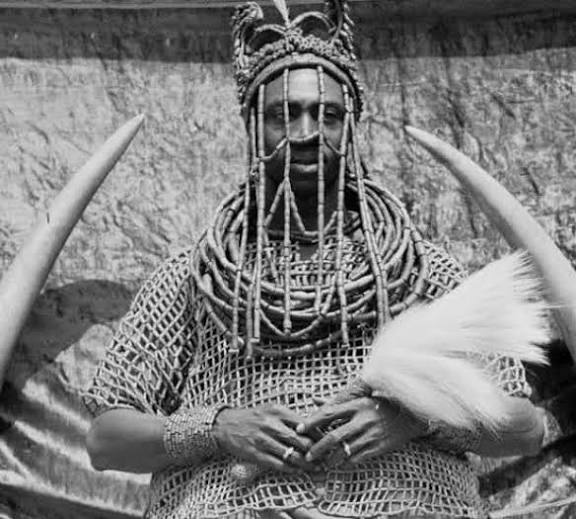
In this sacred space, Oba Olateru Olagbegi II carried himself like a man destined for greatness. Tall and commanding, he bore the regalia of office with the confidence of one who knew that the crown was not just inherited — it was earned through the acceptance of ancestors and the loyalty of his people. Yet, beneath the ceremonial splendor lay fractures that time and politics would cruelly expose.
Colonial Shadows: The British and the Yoruba Monarchy
To understand Olagbegi’s rise — and his eventual dethronements — one must trace the political architecture left behind by colonial rule. The British never abolished Yoruba kingship; they restructured it. Through the system of indirect rule, colonial officers depended on Obas to administer their towns and districts. A compliant monarch could expect British recognition and resources; a defiant one risked deposition.
In this framework, Yoruba kings became both powerful and vulnerable. Their crowns were backed not just by tradition but by paperwork — “Certificates of Recognition” issued by colonial administrators. A crown that had once been solely spiritual now required bureaucratic validation. This dual legitimacy created monarchs who could be enthroned with ancestral rites yet dethroned with a government decree.
Oba Olagbegi inherited his crown in this delicate era. His intelligence and charisma won him recognition, but it also meant he was constantly under the watchful eyes of colonial officers who feared any monarch too independent. Olagbegi’s palace became a theater where colonial interests, Yoruba tradition, and local rivalries collided.
The Rise of Party Politics in the West
By the 1940s and 1950s, the winds of nationalism swept across Nigeria. Yoruba intellectuals, lawyers, and journalists spearheaded movements for self-rule. At the forefront was Chief Obafemi Awolowo, whose Action Group (AG) party became the dominant force in the Western Region. Awolowo understood what many did not: that winning over Yoruba monarchs meant winning over the people.
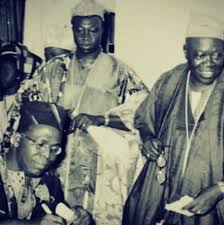
Olagbegi became one of the monarchs courted by Awolowo. Their relationship was not simply political — it was strategic. Olagbegi lent Awolowo the prestige of traditional authority; Awolowo offered Olagbegi political leverage in the modern state. The two men, both ambitious and commanding, found common ground.
But this alliance sowed seeds of division. Within Owo, rival chiefs and factions began to whisper that the Oba had compromised the neutrality expected of a monarch. In Yoruba custom, an Oba was supposed to stand above partisan politics, uniting his people regardless of their affiliations. Olagbegi’s closeness to Awolowo, while strengthening his regional influence, deepened resentment among local rivals who saw him as a partisan king.
Betrayal in Owo: The First Dethronement
The early 1960s were years of turbulence. Awolowo, once the premier of the Western Region, fell from grace when he was accused of treasonable felony in 1963. His imprisonment left his allies exposed, and Olagbegi, once shielded by Awolowo’s political strength, became vulnerable.
In Owo, opposition chiefs capitalized on the moment. They accused Olagbegi of authoritarian tendencies, of meddling in politics to the detriment of the town’s unity. Meetings were held, petitions were written, and factions grew bolder. For the first time, the aura of invincibility around the Oba began to crack.
In 1966, the collapse of Nigeria’s First Republic and the eruption of military coups provided the final blow. The Western Region government, now under pressure to rein in traditional rulers deemed politically dangerous, approved his removal. Olagbegi was dethroned.
The scene was unforgettable. A king who had once presided over grand festivals and received colonial officers in regal attire was suddenly stripped of his authority. His crown, once kissed by chiefs and hailed by drummers, was reduced to a disputed emblem. Olagbegi left Owo in humiliation, his palace echoing with the silence of betrayal.
Nigeria in Chaos: Civil War and Shifting Thrones
The dethronement coincided with Nigeria’s descent into its darkest chapter. The coups of 1966, followed by ethnic massacres and secession, led to the Nigerian Civil War (1967–1970). The war reshaped the country’s politics and exposed the fragility of its federal experiment.
For Yoruba monarchs, it was a time of survival. Many kept their heads low, wary of being caught in the crossfire between military rulers and regional politicians. Some Obas, like Olagbegi, paid the ultimate price of dethronement. Others walked a careful line, maintaining loyalty to whoever held power in Lagos.
For Olagbegi, exile deepened his legend. He was no longer just a dethroned king; he became a symbol of how tradition could be undermined by politics. In Owo, divisions persisted — some longed for his return, others preferred his absence. The town itself mirrored Nigeria: fractured, uncertain, searching for stability.
The First Restoration: The Crown Returns
In 1971, against all odds, the crown returned to Olagbegi. Military rule had reshaped the political order, and the authorities decided that restoring him would stabilize Owo. His return was marked by jubilation from loyalists, but it also reopened old wounds. Chiefs who had celebrated his fall now bowed before him again, their loyalty as pragmatic as it was insincere.
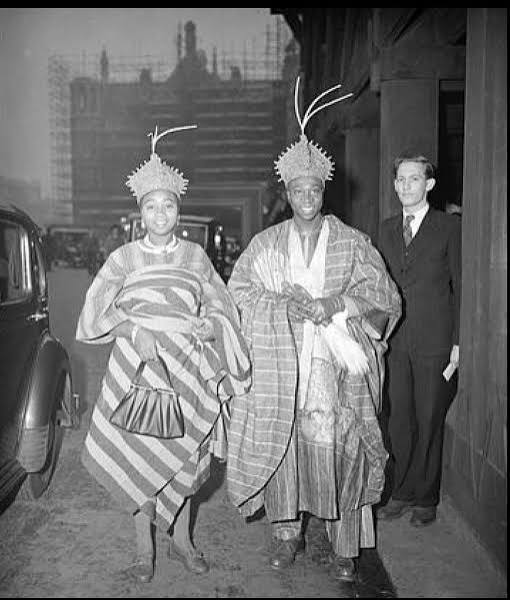
For Olagbegi, restoration was vindication. He had been humiliated, yet the ancestors had not abandoned him. The palace once again rang with drums, and the town’s streets filled with chants of welcome. But he was not the same man who had been dethroned. Experience had sharpened his instincts. He ruled with greater caution, yet the undercurrents of dissent never fully disappeared.
The Second Fall: History Repeats
By the early 1980s, Nigeria entered another phase of civilian rule under the Second Republic. Politics was once again a battlefield of rivalries. Owo was not spared. Old tensions resurfaced, and Olagbegi, despite his restored authority, was again accused of partisanship.
The cycle of betrayal repeated itself. In 1981, just a decade after his triumphant return, Oba Olateru Olagbegi II was dethroned for the second time. For many, it seemed history was mocking him. Twice crowned, twice dethroned — his life resembled a tragic epic.
The Final Restoration: Redemption and Legacy
In 1993, a year that saw Nigeria plunge into political crisis after the annulment of the June 12 election, another extraordinary twist occurred in Owo. Oba Olateru Olagbegi II was restored to his throne for the second time.
It was unprecedented in Yoruba history: no king had ever been dethroned twice and restored twice. His return defied the cynicism of politics, affirming the enduring mystique of monarchy. Even military rulers who distrusted traditional institutions could not erase the cultural gravity of his crown.
He ruled until his death in 1998, closing his life as both a survivor and a symbol. In the end, the man who had tasted humiliation twice also tasted restoration twice — a monarch who embodied resilience in the face of betrayal.
The Meaning of Olagbegi’s Story
The tale of Oba Olateru Olagbegi II is not just the biography of a king. It is a mirror of Nigeria’s 20th century — a nation where politics and tradition collided, where crowns could be lost and found, where betrayal could give way to redemption.
To Yoruba history, he remains a paradox: a monarch revered for his resilience but questioned for his political entanglements. To Nigeria, he represents the fragile line between modern governance and ancient authority. And to Owo, he remains unforgettable — the king who proved that even when the crown slips, it can be reclaimed.
His story asks us to reflect on power itself: is authority a gift of tradition, a function of politics, or a test of endurance? For Olagbegi, it was all three. And that is why his name endures — as a monarch twice dethroned, twice restored, and never forgotten.
Lessons from a Crown That Refused to Disappear
The story of Oba Olateru Olagbegi II is not locked in dusty archives. It still speaks to Nigeria’s present dilemmas — where politics remains volatile, leadership fragile, and tradition both revered and manipulated. His life offers lessons in resilience but also warnings about the dangers of entangling sacred institutions with the machineries of partisan power.
For modern leaders, Olagbegi’s double dethronement and double restoration highlight the fragility of authority. A throne, like an elected office, is never completely secure if legitimacy is compromised. Leaders who rely solely on political alliances without cultivating genuine loyalty from their people often find that the same forces that elevate them can also unseat them.
Yet his story also affirms the possibility of redemption. Twice humiliated, Olagbegi still found the strength — and the fortune — to reclaim his place. In a world where public disgrace often marks the end of careers, his legacy reminds us that history has room for reversals, comebacks, and second chances.
What Modern Nigeria Can Learn
1. The Need for Neutral Institutions
Just as monarchs were once expected to rise above party lines, modern Nigeria needs institutions that are independent of political manipulation. The collapse of neutrality in Owo’s palace mirrors the weakness of Nigerian institutions when captured by partisan interests.
2. The Power of Tradition
Despite colonial interference and military decrees, Olagbegi’s throne endured because Yoruba people still placed cultural weight on monarchy. In modern Nigeria, traditional institutions remain relevant not just as relics but as living custodians of identity. Ignoring them risks severing a society from its roots.
3. The Danger of Overreach
Olagbegi’s closeness to political factions was both his strength and his undoing. For contemporary politicians and monarchs alike, his life is a warning: when tradition bends too far toward politics, it loses its ability to stand above the fray.
The Enduring Relevance of Yoruba Monarchs
Today, Yoruba monarchs no longer wield the absolute power they once did. Yet, their voices remain crucial in matters of culture, conflict resolution, and moral leadership. The Ooni of Ife, the Alaafin of Oyo (until his passing in 2022), and the Olubadan of Ibadan continue to shape Yoruba identity and, by extension, Nigerian society.
Oba Olateru Olagbegi II’s life underscores why monarchs matter. Even when dethroned, his absence created a vacuum that Owo could not easily fill. His eventual restorations demonstrated that legitimacy built on tradition carries a weight no decree can permanently erase.
A Crown Beyond the Grave
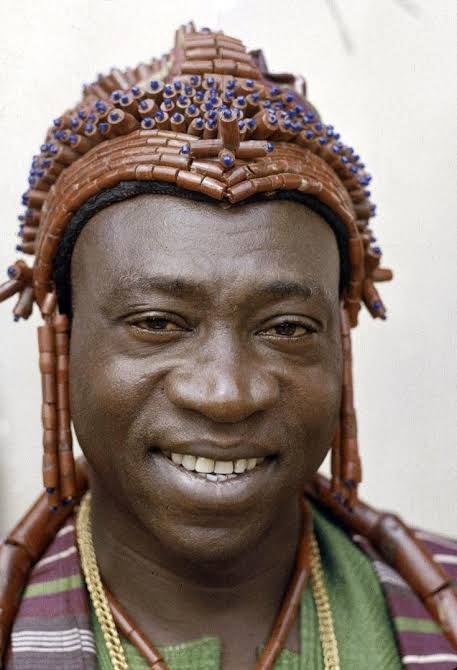
When Oba Olateru Olagbegi II passed in 1998, he left behind more than memories of palace intrigues and political betrayals. He left a legacy of resilience. His successors inherited not just a throne but a history of endurance. The palace of Owo still stands as a testament to the paradox of Yoruba monarchy: vulnerable to politics yet sustained by tradition.
His story is retold not as mere nostalgia but as living memory — a cautionary tale for monarchs, politicians, and citizens alike. In every Yoruba town where the talking drums sound, his name echoes as a reminder that the crown may falter, but it rarely disappears.
Wrapping the narrative: A Monarch, A Mirror, A Nation
Oba Olateru Olagbegi II’s journey — twice dethroned, twice restored — is more than the biography of one man. It is a mirror of Nigeria’s 20th century: the betrayals, the coups, the fragile alliances, the resilience of tradition, and the unending search for legitimacy.
His life embodied the paradoxes of leadership in a land where the past and present constantly wrestle. He was both a victim of politics and a victor of tradition; both a partisan monarch and a symbol of cultural resilience.
In the final analysis, Olagbegi’s crown was not simply regalia of beads and coral; it was the emblem of survival. And as Nigeria continues to navigate the treacherous waters of governance, his story endures as a lesson: power is never permanent, but legitimacy — earned, lost, and sometimes reclaimed — is what history remembers.
Discussion about this post