


In the shadows of Lekki’s luxury towers and Surulere’s densely packed estates, invisible battles rage—between those who own walls and those who live within them. Each eviction notice is more than a letter; it is a pulse of tension in a city where every square meter commands its own war.
The Tenancy Law of 2025 arrived like a new player on this battlefield. Promising balance, fairness, and clarity, it was hailed as a solution to decades of housing uncertainty. Yet, beneath the inked clauses and official signatures, a silent question lingers: does it protect Lagos’ tenants, or does it merely shield the landlords who wield its provisions like a shield in these rent wars?
For the families clinging to cramped apartments in Yaba, the law is both hope and threat. For landlords in Victoria Island and Ikoyi, it is insurance against risk and, sometimes, a lever to maintain dominance over a market that rarely sleeps. Lagos is no stranger to contradiction; the Tenancy Law may only deepen it.
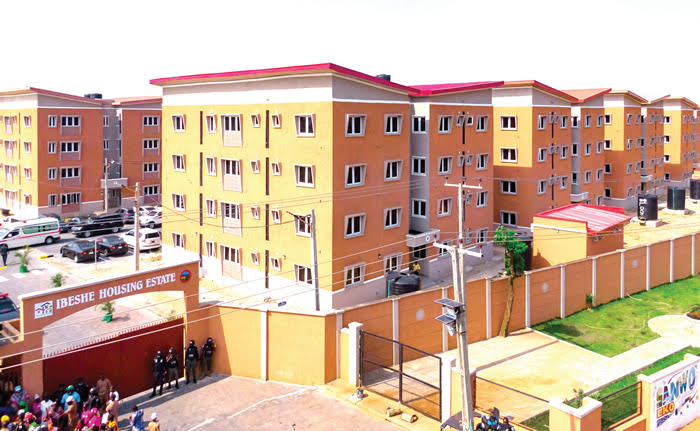
The Lagos Housing Crunch – A City in Tension
Lagos’ skyline is deceptive. Towering glass buildings suggest wealth, order, and opportunity, but on the streets below, life is cramped, chaotic, and costly. Over the past decade, population growth has turned the city into a pressure cooker. With an estimated 24 million residents as of 2025, Lagos is Africa’s most populous city—and its housing market shows the strain.
Average rents in areas like Victoria Island and Lekki have surged by 30–50% in just three years. A one-bedroom apartment in Yaba that rented for ₦500,000 annually in 2022 now commands ₦850,000. In Surulere, modest three-bedroom flats see tenants paying up to ₦1.2 million per year. For many, the numbers are unmanageable; for landlords, the law ensures that these increases are technically defensible.
Amid these statistics are human stories. Take Ifeanyi, a young software engineer who rents a two-bedroom apartment in Ikeja. After a recent promotion, he could afford slightly higher rent—but with Lagos’ unpredictable market, even a minor increase feels like a guillotine. He is not alone. Tens of thousands like him navigate Lagos’ housing labyrinth daily, balancing survival, career ambition, and the fear that their homes could vanish overnight.
Historically, Lagos’ housing struggles are deep-rooted. From colonial-era tenancy frameworks to the Rent Control Laws of the 1980s, the city has wrestled with imbalance. Each new law promised reform; each failed to quell the tension between those who own and those who inhabit. The 2025 law arrives at the height of this historical struggle, under the weight of accumulated mistrust.
The Tenancy Law of 2025 – Origins, Intent, and Provisions
Lawmakers framed the Tenancy Law of 2025 as Lagos’ attempt to codify decades of housing disputes. Its formal intent is to balance landlords’ rights with tenant protections, but beneath the inked clauses, ambiguity persists.
At its core, the law requires:
1. Mandatory Written Tenancy Agreements – verbal agreements no longer suffice. Every rental must be documented, detailing rent, payment schedules, duration, maintenance responsibilities, and deposit terms. For tenants like Chidinma in Yaba, this is both a shield and a source of anxiety—any overlooked clause could become a weapon in a landlord dispute.
2. Rent Payment and Increase Limits – landlords may raise rent only once every 12 months, based on “market value,” with 30–90 days written notice. If a landlord inflates rent beyond reason, tenants can challenge the increase via the Rent Tribunal. Yet, many tenants do not know this right exists, leaving them vulnerable to informal pressure.
3. Security of Tenure and Eviction Procedures – eviction is no longer at landlords’ whim. It is permitted only for:
- Non-payment of rent (after 30 days notice)
- Breach of tenancy agreement
- Owner’s personal use of the property (with 60 days notice)
Crucially, all evictions must go through the Lagos State Rent Tribunal or court. Self-help evictions—changing locks or cutting utilities—are illegal, though still practiced quietly in some neighborhoods.
4. Deposit and Advance Payments – residential deposits are capped at two months’ rent and must be returned within 60 days after tenancy ends, minus legitimate deductions. For tenants like Ifeanyi, this rule is a small but critical safeguard against financial exploitation.
5. Maintenance and Repair Obligations – landlords are legally obligated to keep properties habitable. Tenants can escalate failures to the tribunal, which can enforce repairs or reduce rent. Yet, underfunded enforcement mechanisms mean many landlords ignore this duty without immediate consequence.
6. Tenancy Tribunal and Dispute Resolution – the law empowers tribunals to resolve disputes over rent, deposits, and eviction legality. In practice, the tribunal’s success depends on tenant awareness, legal literacy, and administrative efficiency.

7. Registration and Documentation – all tenancy agreements must be registered with Lagos State authorities. Unregistered leases are unenforceable in court, incentivizing formalization. However, informal practices and shadow markets often bypass registration entirely.
8. Penalties for Non-Compliance – landlords who violate the law face fines or potential loss of rent claims, while tenants who breach agreements can be evicted—but only after tribunal approval.
9. Short-Term Lease Regulations – leases under 12 months must still comply with core rights: written contract, eviction notice, and rent limits.
Landlords’ Perspective – Legal Leverage in Lagos’ Rent Wars
For Lagos landlords, the law is both protection and tool. Mr. Oladipo, owner of three Lekki apartments, now uses formal agreements to enforce timely payments and avoid disputes that previously relied on informal persuasion. The clauses on rent increase, eviction procedures, and deposits give him predictability in an otherwise volatile market.
Yet the law’s language—“market value” and “reasonable notice”—creates flexibility that landlords can exploit. If a unit is desirable, small adjustments in interpretation allow rent to rise steadily without legal repercussions. In Lagos’ dense housing ecosystem, these nuances can make the difference between profit and loss.
Tenants’ Plight – Protection or Paper Shield?
For tenants, formalization is a double-edged sword. Written contracts, rent limits, and eviction protocols exist—but their effectiveness hinges on knowledge and enforcement. Chidinma’s Yaba apartment, for instance, is legally protected from arbitrary eviction. Yet the landlord pressures her informally, threatening moves “outside the tribunal process,” knowing most tenants lack awareness of their rights.
Deposits, a previously opaque financial transaction, are now capped at two months’ rent. Tenants feel some relief, but the slow return of funds, disputed deductions, and weak enforcement create ongoing stress. Tenancy tribunals exist to adjudicate disputes, but long delays and administrative inefficiencies reduce practical protections.
Loopholes and Grey Areas – When Law Meets Lagos Reality
Despite explicit provisions, loopholes persist:
Market Value Clause: While intended to regulate rent increases, it is subjective and often favors landlords.
Short-Term Leases: Tenants in one-year agreements can still face sudden hikes once contracts expire.
Service Charges: Landlords may inflate maintenance costs, often without scrutiny, passing additional burdens to tenants.
Informal Practices: Under-the-table agreements, delayed registration, and unreported subletting weaken legal protections.
Comparative Lens – Lessons from Other Mega Cities
Lagos is not alone in its rent struggles. Across the globe, mega cities wrestle with the tension between landlords’ interests and tenants’ rights. New York, London, and Nairobi offer cautionary tales and inspiration alike.
In New York City, rent stabilization laws cap annual increases and provide tenants with legal recourse. Yet, landlords exploit loopholes, converting rental units into condominiums or short-term Airbnb rentals. The law exists—but enforcement is uneven, and wealthier landlords often find ways to circumvent restrictions.
London faces a similar dichotomy. Tenancy protections are strong on paper, yet the market is under pressure from foreign investment and housing scarcity. Eviction processes, while regulated, are notoriously slow, leaving tenants in limbo and neighborhoods fractured.
Nairobi, closer in economic and urban context to Lagos, mirrors many local challenges. Short-term leases, informal agreements, and high rent-to-income ratios create a precarious balance between tenant survival and landlord profit. Kenyan tenancy reforms have struggled to keep up with rapid urbanization, much like Lagos.
For Lagos, the lessons are clear. Without rigorous enforcement, public awareness, and complementary housing policies, even the most well-intentioned law may favor those with resources, perpetuating cycles of inequality. The metaphor becomes stark: Lagos’ law is a bridge connecting two cliffs—tenants on one side, landlords on the other—but without support beams, the bridge may tilt toward the wealthier, stronger side.
Policy Gaps – Who the Law Truly Serves
Despite the Tenancy Law’s formal protections, policy gaps persist. Enforcement mechanisms remain underdeveloped, and access to justice is uneven. Tenants in informal settlements or low-income neighborhoods often remain invisible to authorities, while landlords with resources exploit legal ambiguities.
One significant gap is awareness and accessibility. Many tenants do not understand their rights under the law. Legal literacy campaigns are sparse, and the cost of hiring lawyers or navigating tribunals is prohibitive.
Another gap involves monitoring and compliance. Lagos’ Rent Control and Tenancy Tribunal is underfunded, understaffed, and overwhelmed. Without digital reporting systems or proactive inspections, landlords can flout regulations with minimal consequence.
Financial loopholes also persist. The law allows service charges to be passed to tenants, often without scrutiny, inflating rental costs. Short-term leases, subletting, and informal agreements create shadows where tenants’ protections vanish.
Policy experts argue that these gaps mean the law often serves landlords more effectively than tenants. The legal framework exists, but practical protections are uneven, favoring those with knowledge, resources, and influence. Tenants’ vulnerability remains, particularly for low-income families, young professionals, and students struggling to maintain stability in a volatile rental market.
Looking Ahead – Lagos at a Crossroads
Lagos in 2025 stands at a crossroads. The Tenancy Law is both a promise and a challenge. It promises clarity, fairness, and stability. It also exposes the fragility of a city whose housing market is as competitive as it is complex.
Looking ahead, three scenarios emerge:
1. Effective enforcement and public awareness: The law stabilizes rents, reduces disputes, and empowers tenants. Legal literacy campaigns, digital reporting, and proactive tribunals could tilt the balance toward fairness.
2. Partial enforcement with loophole exploitation: Landlords benefit disproportionately, tenants remain vulnerable, and shadow rental markets grow. Evictions and rent hikes continue quietly, and the law becomes a symbol rather than a safeguard.
3. Market pressures overwhelm legislation: Rapid urbanization, population growth, and rising costs render the law insufficient. Lagos’ housing market moves beyond regulation, and both tenants and landlords operate in informal, high-risk spaces.
For residents, the metaphor is clear: Lagos is a chessboard. Each law, each clause, each tribunal decision is a move in a game of survival. Tenants maneuver carefully, hoping to hold their ground. Landlords strategize to protect investments, sometimes bending rules to win. The Tenancy Law of 2025 is the board itself—rigid, structured, but capable of tilting depending on who plays smartest.
Ultimately, Lagos’ housing future depends not just on legislation but on societal commitment to fairness, transparency, and equity. Tenants need awareness, landlords need accountability, and the government must ensure enforcement. The stakes are human: families, dreams, livelihoods, and dignity hang in the balance.
Beyond the Ink – What Lagos’ Housing Future Holds
The Tenancy Law of 2025 is more than a set of clauses; it is Lagos’ attempt to impose order on chaos, to codify fairness in a city that thrives on informal networks and rapid urban flux. But the law’s real test will not be in courtrooms or legislative chambers—it will be in the lived experiences of Lagosians navigating tight corridors, soaring rents, and landlords’ subtle pressures.
In a city of relentless ambition and stark inequality, legal reform alone cannot guarantee stability. Tenants may have rights on paper, but without awareness and enforcement, those rights risk becoming ceremonial. Landlords gain structure, yet the power imbalance persists, reinforced by economic realities and opaque market practices.
The deeper question, then, is not just who the law protects, but whether Lagos as a society is prepared to uphold it. Will tribunals be accessible, enforcement consistent, and residents empowered? Will the law catalyze a cultural shift toward fairness, or will it remain a technical instrument wielded by those with the most leverage?
Ultimately, the Tenancy Law of 2025 is a mirror, reflecting the city’s contradictions: a metropolis of opportunity and tension, wealth and precarity, structure and improvisation. Its success will be measured not in ink or fines, but in the quiet victories of tenants who keep their homes, the resilience of landlords who maintain fair practices, and the evolution of a housing market that finally balances human dignity with economic reality.
In this sense, Lagos’ rent wars are far from over—but the law offers a compass, however imperfect, guiding a city toward a future where tenancy is more than survival; it is a cornerstone of urban justice.
Discussion about this post