


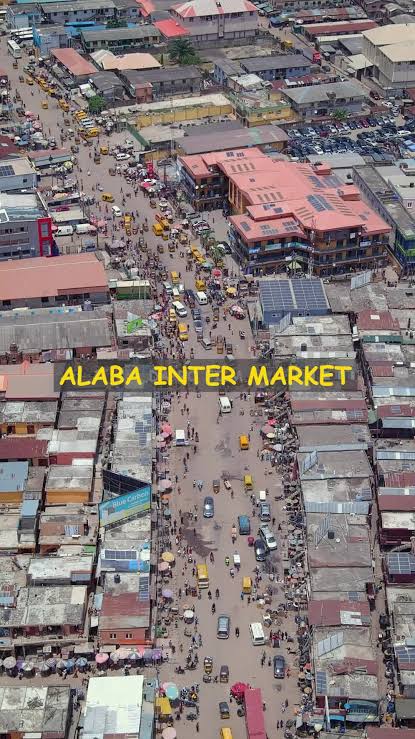
Alaba International Market is more than a commercial hub; it is a living, breathing organism. Its alleys pulse with the rhythm of generators, bargaining, and human ambition, each stall a neuron firing within Lagos’ sprawling economic brain.
Before the sun fully rises, the market already hums with life. Fathers, their faces etched with the experience of decades, move deliberately among stalls stacked with phones, computers, and television sets, inspecting stock and recalibrating alliances.
Sons arrive like energetic currents, phones in hand, algorithms at their fingertips, eager to test the waters of a market shaped by rules older than themselves. Every transaction carries an invisible tension, a quiet negotiation between history and ambition.
The generational struggle is subtle but omnipresent. The heartbeat of Alaba is both steady and volatile—a rhythm dictated by the push and pull of tradition and modernity.
Within this tension lies the future of Lagos’ largest electronics hub. Each choice—whether to honor a supplier relationship, adopt a digital payment system, or open a new stall—becomes a marker in the ongoing war between fathers and sons. The market thrives not only on commerce but on the delicate choreography of generational power.
A Brief Biography of Alaba Market
Alaba’s story begins in the 1980s, with a small cluster of makeshift stalls selling imported radios, televisions, and household electronics. Early traders relied heavily on personal networks, navigating the challenges of cash-only transactions, unreliable port deliveries, and minimal government oversight. The market’s growth was organic, powered by ingenuity and resilience, gradually evolving from a modest cluster of shops into a recognized hub for electronics trade across Nigeria.
By the 1990s, Alaba had transformed into a sprawling commercial complex attracting both wholesalers and retailers. Its organization remained largely informal: stall owners collaborated through trade associations and unions, which acted as both regulators and arbiters of disputes. Senior traders emerged as de facto leaders, their authority rooted in experience and the ability to broker relationships that spanned suppliers, customers, and competitors alike.
The market’s expansion was fueled by demand and adaptability. Traders developed reputations built on reliability and trustworthiness, navigating a network where relationships were as valuable as capital. Generational tensions emerged naturally: fathers, steeped in the market’s rhythms, viewed change cautiously, while sons sought to inject modern methods that often clashed with established practices. This tension reflects Alaba’s dual identity—anchored in history yet ever hungry for evolution.
Over decades, Alaba became not just a marketplace but a symbol of Lagosian entrepreneurship. Its biography is written in the footsteps of traders navigating alleys at dawn, in the whispers of negotiations over crate prices, and in the calculated patience of patriarchs guarding their legacy. Every corner, every warehouse tells the story of survival, adaptation, and the ongoing dialogue between generations.
Who Controls Alaba? The Power Structures
Control in Alaba is more complex than ownership of a stall. It is woven into networks, relationships, and the silent authority accrued over decades. Patriarchs dominate through experience, trusted supplier networks, and the ability to influence market norms. Their authority extends beyond their own stalls, shaping pricing, access to goods, and even the resolution of disputes. These fathers are not only traders—they are architects of the market’s invisible hierarchy.

Trade associations and unions form the second layer of power. They allocate stall spaces, enforce informal rules, and mediate conflicts, ensuring stability in a market that could otherwise descend into chaos. Seniority within these structures often mirrors generational seniority; fathers dominate, their counsel sought and rarely questioned. These networks also act as gatekeepers for sons seeking to expand influence, requiring them to earn legitimacy before they can operate independently.
Beyond formal associations, market alliances act as subtle instruments of control. Families interlink through partnerships, supplier arrangements, and informal agreements that span decades. Loyalty and trust are as critical as financial capital, with reputations cultivated over years dictating access to high-demand products and prime stall locations. Sons must navigate these invisible threads carefully, balancing innovation with respect for legacy.
Sons often arrive equipped with education, digital tools, and ideas to modernize operations. Yet without recognition from established networks, their authority is tenuous. Power in Alaba is negotiated daily, a fluid interplay between paternal legacy and youthful ambition. Understanding this nuanced ecosystem is essential to appreciating why the generational war is as much about relationships and strategy as it is about commerce.
How Business Owners Operate
Alaba’s traders operate within a delicate blend of formal and informal practices, balancing risk, opportunity, and relationship management. Supply chains stretch from Lagos ports to warehouses within the market, connecting international suppliers in China, Dubai, and Europe to local stalls. Patriarchs leverage these long-standing connections to ensure reliability and favorable terms. Sons, eager to assert independence, often attempt to bypass intermediaries through online platforms, occasionally disrupting well-established networks.
Stall management is largely a family affair. Fathers oversee procurement, pricing, and customer loyalty, while sons increasingly manage logistics, inventory tracking, and digital marketing. Apprenticeship is central: sons learn through observation and participation, absorbing lessons about negotiation, supplier management, and dispute resolution. This mentorship, however, is often fraught with tension, as innovation collides with tradition.
Pricing and negotiation are fluid arts. Prices are rarely fixed, with bargains struck based on trust, competitor behavior, and supplier relationships. Sons’ adoption of online promotions or aggressive pricing strategies can challenge established norms, prompting subtle resistance from elders who view such tactics as risky. Mastery of pricing is as much psychological as it is numerical, and missteps can carry long-term consequences for both reputation and revenue.
Compliance with union regulations and informal rules remains a crucial element of operation. Stall owners pay levies, adhere to allocation protocols, and rely on senior traders to mediate disputes. A son who ignores these protocols risks isolation, reinforcing the market’s lesson that authority is relational, not merely transactional. Successful navigation of these rules requires both strategic acumen and respect for legacy.
The Invisible Rules of Influence
In Alaba, control is rarely exercised through formal authority alone. It flows through invisible channels—networks of loyalty, trust, and unspoken agreements that bind traders across stalls, warehouses, and even generations. Patriarchs understand these rules instinctively. They know which suppliers honor deadlines, which unions enforce subtle pressures, and which competitors can be negotiated with rather than challenged. Influence here is as much about relational currency as it is about money.
Sons often underestimate the weight of these invisible rules. A young trader may arrive with education, digital know-how, and global connections, yet find that his strategies falter because he bypassed a trusted supplier or disregarded union protocols. These mistakes serve as lessons: Alaba does not reward ambition in isolation. Authority is relational, earned over time, and maintained through consistent recognition of legacy.
The market’s invisible rules also govern the subtler aspects of trade: who speaks first in negotiations, how discounts are extended, and the timing of bulk purchases. A son who pushes for online-only sales might gain short-term profit but risks weakening alliances that his father spent decades cultivating. Conversely, a father who resists all change risks losing relevance to a new generation more attuned to speed and technology.
These unspoken norms create a delicate equilibrium. Every handshake, every order, every concession is calibrated to preserve influence. Sons who learn to navigate these currents without eroding trust begin to assert authority, subtly reshaping Alaba’s balance of power. Fathers, in turn, adjust strategies, blending mentorship with oversight, ensuring that tradition guides innovation rather than stifling it.
The Market as a Living Organism
Alaba functions like a living organism, each stall a cell, each alley a vein carrying the lifeblood of commerce. Its heartbeat is measured in the rhythmic hum of generators, the footsteps of traders, and the constant negotiation of deals. Fathers are the sturdy backbone—anchoring the market with decades of experience, relationships, and authority. Sons are the currents—fast, restless, and sometimes disruptive, injecting energy and innovation into established flows.
The market reacts to every change. A sudden influx of imported smartphones ripples through stalls, affecting pricing, bargaining power, and supplier relations. A father calmly adjusts stock rotation and credit arrangements, while a son experiments with online preorders and targeted social media sales. Both influence the organism, but in different ways: one stabilizes, the other accelerates.
Daily life in Alaba is a testament to this living system. Early morning sees fathers arranging shipments, negotiating bulk deals, and inspecting stock with meticulous care. Sons move with urgency, tracking online orders, coordinating deliveries, and seeking efficiencies that challenge traditional rhythms. The market absorbs these pressures, adapting while subtly reminding participants that it has its own rules—its own pulse—that must be respected.
This organismic perspective underscores the generational war. Fathers maintain equilibrium, ensuring that the network of relationships remains intact. Sons, by introducing innovation, test the system’s flexibility. Alaba survives—and thrives—because it balances these forces. The market is alive not merely because of its transactions, but because it houses a human ecosystem, continually evolving through the negotiation between experience and ambition.
Battles Behind the Stalls
Conflict in Alaba is rarely public or dramatic; it occurs quietly behind the stalls, in whispered negotiations and calculated interventions. A father may resist a son’s plan to source directly from a foreign supplier, fearing the disruption of established networks. Weeks of tension can follow as suppliers hesitate, alliances are tested, and reputations are weighed. The market becomes a chessboard where each move carries consequences far beyond immediate profit.
Some sons push aggressively, introducing digital platforms or online marketing that bypass traditional intermediaries. Patriarchs often respond with caution, reminding sons of supplier loyalty, union protocols, and the relational web that sustains long-term influence. These battles are not about money alone—they are about authority, trust, and the future of families within the market.
Compromise is the most common resolution. Fathers may allow limited digital experiments, supervised and integrated with existing networks. Sons learn patience and negotiation skills, understanding the weight of legacy before challenging it fully. Both parties gain insight: fathers appreciate the value of innovation, sons learn the invisible rules of influence.
However, not all conflicts end amicably. Misjudged moves can alienate suppliers, weaken alliances, and erode trust. A son overstepping authority might find himself sidelined from key transactions, while a father resisting adaptation may see his influence diminish as younger traders gain prominence. These behind-the-scenes battles shape Alaba as much as any public transaction, leaving traces in relationships, profits, and the unspoken hierarchy that governs the market.
Legacies in the Making
Succession in Alaba is a slow, intricate process. Fathers do not merely hand over stalls; they cultivate heirs capable of managing relationships, understanding the market’s rhythms, and asserting authority without fracturing networks. Sons learn through observation, apprenticeship, and gradual exposure to decision-making, balancing ambition with respect for legacy.
Some families successfully integrate innovation with tradition. A son may handle logistics, digital sales, and online promotions while a father supervises supplier networks and union compliance. These hybrid approaches strengthen influence, ensuring that legacy and modernization coexist rather than compete. The market evolves as these legacies take shape, a layered structure of experience guiding energy and ambition.
Yet the generational war is ongoing. Sons must assert themselves without undermining their fathers’ authority; fathers must adapt without relinquishing control. Every successful integration of old and new becomes a template for others, subtly shifting Alaba’s culture. The future of the market is written in these negotiated legacies, each stall a microcosm of broader generational dynamics.
Ultimately, Alaba’s story is one of continuity and change. Fathers leave behind structures, networks, and lessons. Sons inherit not just stalls but the responsibility of sustaining influence, nurturing relationships, and guiding innovation. This ongoing process ensures that the market remains both anchored in history and responsive to modern pressures.
Closing Thoughts: The River of Commerce: Who Will Steer the Future?
The generational war is a negotiation of flow—who steers, who adapts, and who shapes the river’s trajectory.
Future control depends on those who can blend authority with innovation. Patriarchs who recognize the need for digital integration will preserve influence. Sons who learn the invisible rules of networks, trust, and union dynamics will assert power effectively. Those who misread the currents risk being swept aside or stagnating, their ambitions slowed by unacknowledged constraints.
The river metaphor extends beyond trade—it is human, relational, and strategic. Every transaction, every negotiation, every compromise contributes to the market’s flow. Alaba will continue to evolve because it is steered not by force alone, but by the nuanced interplay of experience, ambition, and trust. Fathers and sons will continue their delicate dance, negotiating control over an ecosystem that is both mercantile and familial.
As Lagos grows, Alaba remains a testament to resilience, adaptation, and generational continuity. Its future rests on the ability of fathers to mentor, sons to innovate, and the market itself to remain a living organism—dynamic, relational, and endlessly instructive about the nature of commerce and legacy.
Discussion about this post