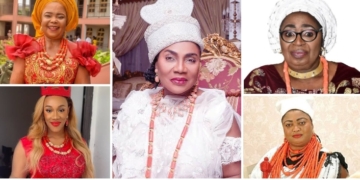


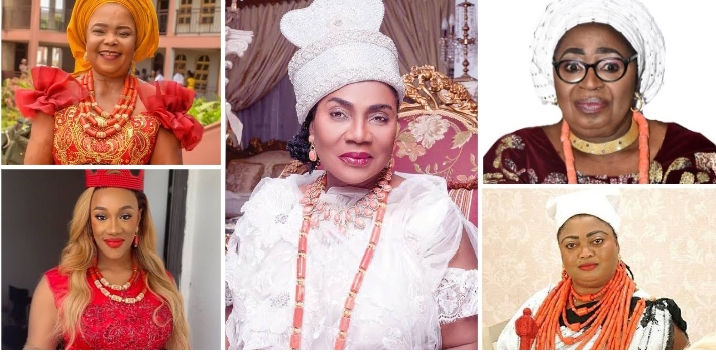
Power is not always loud. Sometimes it moves in whispers, in gestures, in the spaces between tradition and action. In Lagos and Igboland, certain women hold this subtle influence—shaping communities, guiding decisions, and preserving culture without command or proclamation.
They inhabit worlds where history leans heavily on ritual, lineage, and ceremony. Their presence is felt before it is seen; their authority acknowledged without announcement. These women are the Erelu and the Lolo, embodiments of silent power that has endured through generations.
To witness them is to sense the weight of heritage pressing gently yet insistently, a force that shapes life in ways the untrained eye cannot measure. Their stories do not begin with spectacle, but with the quiet gravity of roles honed over centuries.
As we step closer, their influence unfolds—not in headlines or proclamations, but in the rhythm of tradition, the weight of lineage, and the persistence of culture itself.
Early Lineage: Foundations of Influence (1700s–1800s)
In Lagos, the Erelu emerges from bloodlines intertwined with the Oba’s dynasty. Erelu Kuti I, sister to Oba Akinsemoyin in the 18th century, laid the foundation of a role that would endure for centuries. From her lineage flows authority recognized not through force but through presence, counsel, and ceremonial participation. Young Erelus were educated in palace etiquette, oral history, and the subtleties of influence—lessons in wielding authority without spectacle, shaping the course of the kingdom from behind the throne.
Across Igboland, the Lolo derives her position through marriage to a titled chief, often an Onye Nze. While her authority is not sovereign, it carries weight within the family, community, and ceremonial structures. The Lolo’s household becomes a model for conduct, hospitality, and ritual observance, setting standards that ripple through extended kinship networks. Her influence is exercised in quiet guidance, negotiation of disputes, and participation in communal ceremonies—an authority grounded in respect, tradition, and relational power.
Lineage and social positioning in both contexts serve as the architecture of influence. For the Erelu, royal blood grants proximity to the Oba and the palace’s central power. For the Lolo, marital alliance with a titleholder positions her as a bridge between household, clan, and community authority. In each case, cultural expectations reinforce their roles: knowledge of rituals, diplomacy, and propriety is essential to sustain credibility and respect.
Yet authority is more than inherited status. Historical accounts indicate that both Erelus and Lolos solidified their influence through active engagement in ceremony and community life. The Erelu blesses coronations and advises on palace matters; the Lolo mediates family and communal issues, organizes ceremonial events, and ensures cultural norms are upheld. Across generations, these roles illustrate a recurring truth: power often thrives in discretion, shaped by wisdom, presence, and the quiet persistence of tradition.
Formal Investiture and Ceremonial Authority (1800s–1950s)
By the 19th century, the roles of Erelu and Lolo had crystallized into positions of ceremonial and social authority, their influence embedded in the rhythm of tradition. In Lagos, the Erelu Kuti became an indispensable participant in the palace hierarchy, her presence required at key rituals and public ceremonies. She presided over blessings for newly installed Obas, her gestures connecting the present to the weight of centuries past. Each movement, each utterance, was both a declaration and a preservation of cultural continuity.
Among the Igbo, the Lolo’s authority likewise found expression in ceremonial structures. As the wife of a titled chief, she participated in community rites, festivals, and title conferments, ensuring that protocol and etiquette were observed. Her household often served as a model of propriety, and her counsel was sought in matters ranging from domestic disputes to broader communal decisions. Though her power was relational rather than sovereign, it resonated through the social and ritual frameworks of the village or town.
Formal investiture for both roles reinforced their status and responsibilities. The Erelu Kuti’s investiture involved ritual attire, anointment, and public recognition by the Oba and palace elders. Similarly, the Lolo assumed her ceremonial position alongside her husband’s title conferment, participating in rites that symbolized her role in maintaining social order and cultural values. These ceremonies, though differing in form, shared a common function: legitimizing authority, linking individuals to lineage, and embedding tradition within everyday governance.
Through these formalized roles, both the Erelu and Lolo exemplified a principle central to their cultures: that influence could be exercised quietly, yet its effects were profound. Each blessing, each ceremony, each carefully measured intervention maintained the integrity of palace and community life, illustrating that power is not always loud, but when exercised with wisdom, it shapes generations.
Advisory Roles and Social Influence (1950s–1980s)
As Nigeria transitioned from colonial rule into independence, the Erelu and Lolo navigated a changing social and political landscape. In Lagos, the Erelu Kuti continued to serve as a vital advisor to the Oba, providing counsel not only on palace matters but also on issues affecting the wider community. Her authority, though not codified in modern legal systems, was recognized through tradition and respect. By mediating disputes and guiding ceremonial practices, she maintained continuity between past and present, ensuring the palace remained a stabilizing force in a rapidly modernizing city.
Similarly, the Lolo in Igbo communities assumed a more visible role in social governance. While her husband’s title conferred formal authority, the Lolo’s influence extended to organizing communal events, advising families on customs, and upholding social norms. Oral histories recount that her guidance was often sought in times of tension, from disputes over land to the negotiation of marriage alliances. Through these interactions, the Lolo’s presence reinforced cohesion, bridging the gap between individual households and the broader community.
Both the Erelu and Lolo exemplified the principle that power is relational. They wielded influence through trust, knowledge, and ceremony rather than decree. In Lagos, the Erelu’s participation in the Oba’s coronation ceremonies or in palace councils subtly shaped succession and governance. In Igboland, the Lolo’s role in rituals, festivals, and family councils allowed her to uphold cultural continuity while supporting her husband’s formal authority. Their impact, though often invisible to outsiders, was instrumental in sustaining societal structures and cultural identity.
By the 1980s, both titles had adapted to contemporary realities while preserving historical essence. The Erelu Kuti, through public appearances and philanthropic engagement, remained a symbolic anchor for Lagos’ monarchy. The Lolo, meanwhile, continued to shape community life, asserting her authority through ceremonial observance and the moral guidance of households. Across both cultures, these women demonstrated that influence need not be loud to endure; it flows subtly, silently, and persistently, echoing through generations.
Contemporary Significance and Cultural Legacy (1980s–Present)
In modern Lagos, the Erelu Kuti remains a living symbol of continuity and cultural preservation. Abiola Dosunmu, the current Erelu, has held the title since 1980, bridging centuries of tradition with contemporary society. She participates in palace ceremonies, blesses the reigning Oba, and engages in public philanthropy, her influence extending beyond the walls of the palace. Through her presence, the Erelu embodies the delicate balance between historical reverence and modern relevance, demonstrating that power can remain potent even when exercised subtly.
Across Igboland, the role of the Lolo continues to be socially significant. While the formal authority of chiefs may evolve with political and economic change, the Lolo retains influence within family and community networks. She oversees ceremonies, supports her husband’s responsibilities, and serves as a custodian of cultural values, ensuring that traditions are passed to the next generation. Her presence represents a link between historical practices and contemporary community life, embodying the resilience of social and moral authority.
Both the Erelu and Lolo exemplify the enduring nature of female influence in African traditional societies. They demonstrate that power is not solely derived from public office or legislative control; it can reside in ceremonial knowledge, social mediation, and the capacity to sustain cultural continuity. Their stories highlight how tradition adapts, surviving and thriving even amidst the pressures of urbanization, globalization, and modern governance.
The legacy of these roles is profound. From palace corridors to village compounds, the Erelu and Lolo show that authority can flow silently yet persistently. They remind us that the foundations of culture are often upheld not by loud proclamation, but by careful guardianship, ritual, and relational influence. Across centuries and regions, these women maintain a quiet power, one that resonates through families, communities, and the history of their peoples—a testament to the enduring force of heritage.
The Erelus
Erelu Abiola Dosunmu: The Weaver of Lagos’ Living Heritage

Abiola Dosunmu, born on July 29, 1947, emerges as a living thread connecting centuries of Lagos royalty. From her lineage—daughter of Omoba Adewunmi and Olori Adejoke Dosunmu, with roots tied to the Iyalode of Owu Egba—she inherited more than status; she inherited the weight of tradition, a rhythm of responsibility that resonates quietly in palace halls. Each gesture she makes in the palace, each blessing she bestows upon the Oba, is like a whispered chord in a centuries-old symphony of Lagosian authority.
Her investiture as Erelu Kuti IV in 1980 was not just ceremonial; it was an acknowledgment that culture flows through presence and ritual. In the act of blessing the Oba, she does not command; she channels the authority of history itself, shaping the spirit of governance and continuity. The Lagos palace recognizes her not merely as an observer but as a weaver of tradition, stitching together past and present in ways that are felt rather than loudly proclaimed.
Beyond the palace walls, Abiola Dosunmu has turned tradition into action. Through business ventures in Aso Oke, she transformed an artisanal craft into an emblem of Yoruba pride and global appreciation. Each thread she elevates carries history, each garment a narrative of cultural endurance. Her work exemplifies how influence can flow quietly yet touch far-reaching communities, reminding Lagosians and outsiders alike that heritage is a living, breathing force.
Even in her role as cultural ambassador, her power is measured in subtlety. As Queen Mother of Ile-Ife and Erelu of Lagos, she unites ceremonies, philanthropy, and cultural advocacy into a single, continuous act of guardianship. Her life reflects that authority is not always proclaimed; sometimes it is felt in the pulse of tradition, the cadence of ceremony, and the unwavering presence of those who carry history forward.
Erelu Oodua Mabel Tinuade Onaneye: Guardian of Yoruba Spirit

In Aye Kingdom, Erelu Oodua Mabel Tinuade Onaneye carries the mantle of Yoruba heritage as a custodian of memory and culture. Her influence is woven into festivals, ceremonies, and community rituals, where each act resonates with the echo of ancestors long gone yet ever-present.
Through advocacy and philanthropy, she ensures that traditions are not only preserved but also lived, creating a living continuum between elders and youth. Her presence in communal life is like a steady river, shaping the landscape quietly yet inexorably.
Erelu Oodua’s role exemplifies the subtle architecture of influence in Yoruba society. She does not rule with decree; her power flows through guidance, mediation, and the respect she commands as a cultural anchor.
In her stewardship, one sees the enduring force of women in tradition. She reminds her community that culture is a living organism, sustained by care, attention, and the quiet exertion of moral and ceremonial authority.
Erelu Olusola Obada: The Beacon of Ilesa
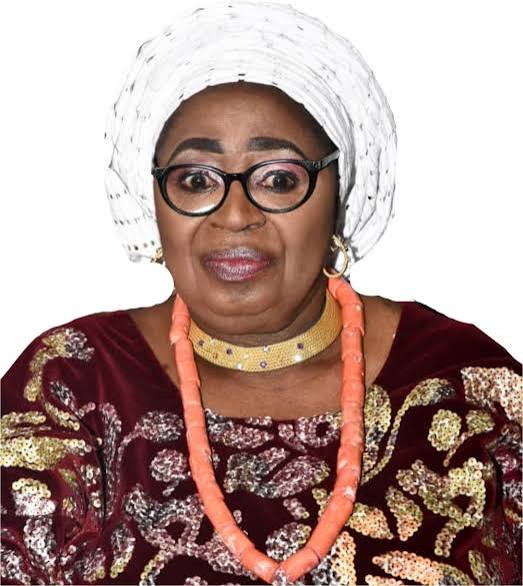
In Ilesa, Erelu Olusola Obada illuminates the path of tradition for her community. As the senior female chieftain, her authority flows like sunlight across ceremonial spaces, highlighting the enduring values of Yoruba life. Her role blends guidance, mediation, and cultural preservation in equal measure.
Through public appearances and ceremonial duties, she maintains the rhythm of Ilesa’s traditions, ensuring that cultural memory survives amid modern pressures. Each festival she participates in becomes a reaffirmation of identity and collective memory.
Erelu Olusola’s influence demonstrates that leadership can thrive in quiet authority. Her voice is not loud, yet it resonates across generations, anchoring community cohesion and respect for heritage.
In her presence, Ilesa witnesses the embodiment of continuity. The Erelu stands as both a mirror and a beacon, reflecting the weight of history while illuminating the path forward.
The Lolos
Lolo Anyanwu Ututu: The Rising Sun of Tradition
Lolo Anyanwu Ututu shines as the first light in her community, a quiet authority whose influence stretches across ritual and kinship alike. Her presence in ceremonies is like the dawn breaking over a village—gentle, illuminating, yet inevitable in its effect. She embodies the continuity of Igbo tradition, reminding all that culture is preserved in the rhythm of daily acts as much as in grand festivals.
As the wife of a titled chief, her responsibilities extend beyond mere representation. She guides communal ceremonies, mediates disputes, and nurtures younger women in the ways of tradition. Each act, though often unnoticed by outsiders, is a deliberate stitch in the fabric of her community’s moral and social cohesion.
Lolo Anyanwu’s influence demonstrates the power of silent authority. She shapes outcomes not through proclamation but through presence and counsel, allowing tradition to flow seamlessly from one generation to the next. Her voice is felt in the echoes of ritual drums, the cadence of festival songs, and the respect accorded by her people.
Through her stewardship, the village witnesses the subtle artistry of leadership. Lolo Anyanwu Ututu reminds us that influence need not be loud to endure; it is in patience, continuity, and devotion that the true strength of culture is maintained.
Lolo Anyi: The Heartbeat of Nsukka
In Nsukka, Lolo Anyi carries the weight of communal conscience. As the most significant female titleholder, she is both anchor and compass, ensuring that social, political, and spiritual life flows in harmony. Her authority is neither overt nor coercive, yet it shapes the pulse of the town like the rhythm beneath a drumbeat, steady and indispensable.
Lolo Anyi’s interventions in communal matters—from dispute resolution to ceremonial guidance—demonstrate a blend of moral authority and cultural guardianship. Her influence is relational, respected across genders and generations, embodying the principle that leadership often speaks loudest in the spaces between words.
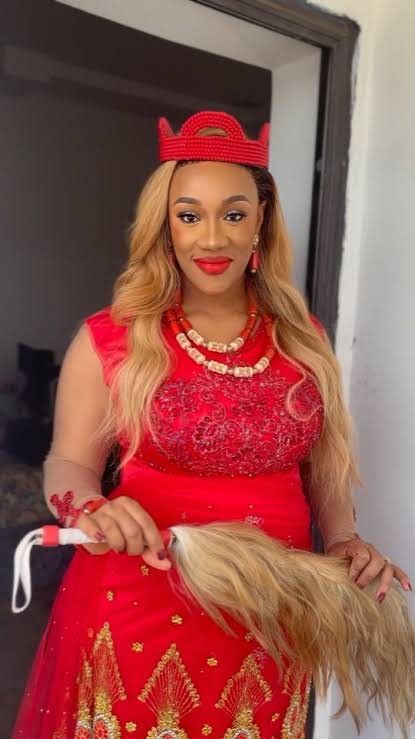
Her role embodies the silent weaving of society, ensuring that customs, rituals, and norms are observed and transmitted. The respect she commands underscores the Igbo belief that wisdom and social stewardship are as critical as formal power.
Through her continued vigilance, Lolo Anyi keeps the community tethered to its ancestral roots. Her quiet power is a reminder that culture thrives not in spectacle, but in steadfast devotion, guidance, and the daily enactment of tradition.
Onokoro Nwa Enyi Nwoti: The Merchant Queen of Influence
Onokoro Nwa Enyi Nwoti’s authority resonates in the marketplace and beyond, where commerce and culture intersect. As a prominent trader and political figure, her influence shaped both economic networks and social cohesion. She wielded power silently, not through formal office alone, but through the trust and respect she cultivated across her community.
Her participation in political life, including membership in the National Council of Nigeria and the Cameroons, reflects a bridging of spheres—where commerce, governance, and culture meet. In every negotiation and ceremonial act, she balanced practical power with moral stewardship, illustrating the duality of leadership in Igboland.
Onokoro’s legacy demonstrates that authority can be exercised in relational, fluid forms. Her impact is felt in markets, ceremonies, and councils, showing that influence often thrives in the interstices of public and private life.
Her story reminds us that cultural power is not always codified in title alone. It flows in the decisions, networks, and presence of those who nurture tradition while shaping the community’s evolving identity.
Theresa Onuorah: The Dance of Heritage
Theresa Onuorah channels culture through motion, making music and dance vessels of tradition. As the founder of the Egedege Dance Troupe of Unubi, she transformed performance into a living archive of Igbo history, ensuring that cultural expression pulses with each generation. Her authority is visible not in decrees but in the sway of movement and rhythm, carrying ancestral memory through performance.
Her stewardship preserves communal identity, linking contemporary audiences to the legacies of ritual and festivity. Each performance is both celebration and instruction, embedding social norms, histories, and values into the hearts of her people.
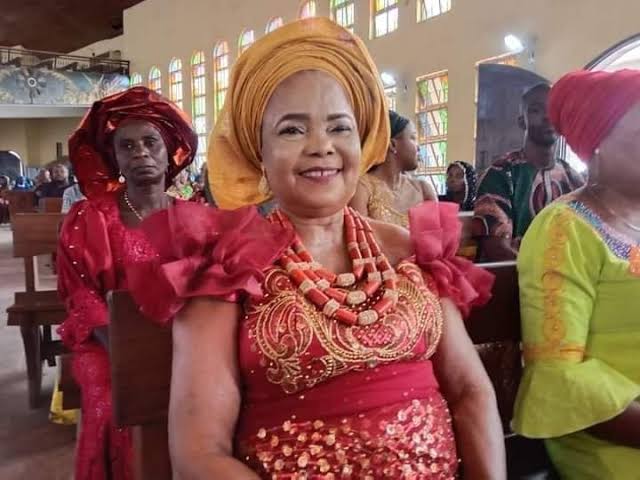
Theresa Onuorah demonstrates the power of embodied leadership—the notion that guidance can be enacted through art, ceremony, and presence, rather than words alone. Her influence ripples quietly through communities, as dancers, musicians, and audiences internalize the heritage she safeguards.
In her hands, culture becomes kinetic and enduring. Theresa reminds us that leadership and authority can be expressed in movement, sound, and rhythm, illustrating the diverse forms of silent power across Igboland.
Closeout: Where Silence Speaks
Power does not always declare itself; sometimes it breathes quietly through ritual, lineage, and presence. The Erelu and the Lolo embody this subtle force, guiding communities and sustaining heritage without fanfare.
In their silence, they teach that influence is measured not by visibility, but by the endurance of culture and the respect it commands. Each ceremony, each counsel, each gesture carries the weight of generations.
They are reminders that authority can exist in quiet spaces, shaping society through presence and wisdom rather than proclamation.
In the shadows of tradition, the Erelu and Lolo remain pillars—silent, steadfast, and profoundly enduring.
Discussion about this post