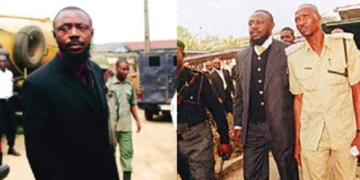


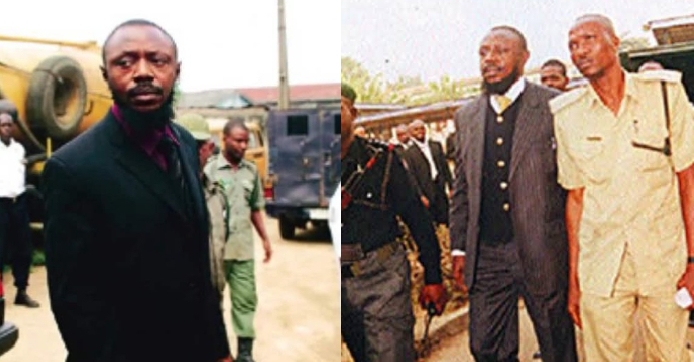
The courtroom in Ikeja was thick with a silence that didn’t belong to the living. The air was still, yet it carried a pulse — the breath of a nation waiting to see what would become of the man who once called himself God of the Whole World. When the judge finally spoke, his voice rolled like thunder against polished wood. In the dock stood a preacher, his once-flawless white cassock traded for prison khaki. His eyes — calm, unreadable — scanned the hall as if he were still on the pulpit, not the edge of justice. The journalists scribbled, the congregation of witnesses murmured, and somewhere outside, Lagos traffic moved on as though it had not just witnessed the unmasking of one of Nigeria’s most fearsome prophets.
They called him Reverend King, but the name that echoed in headlines that year was not one of holiness. It was accusation wrapped in fire. The preacher who poured petrol on sin. That was how the story burned into Nigeria’s collective memory — a tale of devotion that turned into domination, of a pulpit that became a courtroom, and of a faith community scarred by the power of belief.
Before this day, his followers had once bowed at his feet. Now, they waited for a different kind of decree — one that would not come from a pulpit, but from the bench of justice.
The Making of a Messenger
Long before the news cameras found him, Chukwuemeka Ezeugo was just another ambitious teacher trying to make sense of a restless nation. Born in the quiet folds of Mbaise, Imo State, sometime in the 1960s, he was known for his intensity even as a child. Friends from his youth said he had a way of speaking that made the ordinary sound eternal. In a country still rebuilding from the wounds of the civil war, voices like his — confident, unyielding, and spiritual — found eager listeners.
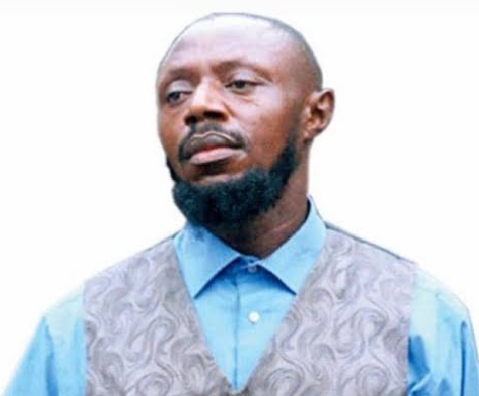
When he moved to Lagos in the 1990s, he entered a city drunk on revivalism. The air was thick with prophecy; every street corner had a preacher, every warehouse could become a church. Lagos was a city of second chances, and Ezeugo took his. He became Reverend King, founding the Christian Praying Assembly (CPA) — a name that promised power through prayer, but soon became a fortress of fear.
His sermons thundered about holiness, sin, and divine punishment. He preached not just salvation but submission. To his followers, he was a prophet who saw sin before it was confessed. To his critics, he was a man who mistook fear for faith.
In the early years, his church grew fast. Middle-class youths, university students, and women seeking deliverance from spiritual battles crowded into his services in Ajao Estate. The CPA compound became both sanctuary and stronghold. Members sold possessions, quit jobs, and surrendered independence in pursuit of holiness. It wasn’t just religion; it was regime.
Reverend King told them he was not just a man of God — he was a god among men, sent to cleanse the world. His charisma made the outrageous believable. His authority made obedience easy.
The Gospel of Fear — Inside Reverend King’s Church of Flames
What began as holiness soon turned into obsession. Former members would later describe the church as a world ruled by fear, not faith. Reverend King dictated how people dressed, ate, and even slept. Women were instructed to avoid “worldly beauty,” and men were warned against any hint of pride. He kept close watch on everyone, demanding confessions, exposing secrets, and punishing infractions with shocking severity.
Inside the compound, loyalty was not optional. He believed sin could be burned out of people — metaphorically, at first. But his metaphors began taking on literal meaning.
Witnesses recalled nights when he would lash out violently at those he accused of impurity. He spoke of “spiritual fire” and “the cleansing flame,” invoking apocalyptic imagery. Gradually, the idea of burning away sin became more than symbolic.
To his followers, questioning him was unthinkable. They saw him as a living extension of divine will — a man whose anger was interpreted as righteous fury. Fear kept them obedient; faith made them blind. And in that combination of awe and terror, tragedy was inevitable.
In the summer of 2006, his obsession with purity reached a breaking point. He accused some female members of fornication — a crime he believed warranted divine punishment. That night, as the humid air hung heavy over Lagos, he decided to act out his sermon.
The Fire That Burned More Than Flesh
It was July 22, 2006 — a humid night that began with prayer and ended in flames.
Inside the CPA compound, Reverend King summoned a group of young women, accusing them of fornication. His anger, witnesses later said, was unlike any they had seen before. He shouted about betrayal, impurity, and divine wrath. Then, in a moment that would alter Nigerian religious history, he reached for a can of petrol.
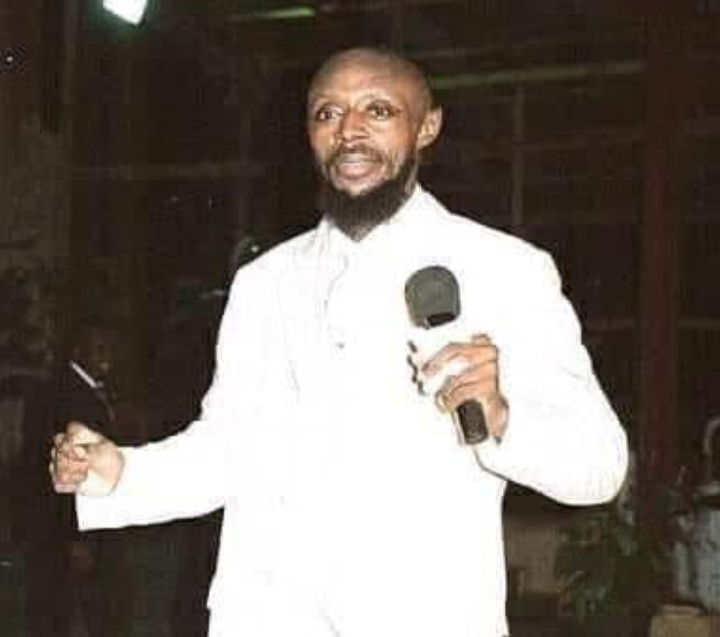
What happened next became both crime and legend. Reverend King was accused of dousing several members with petrol and setting them ablaze as punishment for sin. One of the victims, Ann Uzoh, suffered severe burns that covered most of her body. She fought for her life for days before dying from her injuries.
When the news broke, it was met with disbelief. Many Nigerians had seen extreme pastors, but none who wielded fire in judgment. Lagos newspapers filled with images of the church compound, the charred walls, and the haunting testimonies of survivors. Faith had turned fatal.
Reverend King maintained his innocence, claiming that he was being persecuted for his divine calling. His followers rallied, praying for his release and calling the fire “a test of faith.” But the state saw something else — murder in the name of God.
The Arrest and the Public Reckoning
The Lagos State Police Command wasted little time. Within days, Chukwuemeka Ezeugo was arrested and charged with murder and attempted murder. The CPA compound was sealed, and the preacher who once moved with a convoy of believers now rode in the back of a police van.
The trial drew crowds. Each hearing became a spectacle — journalists, worshippers, skeptics, and human rights observers packed the courtroom. It was part religious drama, part social reckoning. For the first time, Nigerians were forced to confront a question few dared ask: When does a preacher become a dictator?
In court, witnesses described years of abuse masked as discipline. They spoke of beatings, starvation, and humiliation. Some recanted under pressure from loyalists. Others broke down in tears. The prosecution painted a picture of a man consumed by power. The defense called him misunderstood — a victim of misrepresentation.
But evidence spoke louder than prophecy. Medical reports detailed the burns. Photographs showed charred flesh. The prosecution argued that Ann Uzoh’s death was not a tragedy of faith but of fanaticism.
The Verdict of Fire
In January 2007, the Lagos High Court pronounced its judgment: Reverend King was guilty of murder and sentenced to death by hanging. Gasps filled the courtroom. Some wept. Others nodded in grim approval.
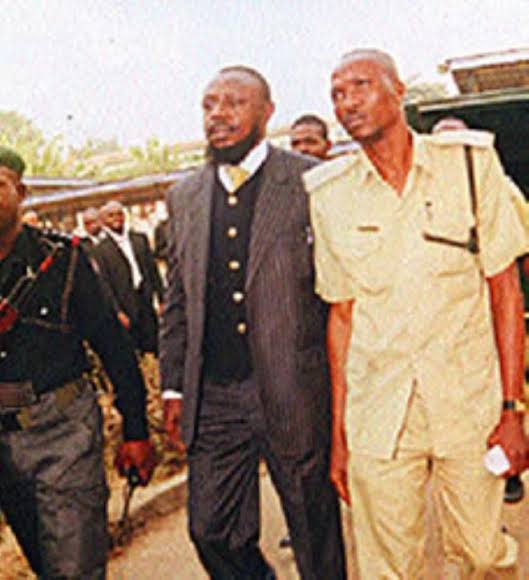
Outside, Lagos moved as always — the city rarely pauses for miracles or murders — but inside Nigeria’s Pentecostal community, the verdict sparked deep introspection. Could a man of God fall so far? Could blind faith justify brutality?
Reverend King’s lawyers appealed to the Court of Appeal, arguing procedural errors and bias. But the court upheld the conviction. The case climbed to the Supreme Court, where, after nearly a decade of legal wrangling, the justices affirmed the lower courts’ decision in February 2016.
The sentence stood. Justice had spoken.
The Prophet Behind Bars
Inside Kirikiri Maximum Security Prison,, Reverend King remained an enigma. Reports from prison officials described him as calm, prayerful, even regal. He continued to preach to inmates, conducting Bible studies and calling himself “God’s prisoner.” His loyalists outside still gathered weekly at the CPA compound, now under tight surveillance, proclaiming that their leader would rise again.
Some claimed he had already ascended spiritually. Others said he performed miracles from his cell. To them, his conviction was not defeat but prophecy fulfilled — the suffering of a righteous man misunderstood by the world.
But beyond the fanatic fringes, many Nigerians saw his story as a warning. It was proof that charisma without accountability breeds catastrophe, and that unchecked authority — even wrapped in scripture — can destroy the very souls it seeks to save.
Yet, uncertainty lingers over his fate. Though the Supreme Court upheld his death sentence in 2016, no official record has confirmed whether the execution was ever carried out. Over the years, rumors have surfaced — some claiming he was secretly executed, others insisting he remains alive, his case suspended in the quiet corridors of Nigeria’s justice system. The truth, much like the man himself, remains shrouded in mystery.
Faith, Power, and the Nigerian Psyche
Reverend King’s saga mirrored a larger Nigerian reality. The late 1990s and early 2000s were years when Pentecostalism surged — when people sought miracles more than meaning, and preachers became celebrities. Economic hardship, political instability, and social despair created fertile ground for spiritual strongmen who promised hope with one hand and demanded loyalty with the other.
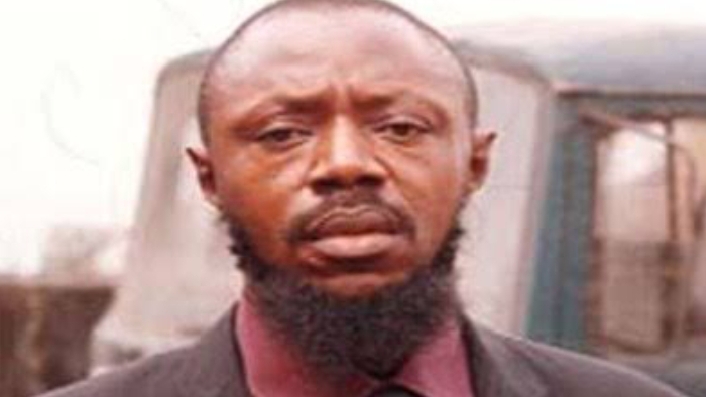
The rise of such preachers blurred the line between church and cult. They built empires around fear, promising deliverance through obedience. Congregations were taught to submit, not question. In this ecosystem, men like Reverend King thrived — articulate, magnetic, authoritarian.
His followers were not fools; they were seekers. In their desire for healing and purpose, they gave him the power to define sin and salvation. And in that transfer of trust, faith lost its compass.
Echoes of the Fire
Today, the Christian Praying Assembly still exists, though diminished. The walls are quieter, the hymns more cautious. Some members have left religion entirely, haunted by the memory of their leader’s fall. Others remain steadfast, insisting he was falsely accused — that the fire was metaphor, not malice.
Reverend King himself remains behind bars. Whether he will ever face the hangman’s noose is uncertain. Nigeria’s death sentences are often commuted, lost in bureaucratic limbo. But symbolically, the fire he lit continues to burn — in headlines, documentaries, and whispered warnings from pulpits.
For every new preacher who claims divine infallibility, his name is invoked as caution: Remember King.
Final Thoughts: When Fire Mistook Itself for Faith
Reverend King’s story endures not because of the flames that once filled the air, but because of the silence that followed — the uneasy quiet of a nation forced to confront how easily reverence can become ruin. He was the Nigerian preacher accused of pouring petrol on sin, but in truth, what he ignited went far beyond his church walls. He lit a question that still burns: how far can faith go before it becomes something else entirely?
In that question lies Nigeria’s reflection — a society that hungers for salvation yet often kneels before spectacle. King’s trial was more than a legal reckoning; it was a mirror held to every pulpit that commands without conscience. Whether he lives or not has become almost irrelevant; what lingers is the parable his life became.
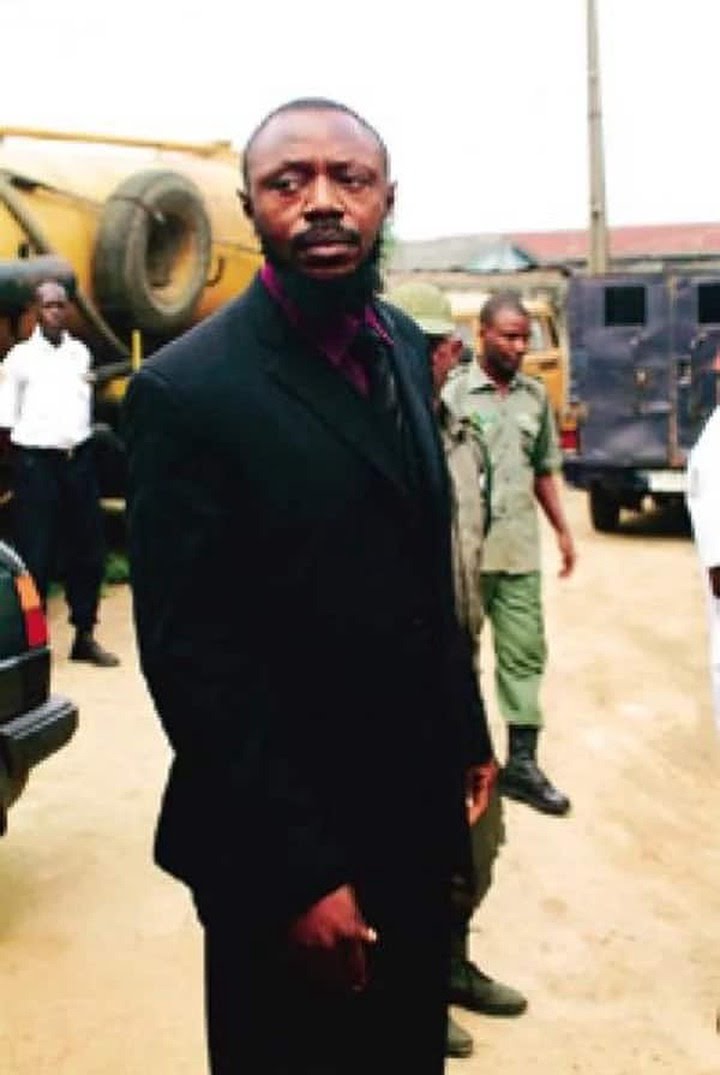
The preacher once called “God of the Whole World” is now a caution whispered through time — proof that even the holiest fire, once misused, stops being light. It becomes warning. And that warning still smolders in Nigeria’s soul, long after the flames went out.
Discussion about this post