
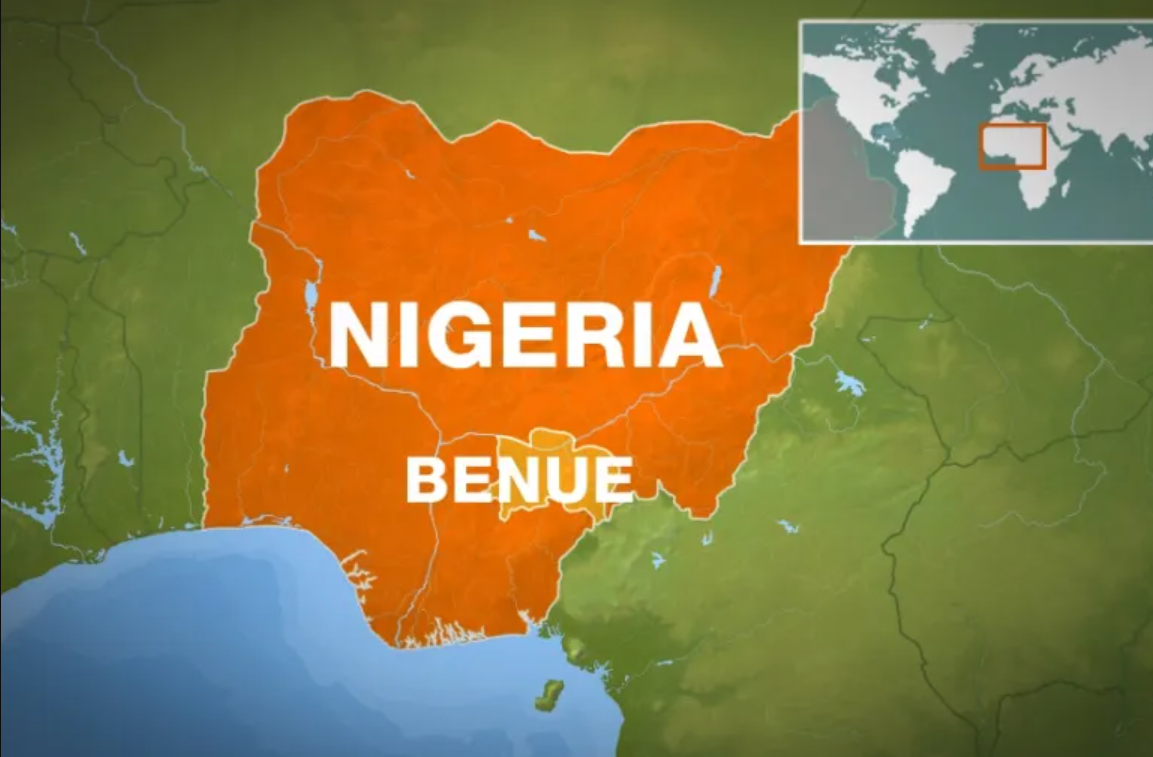
As June comes to a close, Within Nigeria brings you a summary of the key events that shaped the month. From the Democracy Day celebrations and mounting criticism over President Tinubu’s alleged attempts to steer the country toward a one-party state, to the gruesome killings of locals in Benue State by suspected herdsmen, and the signing of four controversial tax bills—these developments defined the political and social landscape of June.
Democracy Day celebration and one-party state
The June 12 Democracy Day celebration came with an unusual development. President Tinubu addressed the National Assembly, departing from the established norm of delivering a national broadcast or addressing the general public. He responded to growing criticisms of efforts to establish a one-party state, amid a wave of politicians defecting to the ruling All Progressives Congress (APC).
Several groups and political parties, including the Peoples Democratic Party (PDP), while reacting to the mass defection, urged Nigerians to resist what they described as the anti-democratic agenda of the APC, particularly the alleged plot to impose a one-party regime on the country. An allegation President Tinubu denied.
In response, Tinubu said, “At no time in the past, nor any instance in the present, and at no future juncture shall I view the notion of a one-party state as good for Nigeria.”
Benue State Killings
On the night of Friday, June 13, into early Saturday, suspected armed herders attacked Yelewata in Guma LGA, Benue State, shooting over 150 villagers as they slept and setting homes ablaze. These brazen attacks by herders have spanned more than a decade, claiming over 3,000 lives. The June 13/14 attack drew widespread condemnation from several organisations and individuals, including the United Nations and Pope Leo XIV.
As tensions escalated, the Chief of Army Staff, Olufemi Oluyede, and the Inspector General of Police, Kayode Egbetokun, relocated to Benue to implement a tactical approach to ending the killings in the state.
The Inspector General of Police, however, stated that 26 suspects have been arrested.
President Tinubu Signs Four New Tax Bills Into Law
On June 26, President Tinubu signed four controversial tax bills into law. The bills — the Nigeria Tax Bill, Nigeria Tax Administration Bill, Nigeria Revenue Service (Establishment) Bill, and Joint Revenue Board (Establishment) Bill — were recently passed by the National Assembly.
The bills were initially condemned by Northern governors after being introduced to the National Assembly in October 2024. The governors argued that they favour more economically active (VAT-generating) southern states, such as Lagos and Rivers, while disadvantaging the more populous but poorer northern regions.
Under the new framework, a single revenue agency — the Nigeria Revenue Service — will now handle all federal tax collection, replacing bodies like the Customs Service and the NUPRC. While VAT remains at 7.5%, essential goods and services, including food, education, healthcare, rent, and transport, are exempted.
The laws also introduce changes to how VAT is shared: 50% will now be split equally among states, 30% based on where goods and services are consumed, and 20% based on population. Small businesses with an annual turnover below ₦50 million are exempt from Company Income Tax (CIT), and individuals earning under ₦1 million annually are exempt from Personal Income Tax (PIT).
Corporate tax rates will gradually drop to attract investors, while a unified development levy replaces older, fragmented levies. The federal government says the reforms will help raise Nigeria’s tax-to-GDP ratio to 18% in three years and fund critical services.


Discussion about this post