
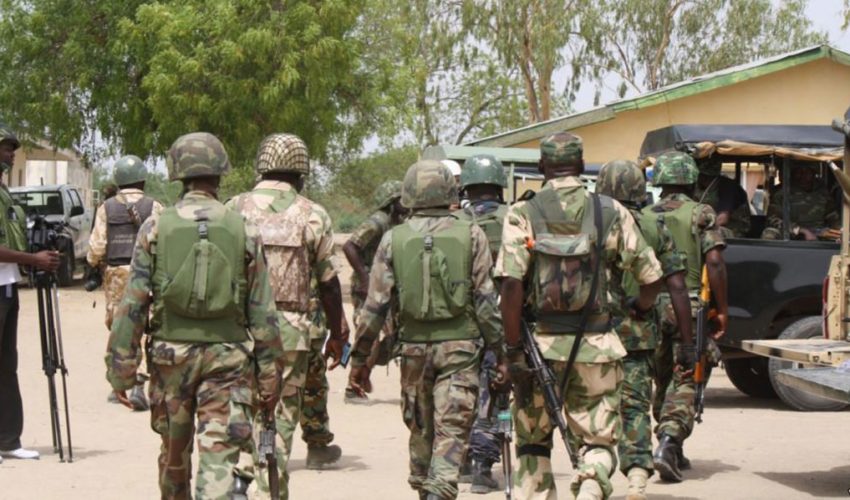
It was in 2018 that the Nigerian Defence Headquarters launched Operation Whirl Stroke (OPWS), a new offensive aimed at flushing out criminal gangs responsible for killings in Benue and other states, including Nasarawa, Taraba, and Zamfara. At the time, Benue was reeling from the deaths of over 3,000 people killed in the farmer-herder crisis.
In January 2018, the Benue State Emergency Management Agency revealed that over 80 persons had been killed in the state since December 31, 2017, following clashes between cattle herdsmen and farmers. In response, the federal government initiated Operation Whirl Stroke—a full-scale military operation, in collaboration with other security agencies—to “completely restore law, order, peace and stability in the affected communities.”
However, findings by Within Nigeria reveal that this operation, which remains active, has done little to secure the lives of Benue residents, many of whom continue to die in brazen attacks by militia herdsmen.
It Started a Long Time Ago
Even before OPWS was launched to address the escalating violence, Benue State—the heartbeat of Nigeria’s Middle Belt—had experienced deadly clashes between predominantly farming communities (such as the Tiv, Idoma, and Agatu) and nomadic herders. These killings intensified as herdsmen, in search of food for their cattle, began destroying farmlands.
These attacks date back to at least 2013, when over 190 deaths were recorded. In May 2013, over 200 herdsmen reportedly surrounded Ekwo-Okpanchenyi in Agatu LGA and killed 40 locals. This came just a month after 10 farmers were killed in Mbasenge community, Guma LGA, by suspected herdsmen.
The violence escalated further in 2016, with over 1,000 deaths recorded. In late February, villages were razed, and about 300 people were murdered in a renewed outbreak of violence across Okokolo, Akwu, Ugboka, and Aila villages in Agatu LGA. On March 19, 2016, at least 500 people were again killed in 10 communities within the same LGA.
Amnesty International later revealed that at least 3,641 people were killed between January 2016 and October 2018, with 57 percent of those deaths occurring in 2018 alone.
As the years progressed, bringing nothing but death and displacement to Benue, 2025 came with a renewed wave of attacks. In June 2025, over 200 people were reportedly killed in an attack by militia Fulani herdsmen on Yelewata community in Guma Local Government Area. A month later, another 42 people were killed in similar attacks.
Governor Hyacinth Alia stated that the recent wave of violence was being carried out by armed herders who entered the state without cattle.
In an interview on Channels Television, Alia said these herders came into the state armed with AK-47s and AK-49s. After murdering residents and destroying communities, new groups of people would often move into the affected areas to take over the land.
As tensions escalated, the Chief of Army Staff, Olufemi Oluyede, and Inspector General of Police, Kayode Egbetokun, relocated to Benue to ease tensions and provide a tactical approach to ending the killings in the state.
Has Operation Whirl Stroke Failed?
Despite still being operational, Operation Whirl Stroke (OPWS) has struggled to curb the persistent attacks by armed herdsmen in Benue State.
On May 18, 2025, the Nigerian Army announced that troops from the 72 Special Forces Battalion, operating under OPWS in collaboration with other security agencies, had successfully captured and destroyed several bandit camps. These camps were reportedly linked to a notorious gang leader operating around Konyo Gbise in the Akwaza area of Katsina-Ala Local Government Area.
However, these security efforts have not prevented the continued loss of lives. Just days earlier, on May 15, at least 23 people were reportedly killed in coordinated attacks allegedly carried out by herdsmen. The attacks occurred across Guma, Logo, Ukum, and Kwande local government areas.
Since the launch of OPWS on May 18, 2018, hundreds of lives have been lost, with many more displaced. This comes amidst several issues significantly hindering OPWS’s effectiveness and relationship with residents.
In 2021, the military publicly denied reports of fresh killings, even as the police and residents confirmed casualties in Ukum LGA. OPWS personnel have also been accused of extorting and harassing civilians, including herders and traders, during operations, causing fear and resentment within the communities they are meant to protect.



Discussion about this post