
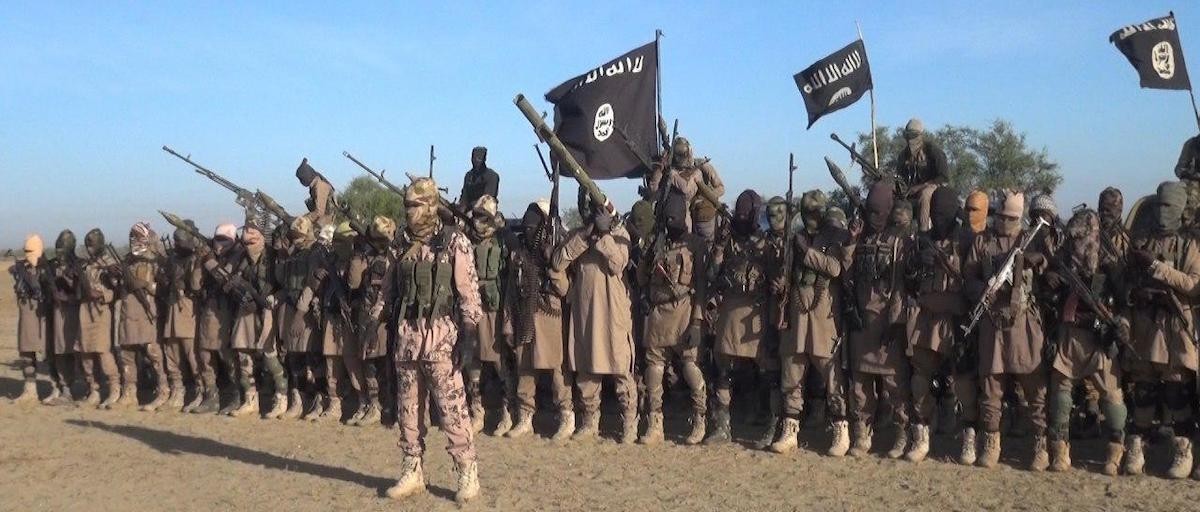
Terrorism is an act of extreme terror. The increasing number of casualties is disturbing and concerning. Boko Haram and ISWAP are terror groups who have invaded Nigeria with a great force of destruction
On October 31, U.S. President Donald Trump, on his social media handle, condemned the killing of Christians in Nigeria and termed it a Christian genocide.
Although some had questioned his position, claiming that his claim is a disrespect to Muslims who were killed by terrorists. They argued that it is Boko Haram or Nigerian genocide, not Christian or Muslim genocide.
President Trump’s claim has put Nigeria on the global stage of discussions centered on terrorism.
Over 50,000 Nigerians have been killed in cold blood, while more than 7 million have been displaced as a result of terror acts credited to Boko Haram and ISWAP—Islamic State West African Province.
Following Trump’s claim, Nigeria has witnessed a renewed hostility between Boko Haram and ISWAP, leading to the death of over 200 members.
This surprising move had resulted in loss of lives from both camps. However, the hostility between Boko Haram and ISWAP did not start in 2025.
HOW ISWAP WAS FORMED
ISWAP—Islamic State West Africa Province—emerged in 2015 from Boko Haram.
According to a report, it happened after Boko Haram, a Salafi Jihadist movement, pledged allegiance to the Islamic State (IS) in Iraq and the Levant.
ISIS—Islamic State of Iraq and Syria—deposed Boko Haram’s leader, Abubakar Shekau, for wider influence and tactics. Abu Musab al-Barnawi was appointed as the leader of ISWAP.
This move provoked the Shekau faction of Boko Haram, and they split. Al-Barnawi became the leader of the ISWAP group, while Shekau remains the leader of the Boko Haram group.
THE CLASH AND SUPERIORITY CLAIM
Boko Haram and ISWAP hostility started over a leadership struggle, but it escalated due to differing goals, objectives, ideologies, and scopes of operations.
The conflict between the duo started in 2016. Boko Haram and ISWAP are terror groups who want to forcefully establish an Islamic state through mass shootings, bombings, kidnappings, and assassinations.
However, the scope of ISWAP—being for West Africa, not a country like Boko Haram—allowed it to grow in capacity and strength, bigger than Boko Haram in size and influence.
Aside from the leadership tussle, which further divided the duo, the battle for territorial control escalated the situation and contributed to and renewed hostility.
The fierce battle for control of the Lake Chad Region was a major cause of the hostility. Security scholars argued that the Lake Chad Basin was a strategic location and a refuge from military attacks, hence the desperate move from both groups to secure the area.
A report claimed that the disagreement over the treatment of Muslim civilians also contributed to the hostility between the duo. In September 2021, Boko Haram raided Kirta-Wulgo Island, an area under the control of ISWAP.
This fierce conflict which took weeks of back and forth fighting led to huge loss of lives. This attack was a notable one because it claimed many lives.
In 2021, ISWAP in retaliation fiercely attacked Boko Haram bases, which led to the death of its leader, Abubakar Shekau.
The death of Shekau disorganized Boko Haram and created a leadership loophole, which enabled ISWAP to expand its operations into other parts of Nigeria.
Since the death of Shekau, Boko Haram and ISWAP have continuously engaged in fierce battle until their recent clash in Dogon Chiku, on the shores of Lake Chad, where ISWAP recorded a huge loss of its members.


Discussion about this post