
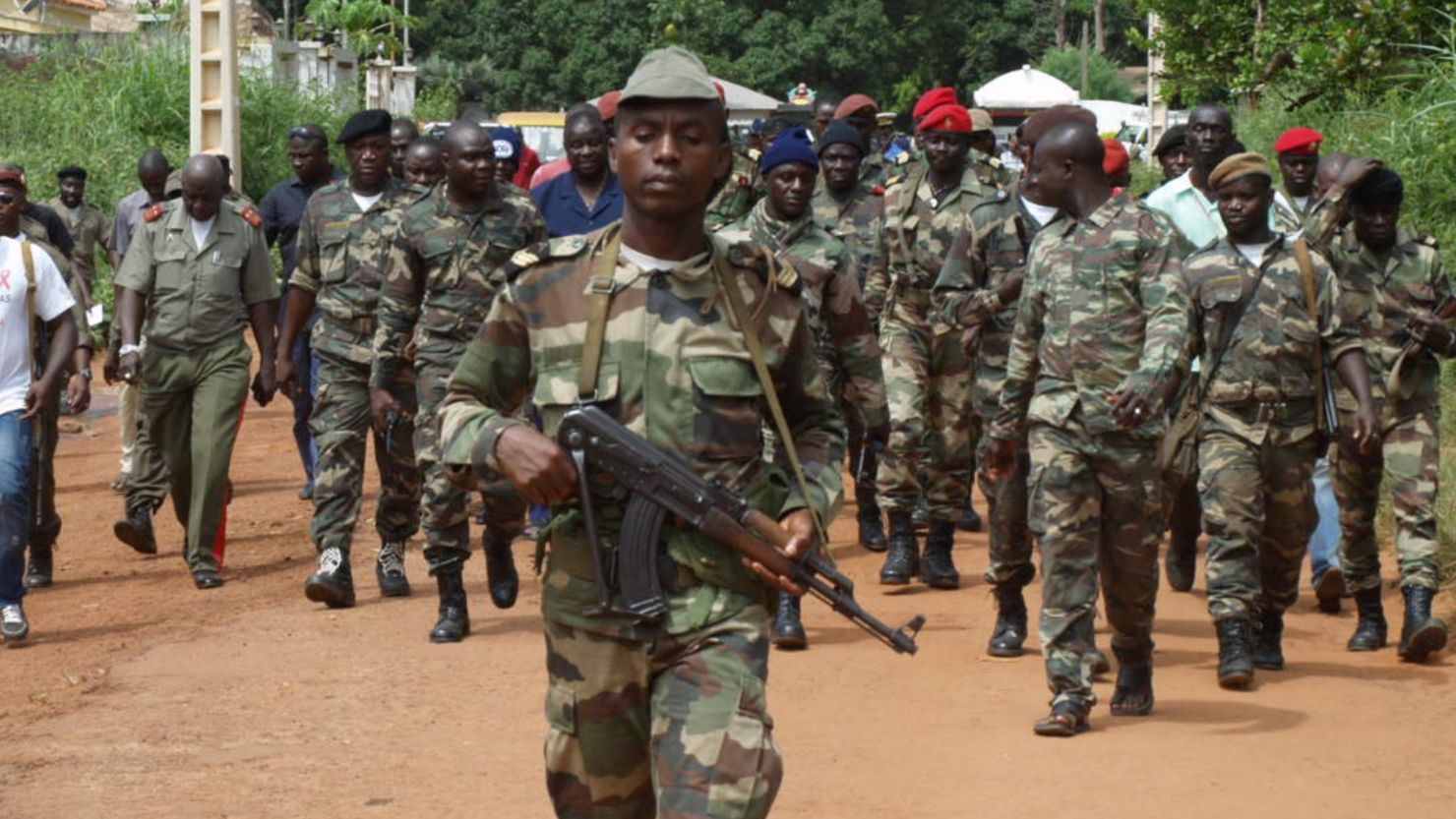
Guinea-Bissau has become the newest West African country to witness a takeover by its armed forces.
The announcement came shortly before the final results of the nation’s presidential vote were expected to be released.
The officers involved said they were stepping in to run the country while regular political structures were put aside.
Borders were briefly shut following the announcement but were reopened soon after.
A senior military figure, Horta Inta-A, was introduced as the temporary head of state. The former leader, Umaro Embalo, left the country shortly after the takeover.
The new authorities said they acted because they believed the elected administration had failed to protect national interests.
Many voices in the region reacted with concern at the latest change of power. The event adds to a rising pattern of power shifts across West Africa over the past few years.
The number of coups and attempted coups in the sub-region has continued to grow since 2020.
The rising trend has caused fears that democratic institutions in the region are becoming weaker.
The situation has also encouraged new alliances among some countries led by military rulers.
Below is a brief look at earlier takeovers and attempts across West Africa since 2020.
Mali had a power change in 2020 when soldiers removed its president after months of tension linked to insecurity and political disagreements.
A temporary government was created afterwards, but another takeover followed in 2021 after further disagreements within the transitional leadership.
Guinea recorded a takeover in 2021 when soldiers moved against the sitting president after long-running disputes about governance and elections.
Burkina Faso faced two takeovers in 2022, the first linked to growing public anger over rising insecurity.
The second followed soon after when the new ruling group was also removed by another set of officers.
The Gambia had an attempted takeover in late 2022, but the effort failed and normal order was restored within a short time.
Niger experienced a takeover in 2023 when soldiers removed the president and began ruling through a transitional team.
The transitional leadership later extended its planned timetable due to continued attacks by armed groups.
Guinea-Bissau’s shift in November 2025 now becomes the latest in the sequence of political disruptions in the region.
Central Africa has also seen similar events, adding to the general climate of instability on the continent.
In Chad, the armed forces took control in 2021 after the death of the country’s long-serving leader.
His son stepped in as interim leader and began directing national affairs under a military arrangement.
Gabon witnessed a takeover in 2023 when officers moved against the government shortly after another presidential result was announced.
The country’s long-running political dynasty ended as state bodies were dissolved and a new administration was installed.
There have also been reports of failed attempts in other parts of the region.
In Nigeria, arrests were made in 2023 after concerns that some officers were plotting against the government.
Sierra Leone faced an armed attack around the same period, but control was restored after fighting in the capital.
These incidents show that political stability across parts of West Africa still faces serious challenges.
The developments continue to raise questions about leadership transitions, national security, and the future direction of the region.



Discussion about this post