
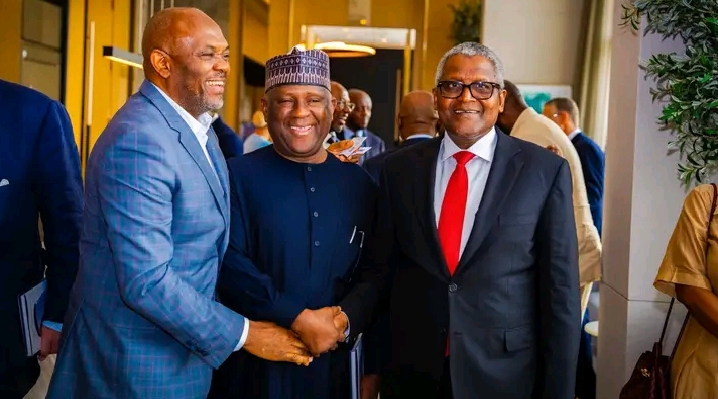
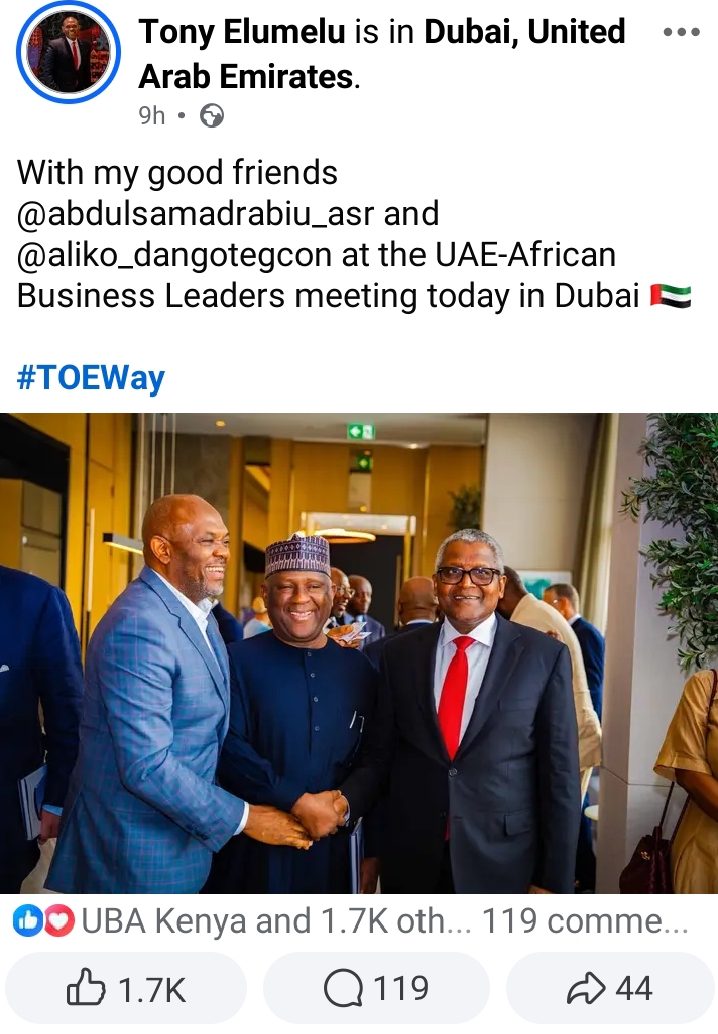
The meeting that took place in Dubai on 6 December 2025 was not another casual dialogue around global trade or another friendly catch up between old business names, it carried weight that was obvious from the moment the list of attendees surfaced and from the moment the Dubai ruler Sheikh Mohammed bin Rashid Al Maktoum welcomed the African delegation at the Address Creek Harbour Hotel. The UAE leadership wanted something concrete from Africa’s most influential private sector voices and Africa’s most influential private sector voices wanted something equally strategic from the Gulf. Nothing about this gathering was vague or ceremonial, every face in the room had a reason to be there.
This event was organised at a time when both Africa and the Gulf are trying to stabilise their economic paths after a full year of currency swings, energy supply disputes, logistic disruptions, political pressure, climate challenges and growing competition from Asia and Europe. The UAE wants deeper African partnerships because the continent still holds some of the world’s fastest growing markets and some of the last major frontiers for investment in energy, digital infrastructure, manufacturing and agriculture. Africa’s top business figures want stronger capital partnerships from strategic regions because many African governments are struggling with revenue limits and heavy public debt which makes the private sector the new main engine for continental development.
In that room in Dubai, three Nigerians stood out not just for wealth but for the kind of influence that stretches across borders. Aliko Dangote with his industrial empire, Abdulsamad Rabiu with a rising manufacturing power base and Tony Elumelu with a voice that has shaped entrepreneurship stories across Africa for more than a decade. What they discussed in Dubai and what the UAE wanted from them is already shaping the next set of conversations about Africa’s economic direction.
The sections below break this meeting down in a way that mirrors how it actually unfolded, using the available facts and the surrounding context.
WHY THIS DUBAI MEET WAS NOT A NORMAL BUSINESS CHAT
There are meetings that look nice on paper but do not move anything on the ground and there are meetings that show up quietly and still end up pushing an entire region into a new lane. This December gathering falls into the second category, not because of how loud it was but because of the weight of the attendees. The UAE does not just call a group of African business and philanthropic leaders for friendliness, the UAE calls them when it sees an opportunity where private sector capacity can plug into big regional plans that governments alone cannot execute at the same speed.
This meeting took place at the Address Creek Harbour Hotel in Dubai, a location that signals intention. It sends a message that this was not a quick corridor meeting and not an airport lounge chat, it was a structured sitting where the hosts could map out strategy with ease. The mix of Nigerian, other African and UAE representatives created an atmosphere that felt like both sides wanted something urgent and something long term at the same time.
The UAE wants to strengthen its energy position and Africa holds some of the most important emerging gas and renewable assets. The UAE wants to widen its supply chain routes, Africa holds ports and land corridors that major global companies are watching closely. The UAE wants to secure long term food stability, Africa remains one of the most fertile zones on the planet. The UAE wants to expand its influence in digital infrastructure and artificial intelligence, Africa is the youngest connected population in the world. Every angle points toward mutual gain.
The Africans in the room also knew why they were there, they knew that collaboration with the Gulf offers access to capital sources that do not always come with the heavy political constraints of western financing and they know the UAE is positioning itself as a premium global investment gateway.
DANGOTE PULLS UP WITH DEEP INDUSTRIAL WEIGHT
When Aliko Dangote stepped into this meeting he represented more than the title of richest man in Africa, he represented a structure built around manufacturing, refining, logistics, cement production, food processing and continent wide distribution lines that few African corporations can match. His presence alone told the UAE officials that the conversation was not just theory, it was coming from someone who understands billion dollar execution on the African continent.
Dangote’s refinery story in 2025 had already pushed him into a new phase of global relevance. The refinery had entered the year with multiple supply shifts, foreign scrutiny, domestic policy tension and a determination to break Africa’s long dependence on imported fuel. For the UAE, that refinery is more than an industrial project, it is a continental pivot point because any regional supply partnership that includes the UAE could reshape fuel flows between the Gulf and West Africa.
The UAE also understands the volume of land, capital and labour behind Dangote’s cement interests. Cement is not a glamorous sector but it is the backbone of infrastructure growth. Dubai is always building something and Africa is entering a long building cycle. A connection between these two zones through Dangote’s supply strength is a logical strategic lane.
Everything Dangote brought into the Dubai meeting was tied to long term capacity. He is one of the few African businessmen who can sit in front of global leaders and speak in terms of decades rather than short projects. That alone makes him valuable to the UAE’s investment vision.
RABIU BRINGS HIS FAST RISING MANUFACTURING PUSH
Abdulsamad Rabiu is not someone who seeks noisy global attention but his influence has been rising steadily. His manufacturing and food related operations have expanded aggressively in the last decade and by 2025 he had established himself as a stabilising force in Nigeria’s private sector. His presence at the Dubai meeting showed that the UAE was not only interested in the largest industrial figure but also in the manufacturers who understand the African consumer base from the ground up.
The UAE wants stable food supply partnerships and Rabiu sits at that intersection. Africa’s food supply has been pushed around by exchange rate issues, climate stress and logistic disruptions. The UAE, with its desert environment, sees agricultural partnerships as an essential part of its survival strategy. Rabiu is one of the African private sector voices who can explain the full food chain from production to distribution without confusion.
His cement operations also give him a seat at the continental infrastructure conversation. If Africa wants to build faster and the UAE wants to invest faster, Rabiu fits naturally into the middle of that plan. What he brought into Dubai was the perspective of a businessman who builds quietly, scales quickly and avoids the political noise that sometimes distracts Nigerian billionaires.
ELUMELU ENTERS WITH ENTREPRENEURSHIP AND PHILANTHROPY ANGLE
Tony Elumelu brings a different type of influence into any high level meeting. Instead of only representing industrial or manufacturing scale, he represents the voice of entrepreneurship, investment banking, power distribution, continental philanthropy and the wider development narrative around African youth. In the Dubai meeting, his role was not to compete with Dangote or Rabiu in industrial scale but to offer a perspective on how the UAE can partner with Africa on human capital and cross border finance.
Elumelu is known for pushing entrepreneurship as the heart of African growth. By 2025, his foundation had already supported thousands of small and medium scale entrepreneurs across Africa and he had positioned himself as a champion of African private sector independence. The UAE sees value in this because entrepreneurship is one of the fastest bridges into digital infrastructure, fintech expansion, renewable energy adoption and regional trade.
In conversations like this, Elumelu tends to bring clarity to social development angles that many large industrial operators do not always emphasise. The UAE wants not just economic partnership but social partnership, especially in areas tied to digital capacity, skills development and philanthropy. That is why Elumelu was present and why his voice mattered in Dubai.
THE TALKS AND WHY THEY MATTERED TO BOTH SIDES
At the core of the Dubai conversations were several major themes. The first was energy, covering both conventional and renewable forms. Africa has some of the most promising gas reserves and some of the most attractive solar and wind zones. The UAE has capital, technology and experience in these sectors. Joining these strengths could shift the energy balance in several African countries.
Another major theme was digital infrastructure. Africa’s population is young and digitally active. The UAE wants to tap into this demographic wave. Africa wants better infrastructure to support its growing digital markets. The Dubai discussions centred on how both sides could create joint platforms and digital corridors to speed up regional connectivity.
Supply chain and transport were also on the table. Africa struggles with weak ports, slow land borders and underdeveloped logistic routes. The UAE, with its world class ports, is exploring how it can partner in building new routes or modernising existing ones. Dangote and Rabiu understand the importance of supply chains because their companies depend heavily on them. Elumelu understands the digital side of logistics. Together they offered a broad view that the UAE found valuable.
Agriculture and food systems formed another pillar of the talks. Food security has become one of the most urgent global issues. The UAE cannot rely completely on imports from distant regions and Africa cannot afford to continue losing agricultural potential. Rabiu’s presence made this part of the discussion more practical and more grounded.
Philanthropy was also highlighted because the UAE is investing more heavily in global humanitarian projects. Elumelu’s long standing philanthropic work made him a natural voice in this part of the meeting.
WHAT THESE TALK POINTS SIGNAL ABOUT THE FUTURE
Meetings like this are usually followed by slow announcements, small updates or long quiet periods. But this one feels different because both sides have urgent needs. Africa needs capital and partnership that does not drown it in debt. The UAE needs long term stability and market access that matches its rapid global positioning.
For Nigeria specifically, this gathering signals a shift toward deeper private sector diplomacy. Three of its most powerful businessmen were not in Dubai for tourism or publicity, they went for strategy. Nigeria’s government has been under economic pressure due to inflation, debt and currency strain. These businessmen are increasingly becoming the face of Nigeria’s economic engagement with the world.
The UAE has also been searching for new reliable partners as global competition intensifies. By bringing Dangote, Rabiu and Elumelu together in one room, the UAE signalled that it sees Nigeria as a central player in Africa’s economic future.
This meeting could influence new energy agreements, new manufacturing partnerships, new digital corridors, and new agricultural investments. None of these deals have been made public yet but the foundation has been laid.
WHAT WE STILL DO NOT KNOW
Even with all the attention this meeting generated, several things remain unclear. There are no publicly confirmed deals. There are no published timelines for new projects. The African attendees have not released personal statements detailing what they plan to do next. Everything discussed still sits at the exploratory stage.
This is not unusual. High level meetings often move slowly from idea to action. What matters now is whether the UAE continues to push this partnership line and whether the African business leaders begin to align their next projects with Dubai’s investment goals.
There is also the question of execution. Africa has sometimes struggled with follow through on large partnerships due to politics, regulation, land issues, slow approvals and currency challenges. If these issues show up again, the momentum created in Dubai may slow down quickly.
But if the Nigerian business leaders and the UAE partners find a way to navigate these barriers, this December meeting could be remembered as one of the most important private sector diplomacy moves of the decade.
THE BROADER CONTINENTAL IMPACT
Africa has been seeking new investment patterns for years. Western financing has become restrictive. China is rebalancing. Russia is unstable. The Gulf has emerged as a new trusted region with money, technology, stability and strategic positioning. The UAE’s involvement in African development is increasing rapidly.
The Dubai meeting is part of a larger pattern where African private sector leaders are becoming the primary negotiators for continental development. Governments are present but heavily constrained. It is businessmen like Dangote, Rabiu and Elumelu who now have the freedom, speed and financial power to engage directly with global players.
If this pattern continues, Africa may enter a phase where major projects are driven by private sector alliances rather than government to government agreements. This could reshape the pace of development and the way partnerships are measured.
CONCLUSION
The December 2025 meeting in Dubai was not a casual alignment of business minds, it was a strategic moment that connected Africa’s most powerful private sector leaders with one of the world’s most ambitious investment hubs. The choice of Dangote, Rabiu and Elumelu was deliberate. Each man represents a different pillar of African development. Together they brought industrial strength, manufacturing depth, food security insight, entrepreneurial experience, financial understanding and philanthropic influence.
What they discussed in Dubai is important but what they will do after this meeting is even more important. Africa and the UAE both stand at a point where every decision matters. If they take the right steps after this meeting, the partnership they began in that room at the Address Creek Harbour Hotel could shape Africa’s next decade.
This story is still unfolding and the next updates will confirm whether this gathering turns into historical progress or just another high level conversation. For now, the signals look serious, the intentions look real and the future looks open.


Discussion about this post