
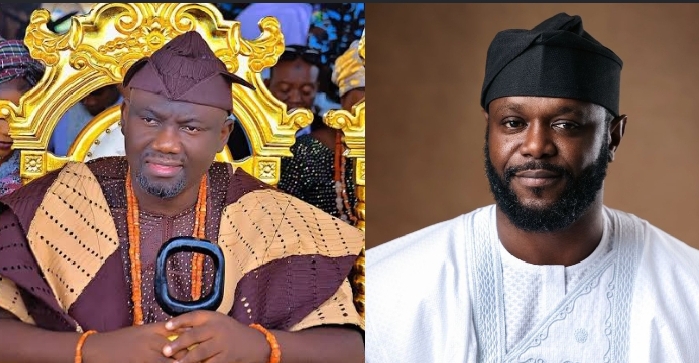
The streets of Oyo Town will soon witness an event that blends centuries of tradition with the pulse of modern Nigerian politics. The Alaafin of Oyo, Oba Abimbola Akeem Owoade, has announced his plans to confer the prestigious Okanlomo of Yorubaland title on Seyi Tinubu, the son of President Bola Ahmed Tinubu. The announcement has stirred both excitement and debate across Yorubaland as traditional authority and political influence intersect. The installation ceremony is scheduled for Sunday, December 21, 2025, promising to attract monarchs, dignitaries, and public attention from across Nigeria.
Okanlomo, often interpreted as beloved child, carries symbolic significance in Yoruba culture. It is not merely a title, but an affirmation of respect, recognition, and cultural belonging. When conferred by the Alaafin of Oyo, the title takes on an additional layer of prestige, symbolizing approval from one of the most historically significant Yoruba monarchs. The conferment is expected to be both ceremonial and strategic, signaling the Alaafin’s authority in matters that transcend the borders of Oyo State.
The event will also see other dignitaries honored, including Senator Abdul’Aziz Yari, who is expected to receive the title Obaloyin of Yorubaland. Such simultaneous investitures underscore the Alaafin’s continued role in shaping social hierarchies and influencing public perception through cultural instruments. For Seyi Tinubu, the title positions him at the crossroads of traditional respect and political legacy, aligning him with centuries of Yoruba heritage while projecting influence into contemporary societal discourse.
Observers have noted that the timing of the title conferment is significant, coming weeks after the Ooni of Ife, Oba Adeyeye Enitan Ogunwusi, conferred a similar Okanlomo-type title on Prince Dotun Sanusi. The act has highlighted longstanding questions of jurisdiction, authority, and protocol among Yoruba monarchs, bringing attention to the delicate balance of power and recognition that underpins chieftaincy practices in Nigeria.
The Significance of Okanlomo in Yoruba Tradition
The Okanlomo title carries weight beyond its ceremonial value. In Yoruba culture, titles such as Okanlomo represent a bridge between ancestral heritage and contemporary recognition. Being named Okanlomo by the Alaafin signals deep respect and positions the honoree as a person held in high esteem across Yorubaland. The title conveys familial warmth, communal recognition, and, implicitly, a measure of moral and social responsibility.
For centuries, Yoruba monarchs have wielded the authority to recognize individuals who have contributed to cultural, political, or social advancement. The Alaafin of Oyo, as a custodian of one of the oldest Yoruba kingdoms, occupies a position of considerable influence. Conferring Okanlomo on Seyi Tinubu not only continues this tradition but also reinforces the Alaafin’s role as a central arbiter of Yoruba cultural recognition. The selection of honorees often reflects both lineage and the evolving sociopolitical context of Yoruba society.
Chieftaincy titles serve multiple functions. They acknowledge personal achievement, solidify networks of influence, and provide a visual symbol of communal cohesion. The conferment of Okanlomo to a figure like Seyi Tinubu illustrates how traditional authority can interface with political prominence. In contemporary Nigeria, these titles have acquired layers of significance, reflecting both historical continuity and modern societal expectations.
The meaning of Okanlomo extends beyond a simple label. It is a form of cultural storytelling that communicates values, expectations, and connections. For Seyi Tinubu, the title anchors him to a lineage of respect while situating him within the broader narrative of Yoruba leadership and influence. Every aspect of the ceremony, from the presence of other monarchs to the audience of dignitaries, reinforces the gravity of the recognition.
Context: A History of Authority and Jurisdiction
The Alaafin’s decision must be viewed against a backdrop of historical and contemporary debates over Yoruba authority. In August 2025, the Alaafin publicly challenged the Ooni of Ife regarding the conferral of titles that span all of Yorubaland. He asserted that only the Alaafin possesses the traditional prerogative to grant pan-Yoruba titles.
At the time, a 48-hour ultimatum was issued for the Ooni to revoke a title previously given to Prince Dotun Sanusi. This confrontation brought longstanding questions of traditional jurisdiction to the forefront, highlighting the layered nature of authority among Yoruba monarchs.
These tensions are not merely ceremonial. They reflect deeper historical legacies and contemporary political realities. The Yoruba kingdom, composed of multiple sub-regions and dynasties, has always navigated questions of hierarchy and precedence. The Alaafin, tracing lineage back to the Old Oyo Empire, carries both historical authority and modern expectations of leadership. Each act of title conferment becomes a statement of cultural legitimacy and influence.
For Seyi Tinubu, receiving the Okanlomo title in this context places him at the intersection of tradition and political lineage. The event draws attention to how royal prerogatives are exercised today, how power is symbolically represented, and how culture and politics coexist in complex, overlapping frameworks. The conferment is as much about affirming the Alaafin’s authority as it is about honoring an individual.
Understanding the historical weight of titles like Okanlomo requires examining the interplay between monarchs and society. Yoruba kingship has always balanced ceremonial, political, and spiritual dimensions. In the modern era, these dimensions manifest in the public attention, media coverage, and political symbolism surrounding title conferments. Seyi Tinubu’s investiture is a lens through which these dynamics can be observed in real time.
Alaafin’s Strategy and Seyi Tinubu’s Role
The planning for Seyi Tinubu’s Okanlomo investiture is as meticulous as it is symbolic. The Alaafin of Oyo has long maintained a careful balance between public visibility and royal dignity. For this ceremony, the palace has coordinated with local councils, cultural custodians, and civic leaders to ensure that every element, from seating arrangements to ceremonial regalia, reinforces both authority and tradition. Invitations have been extended not only to other Yoruba monarchs but to political leaders, community elders, and scholars of Yoruba history. The event is designed to showcase the fusion of cultural continuity and contemporary relevance.
Seyi Tinubu’s role in the investiture extends beyond that of a passive honoree. As the son of the sitting president, his presence brings a layer of political symbolism to the ceremony, highlighting the intersection of heritage and national prominence. Observers note that his conduct, attire, and participation will set the tone for how modern elites engage with ancient traditions. Each gesture, from the acceptance of the staff of office to the acknowledgment of elders, carries weight in communicating respect for Yoruba customs and the Alaafin’s authority.
The strategic timing of the conferment also reflects careful consideration of public perception. Scheduled for a Sunday, the ceremony allows for maximum attendance while minimizing conflicts with governmental or commercial obligations. The palace’s decision to issue a widely circulated flier emphasizes transparency and communal participation, reinforcing the notion that traditional authority in Yorubaland is both public-facing and socially inclusive. This transparency counters narratives that chieftaincy is reserved for private networks or political insiders.
Seyi Tinubu’s investiture is therefore a stage where multiple narratives converge. It is a public affirmation of the Alaafin’s cultural jurisdiction, a reinforcement of social hierarchy, and a deliberate positioning of a political figure within Yoruba heritage. The planning of this investiture underscores the enduring power of ceremony in maintaining authority and transmitting cultural values across generations. It is not simply a celebration, but a carefully orchestrated statement of relevance and influence.
Ceremony Preparations: From Palace Halls to Public Spaces
Inside the walls of the Alaafin’s palace, preparations for the Okanlomo investiture are in full swing. Artisans and palace staff are attending to ceremonial attire, traditional insignias, and decorative arrangements that reflect centuries of Yoruba craftsmanship. The processional routes through Oyo Town are being mapped, ensuring that both local residents and invited dignitaries experience the grandeur and symbolism of the occasion. Each element, from the drums that mark royal authority to the colors worn by palace attendants, is selected to communicate cultural continuity and the significance of Seyi Tinubu’s recognition.
Public spaces outside the palace are similarly transformed. Streets leading to the Alaafin’s palace are being cleared and decorated, reflecting a careful balance of practicality and spectacle. Markets, schools, and civic offices are informed in advance, allowing for coordinated community participation. Vendors and local performers are expected to contribute to the ceremonial atmosphere, blending traditional music, dance, and pageantry. The physical staging of the event serves not only as preparation but also as a visible reminder of Yoruba heritage and social cohesion.
Coordination with other Yoruba monarchs is a central feature of these preparations. The presence of rulers from across the region adds layers of legitimacy and ceremonial weight to the conferment. Protocol officers ensure that seating, ceremonial honors, and procession sequences reflect hierarchy while demonstrating respect for each attending monarch. The careful orchestration highlights the Alaafin’s authority, signaling that his role extends beyond the palace and into the broader network of Yoruba governance and cultural leadership.
Every aspect of the ceremony, from preparation to execution, is imbued with metaphorical meaning. The physical arrangements reflect the structure of Yoruba society, the integration of political and cultural authority, and the bridging of past and present. For Seyi Tinubu, walking through these carefully prepared spaces is not just participation in a ritual but immersion into a living tradition. Each step underscores his recognition as Okanlomo, embedding him within a lineage of honor that transcends immediate political affiliations and situates him firmly within Yoruba cultural memory.
National Influence and Public Perception
Seyi Tinubu’s Okanlomo title cannot be understood without recognizing its political dimension. As the son of Nigeria’s sitting president, his recognition by the Alaafin of Oyo is perceived as a convergence of traditional authority and national influence. The ceremony, while rooted in centuries-old Yoruba practice, is amplified by the attention of media outlets, political commentators, and social platforms. Public perception will inevitably interpret the conferment as a statement about familial prestige, cultural endorsement, and alignment between political leadership and traditional governance.
The timing of the ceremony, following the Ooni of Ife’s conferral of a similar title, intensifies the political narrative. Analysts note that the Alaafin’s act may be interpreted as both a reaffirmation of his authority over pan-Yoruba titles and a subtle positioning of the Tinubu family within Yoruba cultural politics. In a nation where traditional authority intersects with political networks, the Okanlomo title becomes a conduit for influence, signaling both social legitimacy and regional support.
Community reactions further underscore the political layer. Local leaders, elders, and youth organizations are closely observing how the event unfolds. Positive reception reinforces the Alaafin’s cultural authority, while criticism or disputes could highlight ongoing tensions among Yoruba monarchs. The ceremony, therefore, functions as a public test of influence, demonstrating how traditional structures engage with contemporary political realities.
Media framing amplifies these dynamics. Coverage emphasizes the grandeur of the palace, the historical significance of the Okanlomo title, and the visibility of Seyi Tinubu as a figure straddling tradition and modernity. Social media commentary, opinion pieces, and live coverage contribute to a narrative where ceremonial recognition intersects with national politics. The investiture is not merely symbolic; it is a moment that consolidates visibility, authority, and strategic influence across multiple spheres.
Tradition, Influence, and the Okanlomo Legacy
Seyi Tinubu’s conferment as Okanlomo of Yorubaland by the Alaafin of Oyo is more than a ceremonial milestone. It is a reflection of how Yoruba tradition adapts, persists, and interacts with the political realities of modern Nigeria. The title carries historical resonance, cultural authority, and symbolic significance, linking a new generation of leaders to centuries of heritage. For the Alaafin, the investiture reaffirms his position as a custodian of Yoruba culture and a decisive arbiter of pan-Yoruba recognition.
The ceremony is also a lens through which the evolving dynamics of inter-monarch relations can be observed. Tensions between the Alaafin and the Ooni of Ife, long rooted in questions of authority and jurisdiction, provide context to the significance of Seyi Tinubu’s title. Each chieftaincy conferment is a statement, asserting influence, clarifying hierarchy, and reinforcing cultural protocols. The Okanlomo title, while honoring an individual, reflects broader narratives about the balance of power within Yorubaland.
Public perception and media coverage will shape how the event is remembered. The investiture is likely to be analyzed not only for its grandeur and ceremonial precision but for its social, political, and cultural implications. Seyi Tinubu’s acceptance of the title situates him in a lineage of cultural custodianship, linking family legacy with Yoruba identity. It is a moment that bridges past and present, tradition and contemporary visibility, and regional influence with national prominence.
Ultimately, the conferment of the Okanlomo title underscores the enduring significance of Yoruba chieftaincy in modern Nigeria. Titles like these continue to serve as instruments of social cohesion, cultural affirmation, and political signaling. The Alaafin’s decision to honor Seyi Tinubu is both a recognition of personal stature and a reaffirmation of cultural authority. It reminds observers that in Yorubaland, history, tradition, and influence converge, and that ceremonial acts carry weight far beyond the walls of the palace.




Discussion about this post