
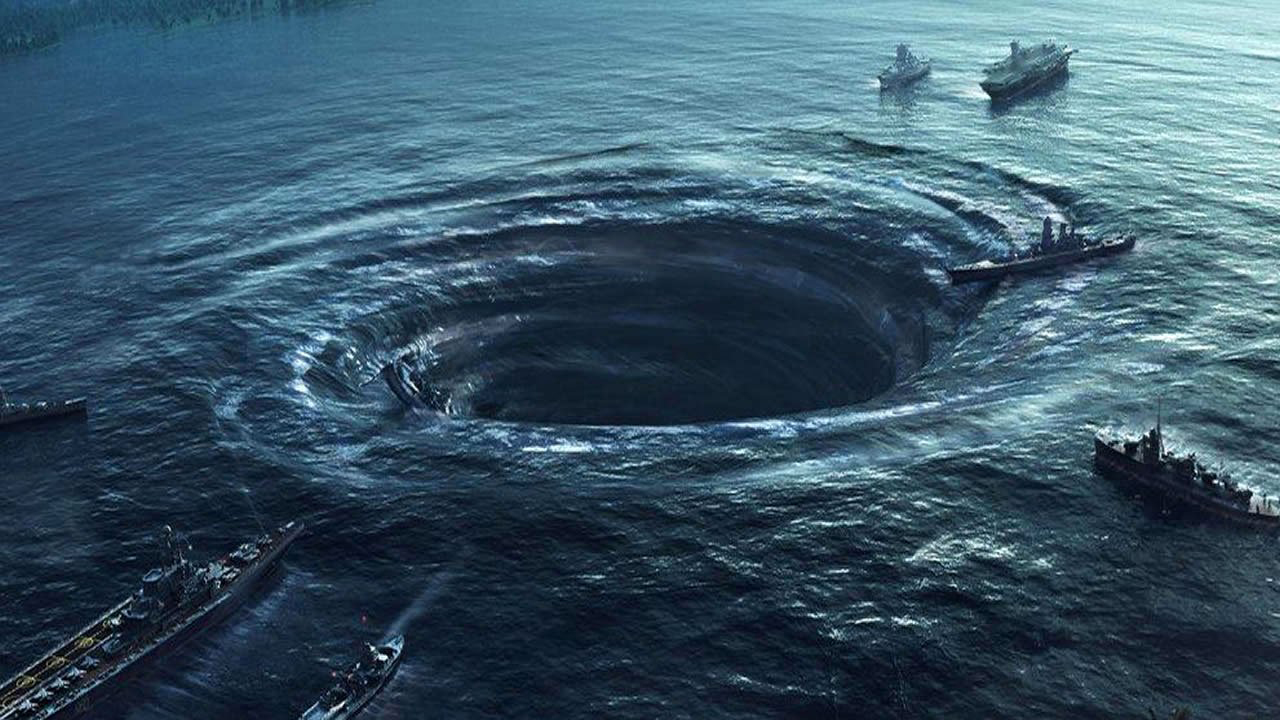
On December 18, 2025, a study published in the journal Geophysical Research Letters revealed that it may have discovered why Bermuda did not sink when its volcanoes went down more than 30 million years ago.
Recall that geologists hypothesized that when volcanoes erupted, the tectonic plate would shift away from the deep mantle hotspot, causing the cooling crust and volcano to gradually descend.
In a twist, the discovery at Bermuda appears mysterious, as scientists reportedly discovered an unusual rock layer beneath the oceanic crust beneath Bermuda, pushing the island up, stressing that the layer is 12.4 miles thick—a thickness never seen in any similar layer anywhere in the world.
BERMUDA, ITS TRIANGLE, AND MYSTERY?
The disturbing story behind the Bermuda Triangle can be credited to writers and spin masters who travelled fictionally into the world of mystery to carve out a niche that is not feared.
However, the Bermuda Triangle is just a loosely defined triangle between Miami, Bermuda, and Puerto Rico—about 500k sq miles of Atlantic Ocean. Many story writers, including spin masters, portrayed Bermuda as a mystery zone or an evil space.
Tragic incidents such as the vanishing of planes and ships, starting with Flight 19 in 1945, did not help matters either.
Damning features of Bermuda and pockets of accidents enable writers to form new twists about the mystery of the giant structure. In 1964, writers like Vincent Gaddis called it the “Bermuda Triangle.”
Eight facts you probably did not know about the popular Bermuda Triangle
The name “Bermuda Triangle” was coined by writers like Vincent Gaddis owing to stories of accidents such as missing planes and ships
It has rogue waves—30+ ft walls of water that smash and flip vessels or knock planes out of the sky
It has a high magnetic field that can lead to compass errors near agonic lines. i.e., compasses can go nuts near agonic lines, making it possible for pilots and sailors to misread them
It contains methane gas bubbles, which can reduce water density and sink ships—giant methane bubbles rising from the seabed can turn water into foam, dropping buoyancy instantly
It contains deep trenches and sudden shelves such as reefs, cliffs, and the Puerto Rico Trench hidden under the surface—the Puerto Rico Trench (nearby) drops to 28,232 ft—reportedly deep enough to swallow Mount Everest
It enables heavy traffic, violent storms, and Gulf Stream currents, which cause more accidents, such as hurricanes, among others
It reportedly enables electronic fog, which reportedly messes with instruments and time perception
It enables a geologic oddity—a 12-mile-thick low-density rock slab sits under the Triangle, making the island of Bermuda “float” higher than expected on the mantle.




Discussion about this post