
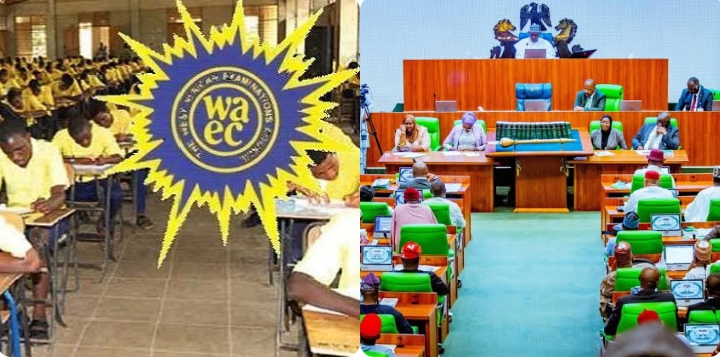
There are moments in a nation’s civic life when a routine institution suddenly finds itself standing under an unforgiving spotlight, not because it sought attention, but because circumstance dragged it there. The West African Examinations Council has long existed as a quiet authority, issuing grades that determine futures without needing to speak loudly about its own power. For decades, it operated in the background of Nigerian life, invisible yet decisive, shaping who advanced and who remained behind.
Then came a season when silence stopped being an option. Reports filtered in slowly at first, like distant thunder that people hoped would pass without rain. Students sitting for critical papers at hours meant for rest, examination halls lit poorly or not at all, schedules collapsing under their own weight. These were not isolated murmurs but repeated accounts, multiplying across states and centres, until they formed a national unease that could no longer be dismissed as coincidence.
The House of Representatives did not enter the picture immediately. Legislative attention often arrives after public patience has worn thin, when complaints have stacked high enough to demand institutional reckoning. By the time lawmakers began to speak openly, the issue had already escaped the narrow confines of examination malpractice discourse and entered a more sensitive terrain. It was no longer only about students or scripts or logistics, but about trust in systems that claim to be impartial and prepared.
What unfolded next was not a scandal in the traditional sense of hidden money or secret deals, but something more complicated and perhaps more unsettling. It was a confrontation between expectation and capacity, between public confidence and operational reality. The question was no longer whether something went wrong, but how a body so central to national progress found itself struggling to meet the basic promise of order.
The Night Exams That Broke the Illusion of Control
Examinations are built on predictability. Students prepare knowing that structure will hold, that time will be respected, that the rules governing their assessment will not shift beneath their feet. When reports emerged of candidates writing papers deep into the night, that foundation cracked in a way that could not be patched with explanations alone. Darkness in an examination hall is not merely physical. It signals a deeper loss of coordination.
Accounts from the examination period described delayed papers cascading into hours of uncertainty. Students waited without clarity, supervisors improvised, and parents hovered outside school gates long past sunset. In some locations, power outages turned classrooms into shadowed spaces where concentration became an act of endurance rather than intellect. The symbolic weight of students writing a life defining paper near midnight resonated far beyond the classroom.
What unsettled observers was not only that delays happened, but that they happened across multiple centres, suggesting systemic strain rather than isolated error. Once that perception took hold, the narrative shifted. The issue stopped being about inconvenience and became about competence. Nigerians are accustomed to institutional shortcomings, but examination bodies occupy a rare moral high ground because they arbitrate fairness.
As stories circulated, public reaction hardened. Social media amplified voices that might otherwise have remained local complaints. Education advocates, parents, and even former candidates questioned how such lapses could occur without early intervention. By the time the House of Representatives began to ask questions, the atmosphere had already moved from concern to suspicion.
Lawmakers Step In and Silence Becomes a Statement
When the House Committee on Basic Education and Examination Bodies issued its summons, it was framed as oversight rather than punishment. In theory, such invitations are procedural, a chance for agencies to clarify facts and reassure the public. In practice, they carry symbolic weight, signaling that lawmakers believe an issue has crossed the threshold from administrative error to national concern.
WAEC’s initial absence from a scheduled appearance became a story of its own. In a political environment where presence often equals respect, failure to show up created interpretations that no official statement could fully neutralize. The committee’s response was swift, issuing a firm ultimatum that transformed the engagement from routine oversight into a visible standoff.
Investigations were announced not as fishing expeditions but as necessary steps to reconstruct how examinations meant to run by daylight drifted into the night. Lawmakers spoke of accountability in measured tones, yet the underlying message was unmistakable. Institutions that shape millions of futures cannot plead complexity when basic order collapses.
This phase of the controversy marked a turning point. What began as reports from examination halls had now entered the formal arena of legislative scrutiny. The matter was no longer owned by WAEC alone. It belonged to the state, and by extension, to the public whose trust both bodies claimed to serve.
The CBT Suspension and the Politics of Readiness
Amid the noise surrounding irregularities, another issue surfaced that broadened the conflict’s scope. WAEC’s plan to transition future examinations to computer based testing had been presented as progress, a sign that the council was keeping pace with global assessment trends. Under normal circumstances, such a move would have attracted cautious optimism.
Instead, the House of Representatives treated the proposal as evidence of misaligned priorities. To lawmakers, an institution struggling with basic logistics had little credibility pushing advanced reforms. The decision to suspend the rollout and shift its timeline far into the future was framed as a corrective measure rather than an obstruction.
This action revealed something deeper about the dispute. It was not merely reactive but philosophical. The House was asserting that reform without foundation risks amplifying failure. Infrastructure, training, and equity were placed above innovation slogans, especially in a country where digital divides remain stark.
For WAEC, the suspension was more than a policy delay. It became a public judgment on institutional readiness. The implication was clear. Before reaching for the future, the present had to be fixed.
WAEC Speaks and the Limits of Explanation
When WAEC finally addressed the concerns placed before it, the tone was defensive but restrained. The council did not deny that things had gone wrong. Instead, it framed the irregularities as the outcome of pressures that overwhelmed an already stretched system. Leaked papers, compromised schedules, and the urgent need to preserve examination integrity were presented as forces that pushed officials into difficult decisions under time constraints.
This response carried an implicit admission that control had slipped at critical moments. By acknowledging that some late night examinations fell below acceptable standards, WAEC attempted to separate intent from outcome. The council argued that protecting the credibility of the examination sometimes required disruptive rescheduling rather than outright cancellation, even when those decisions produced unintended hardship for candidates.
Yet explanations have limits, especially when public confidence is fragile. For many observers, WAEC’s account sounded less like reassurance and more like confirmation that the institution was operating close to its breaking point. The language of operational challenges did little to calm fears that similar lapses could recur without deeper reform.
The exchange exposed a tension familiar in Nigerian governance. Agencies often emphasize constraints while lawmakers emphasize responsibility. In that gap, trust erodes. WAEC’s statements clarified circumstances, but they did not fully answer the underlying question confronting the public. How did an examination body with decades of experience find itself improvising under pressure in a system that demands precision.
Withheld Results and the Quiet Panic of Waiting
As the controversy unfolded, another issue surfaced quietly but carried immense emotional weight. The withholding of examination results, a standard practice during investigations, took on new urgency given the scale of the disruptions. For thousands of candidates, uncertainty replaced the relief that usually follows the end of examinations.
Lawmakers raised alarms not only as policymakers but as representatives of communities where university admission cycles wait for no one. Delayed results do not merely inconvenience students. They can derail academic plans entirely, especially in a system where admission windows are rigid and competitive. The fear was not abstract. It was immediate and personal for families watching deadlines approach.
This concern shifted the debate from institutional accountability to human consequence. Even if irregularities justified scrutiny, the cost of prolonged delays fell squarely on candidates who had already endured disrupted exams. The controversy now carried a moral dimension that went beyond administrative failure.
For the House of Representatives, this was a pressure point. Oversight could not be seen as punishment that inadvertently harmed those it sought to protect. Balancing accountability with urgency became part of the legislative challenge, adding another layer of complexity to an already tense standoff.
Oversight or Overreach and the Question of Authority
As hearings continued and public commentary intensified, a subtle question emerged beneath the headlines. Where does oversight end and interference begin? Examination bodies are expected to operate with a degree of autonomy, shielded from political pressure that could compromise standards. At the same time, they function within national frameworks that demand transparency.
Supporters of the House’s actions argued that legislative scrutiny was not only appropriate but overdue. In their view, an institution that commands such influence over young lives must be subject to rigorous questioning when its processes falter. Accountability, they insisted, is not an attack but a safeguard.
Critics, however, worried about precedent. If lawmakers could halt examination reforms and dictate timelines, what protections existed against future politicization of academic assessment. The concern was not about this intervention alone but about how power might be exercised later under less neutral circumstances.
This tension revealed the delicate balance at the heart of democratic oversight. Institutions must answer for failure, yet they must also retain operational independence. The WAEC controversy became a case study in how easily that balance can tilt when public pressure and political authority converge.
What the WAEC House Confrontation Ultimately Reveals
Strip away the procedural language and political posture, and the controversy tells a simple story. Systems designed to be reliable faltered under stress, and the structures meant to supervise them stepped in with force. Neither side emerged unscathed, yet neither could afford withdrawal.
For students and families, the hope is practical rather than ideological. They want assurance that examinations will be conducted with dignity, predictability, and fairness. They want institutions to work quietly again, without drama.
For the state, the episode underscores a broader challenge. Oversight must be firm without becoming disruptive, while institutions must adapt without losing focus. The balance is delicate and easily lost.
Whether this confrontation becomes a footnote or a foundation depends on what follows. If lessons translate into reform, the disruption may prove meaningful. If not, it risks becoming another chapter in a familiar cycle of outrage and amnesia.




Discussion about this post