
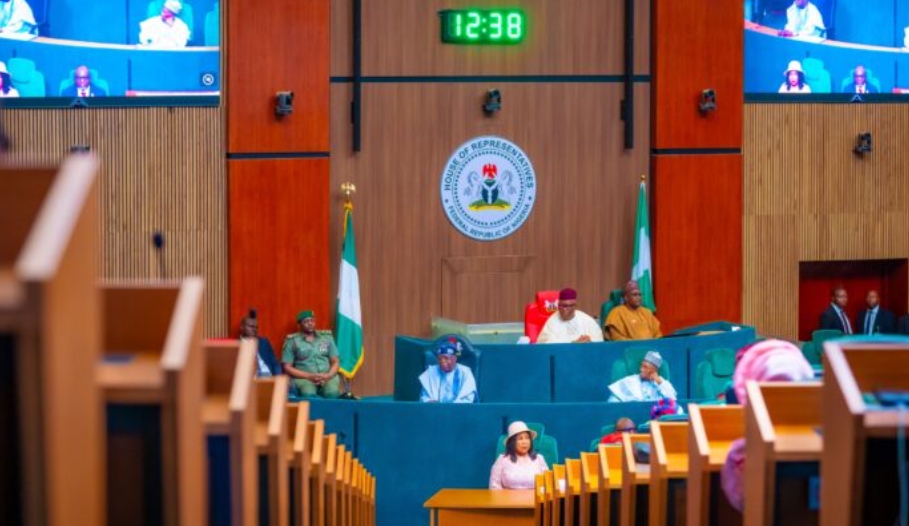
Fresh tension erupted on December 17 after the member of the house of representatives, Abdussamad Dasuki, disclosed that the tax reform Acts passed by parliament do not tally with the gazetted versions released to the public.
The disputed documents include the Nigeria Tax Act, 2025; the Nigeria Tax Administration Act, 2025; the Joint Revenue Board of Nigeria (Establishment) Act, 2025; and the Nigeria Revenue Service (Establishment) Act, 2025, all billed for enforcement in January.
The revelation ignited outrage nationwide as citizens questioned credibility of the legislation and demanded that the implementation timetable be halted immediately.
The senate and house leadership subsequently intervened and directed the clerk of the national assembly, Kamoru Ogunlana, to scrutinise and re-gazette the Acts.
The spokesperson of the house, Akin Rotimi, later announced that the directive was issued to restore confidence in the process and protect the authenticity of parliament’s record.
He said, “In the course of this review, and in the interest of clarity, accuracy, and the integrity of the legislative record, the leadership of the National Assembly, under the President of the Senate, Distinguished Senator Godswill Obot Akpabio, GCON, and the Speaker of the House of Representatives, Rt. Hon. Abbas Tajudeen, PhD, GCON, has directed the Clerk to the National Assembly to re-gazette the Acts and issue Certified True Copies of the versions duly passed by both Chambers of the National Assembly.”
He explained that the step was strictly procedural and aimed at ensuring that the law reflects exactly what lawmakers approved.
Gazetting refers to publishing a law in the federal gazette after the national assembly has passed it and the president has signed it into force.
The gazette acts as an official legal reference relied upon by institutions, courts and citizens as proof of valid legislation.
However, a bill only becomes law after parliamentary passage and presidential assent, not simply because it appears in the gazette.
Once the senate and house adopt a bill, it is transmitted to the president who assents before it becomes an Act.
The Acts Authentication Act outlines the chain of responsibility designed to preserve accuracy from passage to publication.
Although the executive is usually associated with publication, the law equally assigns substantial responsibility to the national assembly.
Section 2(1) requires the clerk of the national assembly to prepare the final copy exactly as passed and certify it as authentic.
Section 2(2) also mandates a certified schedule of bills for assent, ensuring the transmitted version mirrors the intent of parliament.
Section 3 further requires the schedule to detail the title of the bill, its summary and dates of passage in both chambers.
Once the president signs, the law directs that it must be gazetted and the gazetted copy becomes conclusive proof in law.
The same law mandates that copies must be retained and lodged with the president and the chief justice of Nigeria.
A legislative policy analyst, Chibuzo Okereke, said the decision to re-gazette the Acts raises serious procedural questions, especially since parliament already set up a panel to investigate the discrepancies.
He noted that where inconsistencies surface, the priority should be determining what truly happened.
He explained that minor administrative errors differ significantly from changes capable of altering obligations, rights or legal meanings.
Section 18 of the Legislative Houses (Powers and Privileges) Act, 2017 criminalises tampering with parliamentary records.
The provision prescribes a N2m fine, a possible one-year jail term, or both for printing a false legislative document.
Okereke said treating such discrepancies as routine adjustments risks reducing what could be a criminal act to a mere administrative exercise.
He said, “So, we are looking at a crime here. We don’t do a soft landing with a crime. If the wrong version was gazetted, we need to investigate whether it was an administrative error. Under our laws, it is a crime to print a false version of a law.”
He dismissed demands that the laws be suspended, warning that such a move would undermine constitutional separation of powers.
He explained that a law remains valid once it has completed the constitutional process unless parliament amends it or a court voids it.
Okereke stressed that publishing errors do not empower the executive to suspend legislation.
He said, “If the wrong version was published, the remedy is to gazette the correct version — not to halt the law’s operation altogether.”
He added that the controversy has exposed deeper weaknesses in Nigeria’s legislative workflow after presidential assent.
Okereke said the present arrangement often allows gazetting to proceed without final verification by parliament.
He warned that this loophole makes it easier for discrepancies to slip through unnoticed.
He recommended a formal authentication mechanism requiring parliament to confirm the final gazetted version before publication.




Discussion about this post