
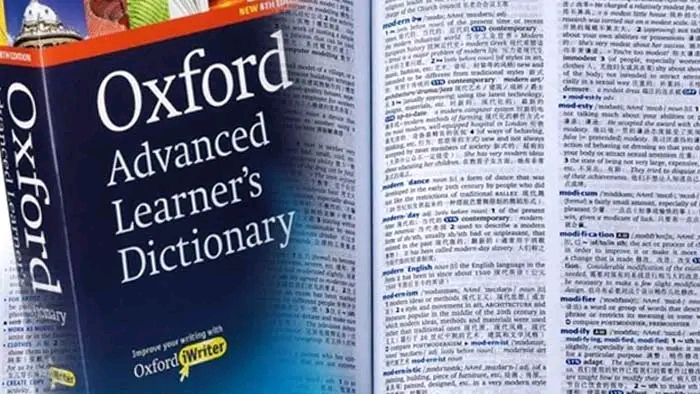
Language rarely announces its turning points. It does not ring bells or call press conferences. It shifts quietly, carried by mouths, screens, lyrics, and streets until institutions are forced to follow. The Oxford English Dictionary has always presented itself as a recorder rather than a creator of meaning, yet every update tells a deeper story about power, influence, and whose voice has become too loud to ignore.
For decades, West African English lived in the margins of global recognition. It thrived in markets, campuses, radio shows, music studios, WhatsApp chats, and diaspora living rooms. It shaped emotion and humour and resistance but remained unofficial, often dismissed as slang or local colour rather than language with global weight. What changed was not simply usage but reach.
The 2026 update of the Oxford English Dictionary did not happen suddenly. It was the result of years of cultural pressure building beneath the surface. Words like abeg and biko did not travel alone. They moved inside songs, captions, interviews, comedy skits, and viral moments. Afrobeats was the vessel that carried them across borders without translation or apology.
In a post via X, the OED revealed that out of the 279 new words added to the dictionary, over 20 are expressions from West African countries, including Nigeria, Ghana, the Ivory Coast, Sierra Leone, Senegal, and Togo.
For Nigeria, the expressions included are abeg, Afrobeats, Ghana Must Go, biko, Mammy Market, Amala, nyash, and Moi Moi, while for Ghana, the additions are Kpanlogo, Light Soup, Abrokyire, and Ampesi.
Many of the words serve multiple grammatical functions, including as nouns, verbs, and adverbs.
Afrobeats as a Cultural Engine, Not a Genre
Afrobeats did not begin as a global ambition. It emerged as a loose expression of sound, blending Nigerian pop, Ghanaian rhythms, highlife echoes, hip hop, dancehall, and street vernacular. It was informal by design and unpolished by choice. That looseness allowed language to breathe inside it.
Lyrics were not cleaned for outsiders. Artists spoke as they lived. Abeg slipped into choruses. Biko appeared in hooks. Slang was not explained because explanation was unnecessary. The confidence of Afrobeats lay in its refusal to translate itself. Listeners around the world adapted instead.
As the music spread, the words travelled intact. Streaming platforms placed Nigerian and Ghanaian artists into homes where English already existed but behaved differently. Fans learned meaning through repetition, tone, and emotion. Language stopped being academic and became experiential.
This is where Afrobeats crossed from entertainment into linguistic force. It did not just popularise words. It normalised them. By the time lexicographers began documenting usage patterns, the global audience had already accepted the vocabulary as functional English.
‘Abeg’ and the Emotional Intelligence of Speech
Abeg is not simply a substitute for please. It is emotional punctuation. It carries frustration, affection, disbelief, persuasion, and humour depending on tone and context. No single English word performs that range with such efficiency.
The global spread of abeg did not come from formal writing. It came from captions, lyrics, skits, and interviews. When artists used abeg on international stages, they did not frame it as foreign. They framed it as normal speech, Audiences followed.
Oxford did not add abeg because it sounded exotic. It added it because the word now appears consistently in English language contexts across continents with stable meaning. That is the threshold dictionaries respect.
What makes abeg significant is not novelty but emotional literacy. It represents a communicative style that prioritises tone and shared understanding. Its inclusion signals that English is absorbing not just vocabulary but emotional structures from West African speech patterns.
‘Biko’ and the Persistence of Indigenous Politeness
Biko originates from Igbo language, yet its migration into global English followed a modern path. It travelled through bilingual speakers who refused to compartmentalise identity. In their speech, English and Igbo coexisted fluidly.
Unlike abeg, biko retained a sense of softness. It is polite but insistent, gentle but expressive. In global circulation, it did not lose its cultural flavour. Instead, it taught listeners a different rhythm of asking.
The presence of biko in the Oxford English Dictionary matters because it represents indigenous language influence without dilution. The word entered English without being anglicised. It retained its phonetics, its spelling, and its emotional register.
This inclusion affirms that English no longer requires domination to borrow. It can now coexist. Biko stands as evidence that global English is becoming porous, allowing local languages to imprint themselves without losing integrity.
Afrobeats and the Moment Sound Became Evidence
The Oxford English Dictionary relies on citations, usage patterns, and contextual stability. Afrobeats provided all three at scale. Lyrics appeared in global publications, interviews were transcribed, social media amplified repetition and academic writing followed popular culture.
By the time Afrobeats was formally recognised as a noun, it had already been functioning as one for years. It named an industry, a sound, a movement, and an identity. Its plural form reflected collectivity rather than fragmentation.
More importantly, Afrobeats reshaped perception. It shifted Africa from a source of influence to a centre of innovation. Language followed perception. When culture leads, dictionaries document.
Afrobeats did more than earn its own entry. It created an ecosystem where other words could thrive and be noticed. Without Afrobeats, abeg and biko might still exist globally but not visibly enough to demand formal recognition.
Food Language as Cultural Proof
Words like amala, moi moi, benachin, and light soup entered the dictionary not as recipes but as cultural markers. Food language is intimate. It reflects daily life rather than performance.
The spread of West African cuisine followed migration, but its naming followed pride. Restaurants did not translate, menus retained original names. Social media reinforced pronunciation and spelling.
These words became searchable, repeatable, and stable in English contexts. Oxford responded by recording rather than redefining them. Their presence affirms that English now documents lived culture rather than colonial hierarchy.
Food terms anchor language in reality. Their inclusion shows that West African English is not limited to entertainment but embedded in domestic life, commerce, and identity.
Migration Slang and the Language of Movement
‘Japa’ and ‘abrokyire’ are not neutral words. They carry aspiration, urgency, fatigue, and hope. Their inclusion reflects global conversations about migration that are increasingly shaped by voices from the Global South.
These words gained traction because they named experiences that lacked precise English equivalents. Japa is not simply leaving. It is strategic escape. Abrokyire is not just abroad. It is imagined opportunity.
When such words enter the dictionary, they legitimise perspective. They confirm that global English must adapt to describe realities beyond Western frameworks.
Afrobeats again played a role here. Migration themes appeared in lyrics, interviews, and artist narratives. Language followed story.
Street Language and the Collapse of Respectability Barriers
Nyash, area boy, agbero, and yahoo boy were once considered unsuitable for formal recognition. Their presence in the dictionary reflects a shift in what counts as legitimate language.
English has always evolved through informal usage. What changed is whose informality now matters. Nigerian urban speech gained global visibility through comedy, music, and online culture.
Oxford did not endorse behaviour. It documented language. This distinction is critical. Dictionaries do not moralise. They record.
The inclusion of street language confirms that respectability is no longer the gatekeeper of English. Frequency, consistency, and influence are.
Objects, Memory, and the Weight of ‘Ghana Must Go‘
Ghana Must Go is not just a bag. It is historical memory encoded in language. Its inclusion demonstrates how English records trauma alongside culture.
The phrase survived because it was useful. It named an object but also referenced a shared experience. Its persistence made it linguistically relevant.
By including it, Oxford acknowledged that English carries history, including uncomfortable chapters. Language preserves what society might otherwise forget.
Why This Moment Redefines Global English
The 2026 update did not simply add West African words. It confirmed a structural shift. English is no longer expanding outward from a centre. It is evolving through multiple centres simultaneously.
Afrobeats symbolises this decentralisation. It proved that cultural power no longer requires institutional approval to matter. Language followed influence rather than authority.
This moment tells future speakers something important. You do not need permission to shape English. You only need usage, confidence, and reach.
The Dictionary as Witness Not Judge
Oxford’s role is often misunderstood. It does not validate culture, it witnesses it. The presence of West African words confirms that the culture has already done the work.
Afrobeats did more than entertain. It normalised identity. It broadcast language. It collapsed borders. It created linguistic evidence at a scale no dictionary could ignore.
This is why Afrobeats belongs in the Oxford English Dictionary. Not because it is popular, but because it changed how the world speaks.
Conclusion: The Sound That Made Language Listen
Long after charts change and trends fade, language remains. The inclusion of abeg, biko, Afrobeats, and dozens of other West African expressions marks a permanent shift.
This is not a moment of arrival. It is confirmation that arrival happened long ago. Oxford is catching up.
English has expanded its ears. West Africa has expanded its voice. Afrobeats was the sound that connected them, and this time, the dictionary listened.




Discussion about this post