
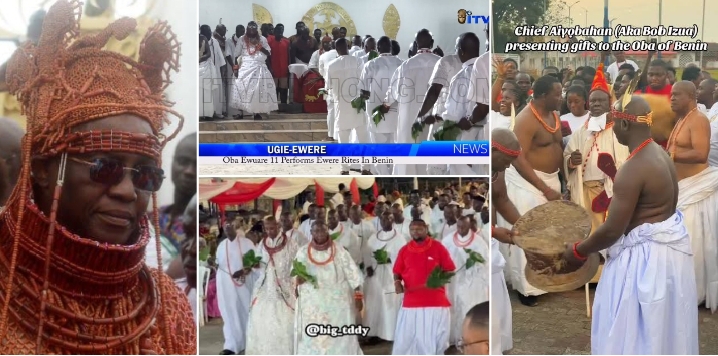
In the heart of Benin City, something stirs that cannot be explained by the wind or the sun. The streets feel different, charged with an energy that draws the young and old alike to pause and notice. Traders lower their voices mid-sale, children slow their play, and even the river seems to shimmer with quiet anticipation. There is no announcement, no fanfare, yet the city itself seems to know that this day carries weight. Something ancient is about to unfold, and everyone senses it, even if they do not fully understand why.
Across the city, preparation is underway in ways that outsiders would scarcely notice. Hands move with intention, arranging leaves, banners, and sacred objects. Elders whisper instructions that carry meanings learned over generations. The air is heavy with the scent of earth and ceremony, a fragrance that promises more than ritual; it promises connection, reflection, and perhaps a glimpse of what binds the past, present, and future together. For those who pay attention, it is impossible not to feel that something extraordinary is quietly approaching.
There is a rhythm to the day that draws people forward without them even realizing it. Drums echo in distant corners, footsteps fall in patterns that seem to mirror centuries of tradition, and voices rise in tones that call to memory as much as to action. Each gesture, each subtle movement, builds a tension that is both palpable and mysterious. In Benin, history does not just exist in books; it lives in the air, in the streets, and in moments like these, when time seems to pause just long enough for a city to hold its breath.
No one can say exactly what will happen when the day reaches its peak, and that is precisely the point. What follows is not a story told in words alone but in gestures, blessings, and the quiet pulse of a people in rhythm with their past. Every leaf, every chant, every movement is part of a narrative older than memory, unfolding in real time, and leaving those who witness it with a sense that they have glimpsed something larger than themselves. The day begins like any other, yet it carries the weight of history, the promise of transformation, and the unspoken question of what might come next.
The Origins of Ewere and Its Sacred Significance
Long before the palace walls were fortified with coral stones, before European maps marked the coastlines, the people of Edo held sacred the mysteries of the Ewere leaf. Oral history links the leaf to Oba Ewuare the Great of the fifteenth century, a ruler whose ingenuity and spiritual insight transformed Benin into a kingdom of renown. In his time, the leaf became a symbol of divine favor, a token of the connection between the monarchy, the ancestors, and the living. It was said that during moments of conflict and uncertainty, the Oba would seek guidance through the Ewere, its fragrance carrying prayers that could alter the course of destiny. This historical context gives each modern performance a gravity that reaches beyond ceremonial pageantry, embedding it deep into the psyche of the kingdom.
The leaf itself embodies layers of meaning. It is a symbol of peace, signaling the kingdom’s desire to maintain harmony among its citizens and with neighboring communities. It is a sign of prosperity, a reflection of the Oba’s responsibility to nurture growth and opportunity. It carries protection, a safeguard against misfortune, and joy, as a reminder that cultural continuity brings emotional and spiritual sustenance. Presenting the leaf during the Igue festival transforms ordinary spaces into vessels of blessing, creating a collective sense of anticipation as each participant waits to witness the Oba’s touch on this sacred object.
Ewere is not simply an act of devotion; it is a dialogue with time itself. Through ritual, the past converses with the present, and the future is invited into the conversation. The repetition of the ceremony each year reinforces communal bonds, signaling that the kingdom’s prosperity is intertwined with respect for tradition. The leaf, though small, becomes a powerful emblem of continuity, linking generations through a shared spiritual and cultural framework. In this sense, the Ewere rite is both a historical record and a living testament to the endurance of Benin’s cosmology.
The Igue Festival: A Journey Through the Sacred Calendar
The Igue festival is more than a celebration; it is the heartbeat of Benin’s spiritual and cultural rhythm. Each year, as the final months of the calendar approach, the city prepares for a series of rites that span days, each carefully sequenced to honor the ancestors and reaffirm the Oba’s authority. Traders, priests, artisans, and citizens all play roles in a grand choreography that blends devotion, history, and communal unity. The festival does not begin with spectacle; it begins with intention, a quiet recognition that every gesture, every offering, carries weight beyond immediate perception. It is a temporal bridge, linking the past with the unfolding present and guiding the kingdom toward a future that resonates with ancestral wisdom.
Central to the festival is the interplay between sacred duty and communal participation. Ugierhoba, one of the opening rites, sets the tone, inviting participants to reflect on moral and spiritual readiness. The rhythm of drums, chants, and prayers begins to echo through the city, awakening awareness in individuals and the collective consciousness. Each movement, from the placement of offerings to the uttering of invocations, is carefully calibrated, ensuring that the flow of energy aligns with traditional cosmology. The city becomes a living canvas for ritual, each citizen a brushstroke in a narrative that spans centuries.
Ugie‑Otue Oba, another key rite, draws focus to the Oba’s role as a spiritual mediator. During this ceremony, the monarch receives homage from chiefs and subjects alike, reinforcing the continuity of leadership and the sacred covenant that binds ruler and people. These rites, which might appear purely ceremonial to outsiders, serve a dual function: they honor tradition while providing a spiritual framework for governance, reminding the Oba and the citizens that the prosperity of the kingdom depends on alignment with ancestral guidance and moral integrity.
The sequence of the Igue festival culminates in the communal thanksgiving, a moment of collective acknowledgment of blessings received throughout the year. It is here that the Ewere rite assumes its central role.
The Sacred Choreography of the Ewere Rite
From the moment the Oba enters the palace courtyard, the rhythm of anticipation is palpable. Courtiers in traditional attire form precise patterns, drums set the heartbeat, and chants ripple through the air like currents in a river. The Ewere rite is performed with a choreography that has been refined over centuries, each gesture a visual language understood by initiates and citizens alike. The Oba’s procession is measured, deliberate, and imbued with symbolism, signaling not only his authority but also the kingdom’s alignment with spiritual forces that guide prosperity and protection.
Every participant has a role, from chiefs carrying banners to palace attendants presenting sacred items. The Ewere leaves themselves are handled with reverence, carefully plucked, arranged, and blessed before reaching the Oba. This ceremonial flow ensures that the energy of intention is preserved, allowing the leaf to act as a conduit for blessings. The ritual is as much about timing and sequence as it is about prayer, emphasizing that spiritual efficacy in Benin cosmology relies on precision and communal coherence.
As the ritual progresses, the Oba returns blessings to the participants, creating a circular flow of energy. Those who presented the leaves leave with renewed spiritual vigor, carrying the Oba’s favor into their homes and neighborhoods. This exchange reinforces the symbiotic relationship between monarchy and citizenry, showing that the power of the Ewere rite extends far beyond the palace walls.
The choreography is not mere performance; it is a carefully orchestrated manifestation of Benin’s cultural, spiritual, and social continuity, a reminder that leadership, faith, and community are inseparable in shaping collective destiny.
The Prayers of Oba Ewuare II and the Year-End Intentions
On December 25th, 2025, Oba Ewuare II’s prayers were precise yet expansive, seeking alignment between ancestral guidance, divine favor, and contemporary needs. His petitions encompassed the wellbeing of Edo State citizens and broader Nigerians, reflecting the monarchy’s understanding that the kingdom’s prosperity is intertwined with national progress. Each uttered word resonated with intention, addressing not only material needs but also moral fortitude, social harmony, and resilience in the face of challenges. In Benin cosmology, such prayers are performative, shaping reality through ritualized language, communal acknowledgment, and spiritual resonance.
The Oba prayed for breakthroughs, particularly for sectors that directly impact daily life, including agriculture, trade, education, and security. These prayers are not abstract; they are rooted in observations of the community’s needs and aspirations, translating cultural tradition into practical concern for citizens’ welfare. Through the Ewere leaf, these intentions are symbolically disseminated, connecting palace authority to local realities. The act itself reaffirms the monarch’s role as protector and facilitator, someone who channels spiritual energy toward tangible progress in society.
Protection and peace formed a central theme in the year-end prayers. Oba Ewuare II invoked ancestral spirits to guard against misfortune, disputes, and social unrest, recognizing that unity and stability are as crucial to prosperity as material wealth. This emphasis highlights the enduring relevance of traditional authority in navigating contemporary societal challenges, where ritual intersects with leadership to guide communities through uncertainty and change. Each invocation is carefully calibrated to reinforce trust, continuity, and collective commitment to the kingdom’s wellbeing.
Beyond material and social concerns, the Oba’s prayers carried a metaphysical dimension, seeking divine favor for creativity, innovation, and moral courage among the people. Such spiritual intentions position the kingdom for growth that is ethical, sustainable, and culturally grounded. By articulating hopes for both individual and communal advancement, the Oba reinforces the belief that the Ewere rite is not merely symbolic but actionable, a ritual that can influence mindsets, behaviors, and trajectories. The prayers are a blueprint for prosperity, a spiritual and social roadmap that connects past wisdom with future possibility.
The Broader Impact: Ewere’s Influence on Edo and Nigeria’s Future
The Ewere rite extends beyond Edo State, carrying implications that resonate across Nigeria. When the Oba of Benin prays for peace, prosperity, and breakthroughs, the intention is not limited to the palace or the local community. The ritual embodies a vision for national cohesion, moral leadership, and cultural affirmation. In a country marked by diversity and complexity, the symbolic weight of a monarch invoking blessings for the collective welfare is profound. It reminds citizens that traditional institutions remain influential in shaping societal ethics, guiding communal behavior, and promoting unity through shared cultural touchstones.
The Ewere rite also influences social and civic responsibility. Citizens, inspired by the Oba’s prayers and the symbolic power of the leaves, are often encouraged to participate in acts of community service, ethical entrepreneurship, and intergenerational support. By linking ritual practice with civic engagement, the ceremony creates a framework for sustainable progress. Schools, markets, and civic organizations become conduits for these intentions, allowing the Oba’s spiritual vision to translate into tangible outcomes. In this sense, the Ewere rite functions as both a spiritual exercise and a mechanism for societal improvement, bridging heritage and contemporary governance.
Cultural preservation is another dimension of the rite’s broader impact. In a rapidly modernizing world, rituals like Ewere reinforce the continuity of Benin heritage, serving as both education and identity affirmation. Young citizens, witnessing the Oba’s performance, internalize lessons about respect for tradition, the importance of collective wellbeing, and the power of spiritual and cultural alignment.
Finally, Ewere represents the potential for cross-regional inspiration. Leaders and citizens across Nigeria may draw insight from Benin’s integration of ritual, governance, and communal responsibility. The ceremony underscores the value of combining spiritual foresight with practical action, of grounding policy and social behavior in shared cultural principles.
Closing Reflections: Continuity, Culture, and Collective Destiny
The Ewere rite shows that culture is not just observed but lived, shaping how a community sees itself and its future. Through ritual, history and tradition become guiding forces, connecting people to values that endure beyond the day’s ceremonies.
It also highlights the bond between leadership and community. The Oba’s actions ripple outward, reminding citizens that progress depends on shared responsibility, respect, and collective care. Participation turns intention into action, and tradition into a force that influences daily life.
Above all, the ritual carries hope. Each gesture, blessing, and leaf points toward continuity and renewal, leaving a subtle but lasting mark on the city. It demonstrates that when culture is practiced with purpose, it not only honors the past but shapes the promise of what comes next.




Discussion about this post