
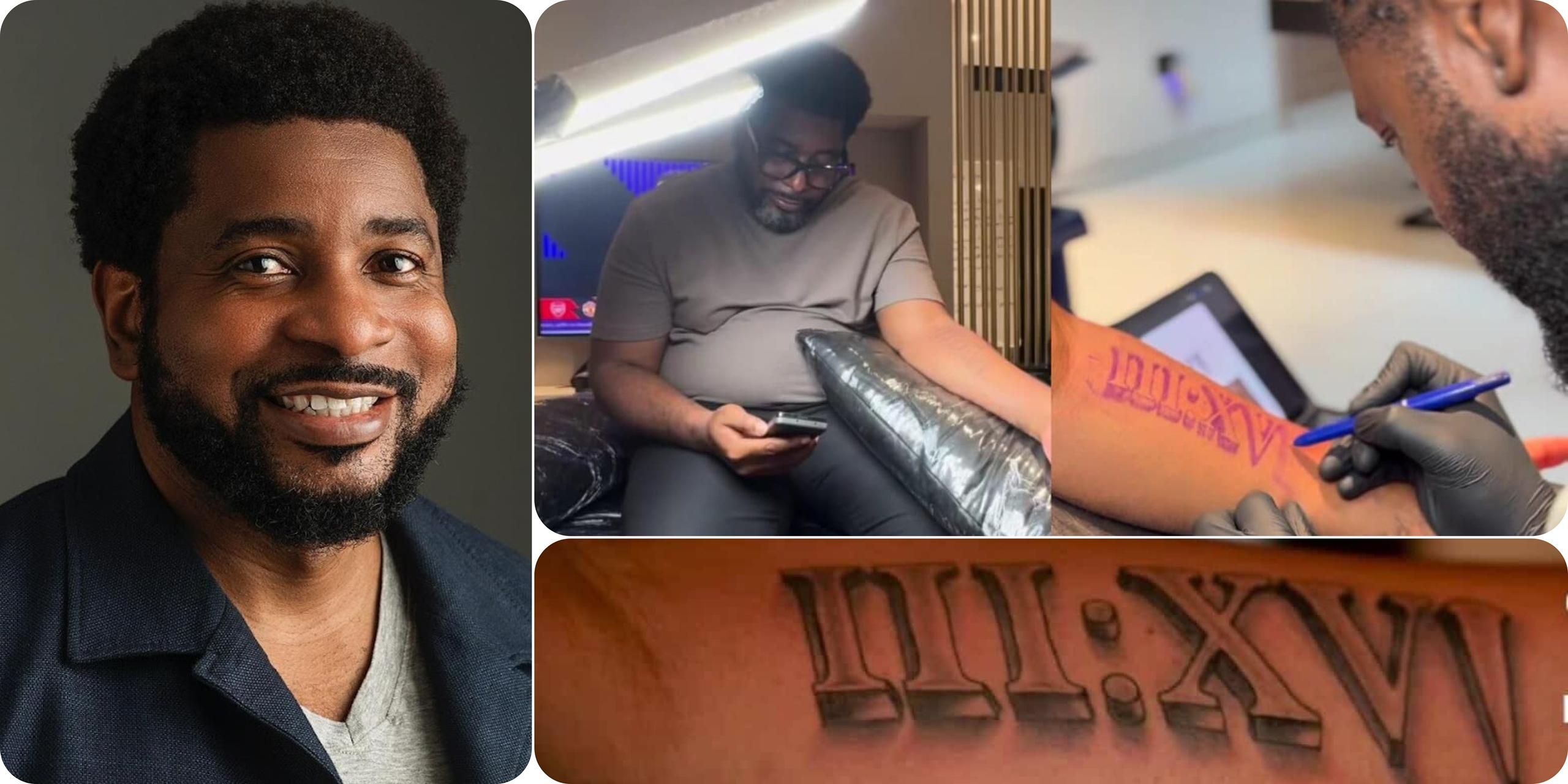
Pastor Kingsley Okonkwo, a prominent Nigerian clergyman best known for his work as a relationship coach and as the founder of David Christian Centre in Lagos, found himself in the centre of one of the most talked-about religious debates across Nigerian social media on January 31, 2026. Instead of a sermon or a book release, it was about a tattoo, unveiled in honour of his 50th birthday. The tattoo has captured national attention and ignited heated discussion among Christians, commentators, and netizens.
On the weekend of January 31, 2026, Okonkwo surprised followers by posting a video on his official Instagram page showing the fresh ink on his forearm: “III: XVI,” the Roman numerals for John 3:16, one of the most widely quoted verses in the Bible. The video began with a recitation of the scripture… “For God so loved the world that He gave His only Son…”…before panning to the completed tattoo. What might have been a simple celebratory moment instead became a national flashpoint.
Almost immediately, reactions poured in. Some praised the gesture as bold and creative, saying it helped spotlight a core message of the Christian faith. Others were outraged, stepping into a broader conversation about faith expression, religious tradition, and pastoral responsibility.
A Tattoo as Evangelism — His Explanation
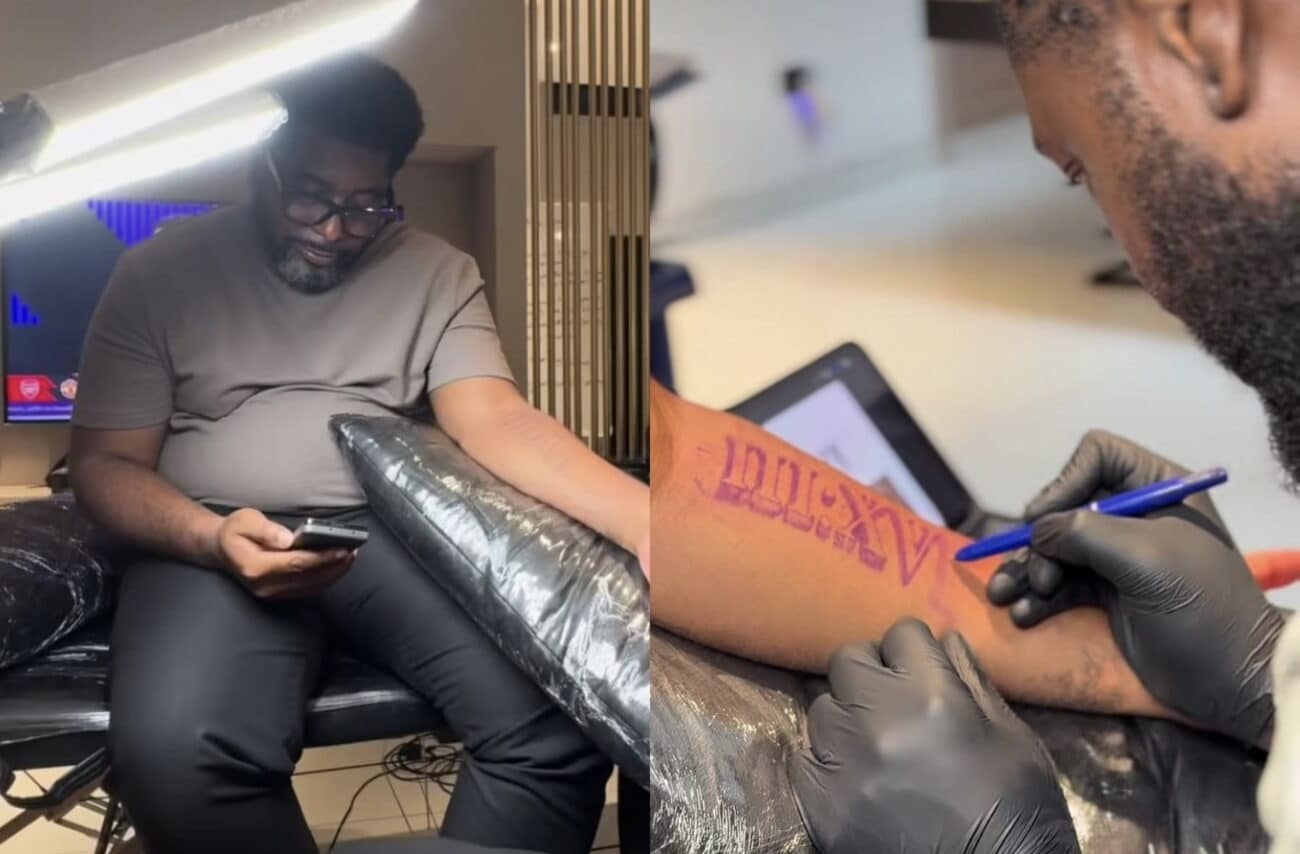
Rather than shrink from the controversy, Pastor Okonkwo addressed it head-on. On Sunday, February 1, 2026, he explained in a social media post that his tattoo was not a fashion statement but a deliberate form of evangelism. In his words, critics were so busy debating whether the tattoo was appropriate that they “didn’t notice that the gospel (John 3:16) was preached to millions in 24hrs by almost all blogs.” He highlighted that the tattoo’s unveiling sparked widespread coverage that took the verse to audiences far beyond his church walls.
In interviews following the online storm, Okonkwo also shared that he personally likes tattoos and had not expected such a strong reaction. He challenged critics to back their objections with clear spiritual or scientific evidence, saying, “There’s no scripture that says a child of God cannot have a tattoo.” He argued that many criticisms were based on personal or church preferences, not clear biblical wording. He posed rhetorical questions about other forms of body marking and style choices, asking why they were acceptable but tattoos were not. In his words:
“People who wear another human being’s hair, do eyelashes, micro-blading, were busy talking about my tattoo.”
“You’re not my Lord and savior. You didn’t call me. I don’t know you. Don’t be rude on my page. I have been born again for 30 years. I don’t care about your personal opinion. I didn’t come from a boring Christian background.
How is tattoo wrong? Women do micro blading, Hausas do lali.
Is it not tattoo?.”
Okonkwo even joked in a viral clip that he might “do more,” including growing dreadlocks, to continue pushing back against what he called outdated thinking. He said:
“I will draw more tattoos and I’ll do dreads. There is a Pastor I know who has tattoos and dreads. You think the younger generation are as boring as you?.”
He questioned why his personal choice had garnered so much scrutiny when many pressing national and social issues were at stake.
The Debate: Tradition vs. Modern Expression

Almost as soon as Pastor Kingsley Okonkwo shared a video of his new tattoo online, reactions poured in from across social media and not just from everyday users. Many Nigerians, including public figures and entertainers, weighed in on whether it was appropriate for a pastor to have visible body art.
One of the more thoughtful celebrity responses came from gospel artist Mike Abdul, who posted his perspective on the debate. In a message shared on Instagram, he said that tattoos don’t inherently dishonour the body. “Tattoos… were used for identity, memory, status, covenant, and storytelling across ancient cultures, nothing more,” Mike Abdul wrote. He added that what matters most is “what the mark points to, not the mark itself,” stressing that “God reads hearts, not skin” and that faith shouldn’t be judged solely by outward appearances. “Ink without conviction is decoration. Ink with conviction is remembrance,” he explained, underscoring that a tattoo should reflect meaning rather than mere trend-chasing.
Public officials also chimed in. Delta State Governor’s aide Ossai Success was sharply critical of Okonkwo’s justification, calling the explanation disappointing and suggesting that a pastor must be careful about how his actions are perceived by followers. In his words:
“A pastor having a tattoo is an act of irresponsibility.
I’m still trying to process the fact that Pastor Kingsley of DCC has gotten a tattoo!…
As a pastor, he’s a role model to many, especially young people in the congregation.
If he can have a tattoo, they’ll likely think it’s okay for them to get one too….
I think it’s a bit inconsistent to pick and choose which parts of scripture to follow….
If he has the tattoo before becoming a pastor, that would have be a different case .
I’m really disappointed in Pastor Kingsley’s decision.”
Some netizens and religious leaders cited scriptures like Leviticus 19:28, which advises against marking the body, suggesting that pastors should avoid tattoos as spiritual leaders and role models. Critics on platforms like Morayo’s Live Show argued that a pastor’s actions have influence and that visible tattoos could confuse or mislead younger believers looking up to church leaders.
Others defended Okonkwo’s choice, insisting that the tattoo’s spiritual message, especially one as foundational as John 3:16 outweighs arguments about external appearance. They said that connecting deeply held faith to cultural expressions familiar to younger generations might be exactly the kind of bridge contemporary Christianity needs. Some of his supporters even said they felt personally encouraged or “set free” by his decision.
Why This Matters Beyond the Tattoo
The conversation around Okonkwo’s tattoo isn’t just about body art; it highlights a larger tension within many Christian communities today. In Nigeria, where Pentecostal and evangelical churches play a significant role in religious and social life, leaders and followers are continually navigating how to preserve tradition while staying relevant to younger generations increasingly shaped by digital culture. The debate touches on issues of personal expression, doctrinal interpretation, and how religious leaders engage publicly in a digital world where every moment can go viral.
Critics argue that pastors should be careful stewards of influence, prioritizing spiritual integrity and example. Supporters argue that creative approaches like Okonkwo’s tattoo can help spread core biblical messages and break down barriers between institutional religion and everyday people. In both cases, the conversation shows how faith, media, and culture intersect in ways that can be both contentious and thought-provoking.
Conclusion
As the debate continues to trend online and across talk shows, one thing is clear: Pastor Kingsley Okonkwo’s tattoo has become more than just a personal marker; it’s a flashpoint in a broader cultural conversation about Christianity in the 21st century. Whether viewed as a bold evangelistic move or a controversial departure from tradition, the tattoo has reopened questions about expression, leadership, and how faith is lived out in public spaces.
This story continues to evolve, but for now, the message of John 3:16 has reached far beyond the walls of one church, sparking debate and dialogue that few anticipated when a pastor decided to mark his arm with ink on his 50th birthday.




Discussion about this post