
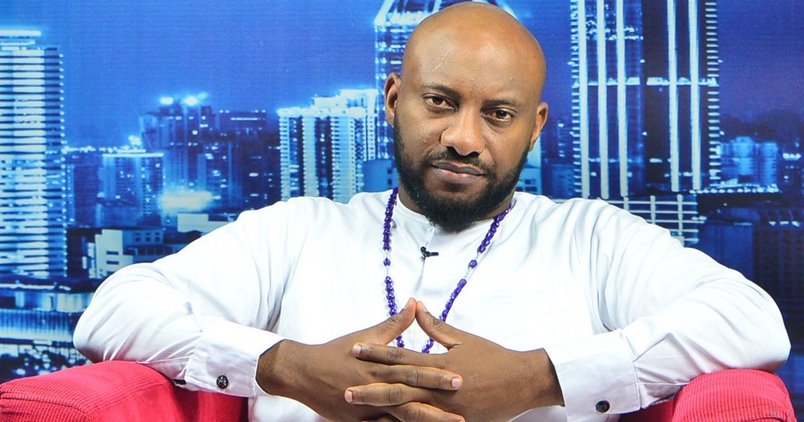
When a public figure goes quiet about something they used to share freely, people notice. For Yul Edochie, the silence was loud.
For years, his children were a visible part of his online life, sometimes in casual photos, sometimes in proud father moments, and sometimes in posts that felt like a man trying to show the world that family still mattered to him, even when everything around him seemed to be shifting.
Then suddenly, that part of his timeline faded. No birthday messages. No “my son, my pride” captions. No father-and-child pictures. No proud family updates.
To the public, it looked like distance. To some, it looked like punishment. To others, it looked like a man who had simply moved on. But was it really that simple?
In a recent interview on Kaatruths Podcast, Yul offered a version of events that paints a more complicated picture, one shaped by legal restrictions, a divorce process that is still unfolding, and the reality of trying to be a parent while the whole world believes it has a right to your private life.
The interview touched on four key things people have been asking for months. Why he stopped posting his children with May. Why he missed his son’s matriculation. What his relationship with his children is like now. And why he refuses to speak publicly about the deepest parts of his marriage.
The result is an interview that does not give people everything they want, but gives enough to reopen the conversation and, in some ways, deepen it.
The Court Order He Said Changed Everything
In the interview, Yul introduced a key detail that shifts the entire conversation. He said there is a court order tied to the divorce proceedings between him and May. According to him, the court order restricts both of them from posting their children publicly on social media. In simple terms, he claimed the reason he stopped posting his children was not because he has a bad relationship with them. He said it was because he was legally required to stop.
This is a major statement because once the word court enters the story, the situation becomes less about personal choices and more about legal consequences. A court order is not a suggestion. It is not a social media debate. It is not something you ignore because you want to prove a point online. Disobeying a court order can lead to serious consequences, and for someone already in the middle of a divorce case, it is the kind of risk most people would avoid.
Yul’s claim also carries another important implication. He said the restriction applies to both him and May. That means, at least in his version of events, neither of them is free to post the children publicly for now. If that is true, then the silence people have been reading as emotional distance could actually be legal compliance. It does not automatically mean the family is healed or that the situation is peaceful. But it does suggest that the absence of posts is not necessarily proof of abandonment.
Why Courts Step In When Children Become Content
In public divorces, children are often the most vulnerable people in the story. They are the ones who cannot defend themselves, cannot control what is shared about them, and cannot choose how much of their lives become public. Even when parents are not trying to use their children as weapons, the internet often turns children into symbols anyway. A child becomes proof that one parent is present. A child becomes proof that one parent is struggling. A child becomes proof that one parent is winning. And that is where things become unhealthy.
This is why courts sometimes restrict parents from posting their children during divorce proceedings. It is not always about punishing either parent. Sometimes it is about protecting the children from being turned into public property. Once a divorce becomes public, every post becomes a statement, and every caption becomes something people analyze for hidden meaning. A simple family photo becomes a headline. A birthday message becomes a debate. Even silence becomes content.
If Yul’s claim about the court order is accurate, then it suggests the legal system is trying to remove the children from the center of the public drama. Whether people like Yul or dislike him, that kind of restriction would not be unusual in a tense divorce process. It is one of the few ways the court can reduce the risk of the children being pulled into a media war they never asked for.
The Relationship With His Children, According to Him
Beyond the court order, Yul also spoke directly about his relationship with his children. He said he still has a cordial relationship with them and that he remains in contact. He also said he still supports them financially. This was a key part of the interview because it addressed the most painful accusation people have made against him. The accusation that he has emotionally abandoned his children, or that he has chosen a new life that no longer includes them.
When a father is accused of abandoning his children, it is rarely just about money. It is about presence, affection, and emotional responsibility. People want to know whether the father is still involved, still checking on them, still taking interest in their lives, still showing up when it matters. Yul’s statement was his attempt to correct the narrative that he has disappeared from their lives. He did not say everything is perfect. He did not pretend there is no tension. But he did insist that contact and support still exist.
He also mentioned that he sends money to his son through May. That detail matters because it shows that, at least in his version of events, he is still playing a role in their lives through the structure of co parenting. It also suggests that communication between him and May may be limited, and that the most practical way to support the child is through the parent who is physically closer. This is not unusual in co parenting arrangements, especially when emotions are still raw.
The Matriculation He Missed and Why It Hit So Hard
If the social media silence created questions, the matriculation issue created emotion. Matriculation is not just a school event. In many Nigerian families, it is a milestone that carries pride, sacrifice, and celebration. It is one of those moments parents dream of when they are working hard, paying school fees, and hoping their children will grow into something meaningful. It is the kind of day that many parents mark as proof that their effort has not been wasted.
So when it became public knowledge that Yul did not attend his son’s matriculation, it was not treated as a small issue. It was treated as symbolic. People interpreted it as a sign of distance. They interpreted it as proof that he was absent. And because the public already had strong feelings about his marriage situation, many people did not approach the story with patience. They approached it with anger, disappointment, and certainty.
In the interview, Yul said he spoke with his son recently, and that his son told him about being admitted into university and the matriculation ceremony. However, he said he was unable to attend because he was not informed early enough. He emphasized that it was not lack of interest. He said it was lack of notice. In other words, he presented it as a timing issue, not an emotional issue.
The Quiet Question Behind the Late Notice Explanation
When someone says they were informed too late, it naturally raises another question. Why did the information come late? In normal family situations, details about a matriculation ceremony are usually discussed in advance. Parents plan, they make arrangements, they prepare emotionally and financially. So when Yul says he did not get enough notice, it suggests that the communication structure in the family may be strained.
That strain could come from many places. It could come from the divorce process itself. It could come from limited communication between parents. It could come from emotional tension that affects how information flows. It could even come from the child trying to navigate the situation carefully, not wanting to trigger conflict. In families going through separation, children sometimes become cautious about how they share information because they do not want to be the reason their parents argue again.
Yul did not go deeper into the reasons behind the late notice. He did not accuse May of withholding information. He did not accuse his son of avoiding him. He did not accuse anyone of sabotage. Instead, he stayed on the simplest explanation. He said he was told too late, and that was why he missed the event.
What His Explanation Suggests Without Saying It
Even though Yul did not assign blame, his explanation still suggests a reality that many people understand quietly. Divorce changes communication. It changes access. It changes how family events are planned. It changes the emotional atmosphere of milestones. A day that should be pure celebration becomes complicated when the parents are no longer together and when the relationship between them is tense.
It is also important to acknowledge that Yul is a public figure. If he attended the matriculation, it would likely attract attention. People might take pictures. People might record videos. People might post him online and turn the event into another trending topic. And in situations where emotions are already fragile, that kind of public attention can make things harder, not easier. Sometimes, even if a parent wants to attend, the circumstances around their presence become complicated.
The Support He Says Never Stopped
One of the most consistent points Yul made in the interview was about support. He stressed that he still supports his children financially. He also stressed that he still maintains contact with them. This was important because, in public perception, financial support is often treated as the bare minimum. But in legal terms, it is one of the key responsibilities of a parent. So when he mentioned it, he was not only speaking emotionally. He was also speaking practically.
By saying he sends money through May, he was describing a co parenting arrangement where the children’s mother is the channel through which support flows. That can be interpreted in different ways. Some people will see it as a sign that he is trying to do the right thing. Others will see it as proof that direct closeness is limited. But either way, it reinforces his claim that support has not stopped, even if the public does not see it.
This is where the internet sometimes struggles. The internet measures love through visibility. If you do not post your child, people assume you do not care. If you do not attend an event, people assume you are absent emotionally. But love does not always come with social media proof. Support does not always come with captions. Some of the most meaningful parenting actions happen quietly, away from public view, especially when legal boundaries exist.
The Marriage Questions He Refused to Turn Into Drama
Another major part of the interview came when Yul was asked about his marriage and honesty with May. This was the part many people were waiting for, because the public has been hungry for details about what truly happened, what was said, and who hurt who. But Yul did not give the public what it wanted. He chose to keep family matters private. He said he did not want to publicly assign blame.
That choice may frustrate people, but it also reveals something. It suggests he understands how quickly the public can turn private pain into entertainment. It suggests he knows that once he begins speaking deeply about the marriage, the conversation will never end. People will demand timelines, receipts, and explanations. They will interpret every word as an attack. They will compare his version with May’s version. They will force the children to live inside a public argument that never dies.
By refusing to assign blame publicly, Yul positioned himself as someone trying to control the damage. Whether people believe him or not, the choice itself is significant. It shows that, at least in this interview, he was not trying to fuel the fire. He was trying to explain just enough to answer the questions, without turning the interview into a public courtroom.
Why the Public Still Might Not Believe Him
Even with the explanations, many people will still not believe Yul. Public trust is difficult to rebuild once it has been damaged. And in celebrity culture, people rarely give second chances easily. Some people will hear his court order explanation and assume it is an excuse. Some will hear his late notice explanation and assume it is a cover. Some will hear his claim of support and assume it is only being mentioned because he is under pressure.
This is the reality of being a controversial public figure. Once the public forms a fixed opinion about you, even your truth sounds like strategy. Even your calmness sounds rehearsed. Even your refusal to blame sounds like manipulation. That is why interviews like this often do not end the conversation. They simply create a new round of debate.
But the fact that people debate does not automatically mean the explanation is false. It only means the public is emotionally invested, and emotional investment rarely comes with patience. People do not want slow truths. They want instant conclusions. And the internet has trained people to treat their conclusions as facts.
The Children at the Center of Everything
No matter how people feel about Yul or May, one truth remains. The children are at the center of the story, whether they want to be or not. They are the ones who have to grow up in the shadow of public commentary. They are the ones whose parents are being analyzed by strangers. They are the ones whose milestones are being turned into headlines.
This is why the court order detail matters so much. If the court truly restricted both parents from posting the children, it suggests that the legal system recognizes the danger of turning children into public content during a divorce. It suggests that the children’s privacy is being prioritized, even if the public finds the silence suspicious. And it suggests that some of the absence people interpret as emotional distance may actually be protection.
It is also important to remember that children in divorce situations often carry emotional burdens quietly. They may love both parents, may feel pressured to choose sides or feel guilt for events like matriculation becoming controversial. They may feel like their lives are no longer theirs. So even when adults are arguing publicly, children are often the ones suffering privately.
What the Interview Actually Does and Does Not Do
Yul’s interview does not solve the story. It does not close the chapter. It does not provide the dramatic confession some people were hoping for. Instead, it does something quieter. It introduces a legal explanation for why the children disappeared from his social media. It offers a timing explanation for why he missed his son’s matriculation. It reinforces his claim that support and contact still exist. And it shows that he is unwilling to publicly assign blame about the marriage.
What it does not do is convince everyone. It does not erase public anger. It does not erase the past. It does not erase the emotional weight of everything that has happened. It simply adds complexity to a story that many people had already simplified.
And perhaps that is the most human part of it. Real life is rarely as clean as social media wants it to be. Real life is rarely as simple as one person being good and another being bad. Divorce is messy. Co parenting is complicated. Public scrutiny makes everything worse. And children often become the quiet victims of adult decisions.
Conclusion: The Loudest Part of This Story Is Still the Silence
In the end, Yul Edochie’s interview leaves the public with more to think about, even if it does not give the public everything it wants. He says he stopped posting his children because of a court order. He says he missed his son’s matriculation because he was informed too late. He says he still has a cordial relationship with his children and remains in contact. He says he still supports them financially, including sending money through May. He says he wants to keep his marriage matters private and does not want to assign blame publicly.
For some people, this will sound like excuses. For others, it will sound like a man trying to manage a complicated family situation under public pressure. But no matter what side anyone takes, the reality remains that a family is still in the middle of a painful transition. And the children, who did not ask to be public content, are still growing up in the middle of it.
Maybe that is why this story keeps returning to silence. Not the silence of social media posts, but the silence of what people cannot see.
And perhaps the hardest truth of all is this. In a world that demands proof, love sometimes looks invisible. In a world that demands spectacle, responsibility sometimes looks quiet. In a world that demands blame, maturity sometimes looks like refusal. And in a world that demands constant updates, the most human thing a person can do is step back, obey the rules, and keep what matters most away from the noise.




Discussion about this post