
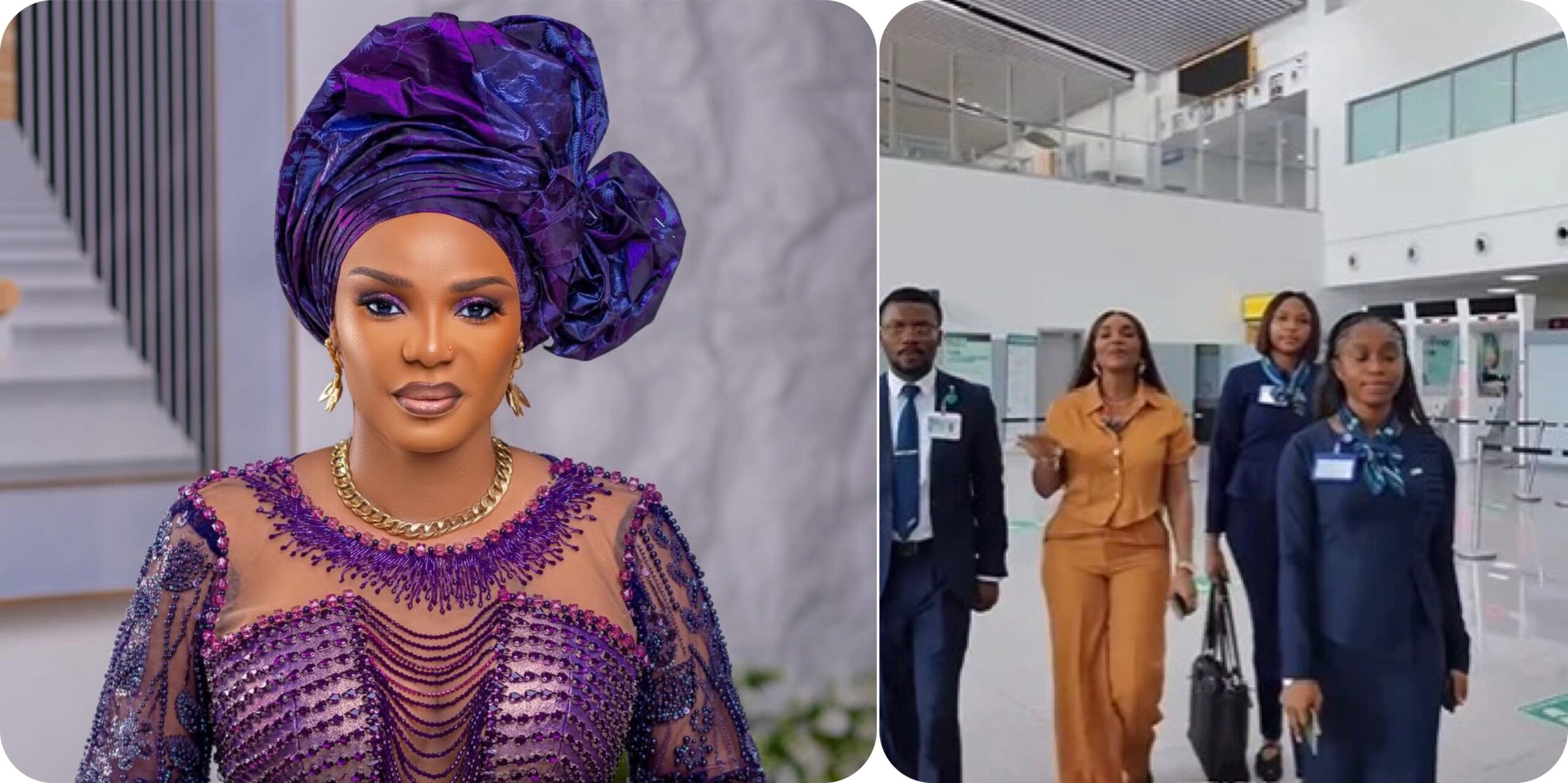
A single video can change the narrative of a celebrity overnight. That’s exactly what happened when Nollywood actress Iyabo Ojo posted a clip praising the upgrades at Murtala Muhammed International Airport (MMIA), Lagos. What was meant to be a simple acknowledgment of improved terminals, passenger protocols, and airport infrastructure quickly morphed into a nationwide debate, stirring rumours about contracts, payments, and political alignment. Social media erupted, so much so that both Iyabo and the Federal Airports Authority of Nigeria (FAAN) had to step in to clarify what actually happened.
The incident shows how, in Nigeria’s digital age, perception often travels faster than fact. It also reveals how the influence of a celebrity can transform a simple moment into a conversation about patriotism, politics, and public trust.
How The Iyabo Ojo – FAAN Story Started
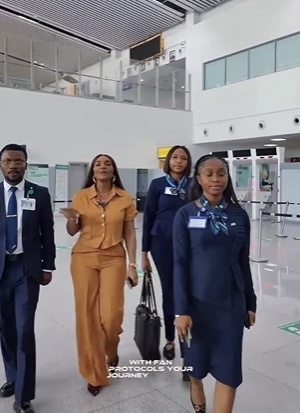
The story began while Iyabo Ojo was filming a movie at MMIA. During the shoot, she noticed improvements to the airport’s facilities and shared a video highlighting the upgraded terminals, better passenger service, and smoother security protocols. In her words:
“FAAN is changing for the better in so many ways. Besides the renovation of the MMIA Lagos Terminal 1 and the beauty & comfort of Terminal 2, the service of their Protocol Team is exceptional. I’m so proud of my country.”
FAAN reportedly requested her assistance in amplifying these improvements to the public. The agency clarified later that she was not paid or contracted to post the video; she did so voluntarily. However, the clip quickly drew attention because of Iyabo’s prominence and her known political voice in previous debates. What could have been a simple acknowledgment of infrastructure reform became a lightning rod for massive speculation.
Why It Started Trending:
1. Ambassador Rumour
Once the video circulated, rumours emerged that Iyabo had been appointed a FAAN ambassador or was being paid to endorse the agency’s achievements. Netizens amplified these claims, and media outlets repeated the speculation, making it appear official. Despite no announcement from FAAN, the public began to treat the video as evidence of a government partnership.
2. Political Interpretation
Beyond financial rumours, Iyabo’s past political activism shaped the narrative. Many netizens questioned whether her praise of a government agency was politically motivated. Social media comments framed the clip as potential soft endorsement of current leadership, sparking debates about celebrity influence, neutrality, and the blurred line between patriotism and politics.
The combination of financial speculation and political interpretation helped the story gain traction, trending across different social media platforms like X, Instagram, and TikTok, and becoming a nationwide talking point.
FAAN’s Official Position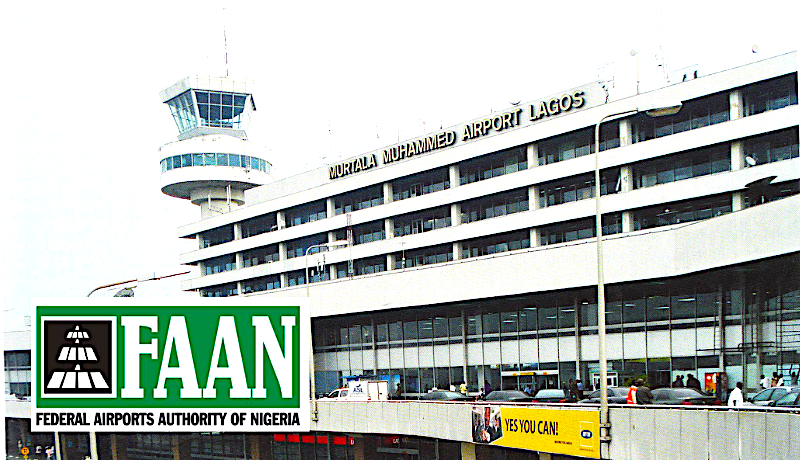
FAAN quickly moved to clarify its stance. The agency confirmed:
• Iyabo Ojo had no ambassadorial appointment.
• There was no financial transaction or promotional contract.
• Her video was posted voluntarily to highlight visible airport improvements during her filming.
The Managing Director, Olubunmi Kuku, emphasized that the actress’s participation was informal and not part of a structured campaign. In her words:
“Iyabo Ojo was not ‘awarded a gig’ by FAAN, nor is she an Ambassador.
“She was only asked to raise awareness on transformational initiatives under this same Tinubu administration at the airport while shooting a movie scene. There was no financial incentive.”
The statement aimed to separate speculation from fact, but by then, social media debate had already intensified.
Iyabo Ojo’s Reaction

Speaking publicly, Iyabo Ojo on Sunday, February 15, repeated FAAN’s clarifications, stressing that her video:
• Was unpaid
• Was not linked to any contract or ambassadorial role
• Was motivated by patriotism, not politics
She told fans on Instagram that she highlights progress in Nigeria whenever she sees it, regardless of which government is in power. Iyabo framed her post as a civic act celebrating development, not endorsing any political agenda. She also said she would support projects that positively impact Nigeria, irrespective of political affiliation. Iyabo Ojo’s statement read in part:
“I’m Nigerian. And I’m a voice. When I see progress, airports upgraded, roads rebuilt, systems improved etc, I shout it from the rooftops, if need be, not because I’m paid, not because I’m political, but because I feel it and I want good for my country. I Will continue to use my craft, my voice, to promote Nigeria, and I’m unapologetic about it.
As an influential person, a frequent traveler, a good citizen, and a child of this land… I got approved to film at the airport.
FAAN approached me: You’ve seen the changes, Please help us spread the word. So I did.
*FOR FREE.*
No fee.
No contract. Just love for Nigeria.Note: My fees as an influencer are way higher than the cost to pay and film at the airport – so l won’t call it “trade” by Bata… but just for the love of seeing changes.
Some ask: Why praise them?
I say, I praise GOOD – not government, and if the government does good, l’ll praise them too.
I praised FAAN — they’re doing an amazing job. I patronize them all the time. Even for my daughter’s wedding, they did so well.
My loyalty? To my country. Always.
I’m not just a voice. I’m a movement.
If Nigeria must rise — we ALL must build it.
Silence helps no one.
The Deeper Angle
The controversy goes beyond the actress or the airport. It highlights larger cultural and media trends in Nigeria:
• Celebrity Patriotism vs Political Messaging: Celebrities now navigate a fine line between celebrating development and being perceived as political endorsers.
• The New Era of Soft Government PR: Influencers can amplify institutional messages without formal contracts, raising questions about transparency and ethics.
• Nigerian Social Media Culture: Rumours spread faster than verification, public opinion can be volatile, and digital narratives often outpace official statements.
This story provides insight into how modern Nigeria consumes information and interprets public figures’ actions.
Conclusion
What should have been a simple moment of acknowledgment sparked a nationwide conversation about celebrity influence, patriotism, and public trust. Iyabo Ojo’s video at MMIA illustrates the power and risk of social media in shaping narratives. It also underscores a truth for public figures that even good intentions can spark debate, and in today’s Nigeria, perception often travels faster than the facts.



Discussion about this post