
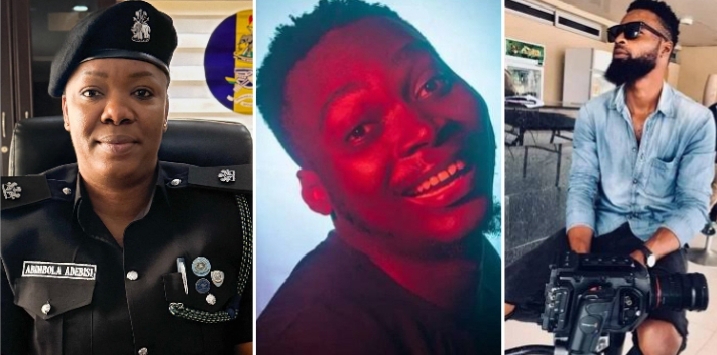
On 7 February 2026, what began as a routine production day on a Lagos film set ended in grief, shock, and a criminal investigation that has since gripped the Nigerian film industry. Two respected members of a Nollywood production crew were found lifeless inside a parked vehicle within the premises of Evercare Hospital Lekki in Lekki Phase 1.
The hospital, located in one of Lagos State’s most affluent neighborhoods, had been secured as a filming location for a movie shoot scheduled for that Saturday. By nightfall, the creative community that had gathered to tell a story on camera was instead confronted with a real life tragedy whose cause remains under investigation.
What is known, however, is the timeline of that day, the identities of the deceased, and the growing list of unanswered questions that now surround a film set that was meant to produce art but instead produced mourning.
This is a structured account of what has been established so far, broken down in sequence, grounded in the verified details available, and attentive to the human cost behind the headlines.
The Setting and the Production Day
Lekki Phase 1 has long been a favored hub for Nollywood productions because of its blend of modern architecture, controlled environments, and proximity to industry professionals who reside on the Island. On 7 February 2026, a film production team gathered at Evercare Hospital Lekki which had been booked as a shooting location. Hospital based scenes often require careful coordination between medical administrators and production managers, and it is standard practice for such shoots to begin early to maximize daylight and minimize disruption to facility operations.
Crew members typically arrive ahead of principal cast in order to set up lighting rigs, test camera angles, arrange cables, and ensure power supply stability. The nature of film production in Lagos often demands improvisation and resilience, especially when working in real locations rather than studio environments. The day reportedly began like many others, with technical teams on site before 8 in the morning to prepare for filming.
Among those who arrived early were two professionals whose reputations within the industry had been built over years of creative work. They were not actors seeking spotlight but crew members whose expertise shaped the visual texture of countless projects. By the time the rest of the team began assembling for scheduled scenes, these two men had already completed a significant portion of their assignment for the morning.
The Men Behind the Work
The deceased were identified as Ekemini Imeh, popularly known in professional circles as GeeTee, and Ayodeji Walter Odediran, widely recognized as Director Carrinqton. Ekemini Imeh was a lighting director and the chief executive of GeeTee Light, a company known within Nollywood production networks for providing lighting equipment and technical services. Colleagues described him as meticulous and inventive, someone who understood how to manipulate brightness and shadow to create emotional tone on screen.
Ayodeji Walter Odediran, known as Director Carrinqton, was a creative video director whose body of work spanned film and other visual productions. In an industry where technical roles often remain invisible to the audience, his peers knew the extent of his contributions. He was regarded as someone who understood storytelling not only through dialogue and performance but through framing, movement, and the rhythm of images.
Their presence on the set on 7 February 2026 was not incidental. They had been engaged in professional capacity to support the production, and by all accounts they arrived early and began executing their tasks. According to information released in the aftermath, the two men completed their lighting setup before the main shoot commenced.
The Morning Hours
After setting up lighting equipment, the two men reportedly decided to rest inside a tinted Nissan vehicle parked within the hospital premises. Such breaks are not unusual on film sets, particularly when crew members complete preparatory tasks and must wait for actors or directors to finalize next steps. The Nigerian heat, combined with the intensity of physical setup work, can make short periods of rest necessary.
At approximately 11 in the morning on 7 February 2026, a crew member delivered breakfast to them inside the car. This detail later became significant in the investigation, not because any cause had been established, but because it marked one of the last confirmed interactions with the two men while they were alive. The breakfast delivery indicated that they were expected to remain nearby and rejoin the production once needed.
As filming progressed through the day, attention shifted to scenes, performances, and technical adjustments. On a typical set, once cameras roll, communication can become fragmented. Crew members may assume that others are occupied with tasks or resting, especially if earlier duties were already completed.
Silence and Discovery
As the hours passed, attempts to reach the two men reportedly went unanswered. Their phones did not respond. On film sets, delayed responses are not always cause for alarm because crew members may silence devices during recording. It was only later in the evening, after shooting wrapped up, that concern escalated to a point where a search was conducted.
Their bodies were discovered inside the parked vehicle within the premises of Evercare Hospital Lekki on Saturday 7 February 2026. The exact time of discovery has not been publicly detailed, but reports confirm that it occurred after filming activities had concluded for the day. What had been assumed to be routine rest turned out to be something far more tragic.
Emergency services were alerted, and the matter was reported to law enforcement. Shock spread quickly among those present. Colleagues who had worked alongside the two men just hours earlier were suddenly confronted with the reality that they were gone.
Initial Police Response
The case was first reported at Maroko Police Station, which holds jurisdiction over parts of Lekki Phase 1. Given the gravity of the incident and the public interest surrounding it, the matter was subsequently transferred to the State Criminal Investigation Department in Yaba for comprehensive investigation.
The Lagos State Police Command confirmed that detectives were exploring all possible angles. This included questioning individuals connected to the production such as the film producer, the crew member who delivered breakfast, and staff of the hospital facility where the filming took place. The decision to question multiple parties indicated that investigators were not narrowing prematurely on a single theory.
One crew member who delivered the food was reportedly arrested and taken into custody as part of investigative procedure. Authorities have not publicly declared this individual guilty of any wrongdoing, and as of the latest updates no official cause of death has been confirmed.
Forensic Procedures Underway
Investigators have ordered autopsies to determine physiological causes of death. Toxicology tests have been initiated to assess whether any substances were present in the bodies of the deceased that could explain the tragedy. In addition, mechanical inspection of the vehicle has been scheduled to determine whether environmental or mechanical factors could have contributed.
Vehicles, especially when parked with limited ventilation, can become hazardous environments under certain conditions. However, authorities have not concluded that this was the case. Reviewing CCTV footage from the hospital premises is also part of the investigative process, as it may clarify movements around the vehicle during the day.
Each of these steps is standard in sudden death investigations, especially when two individuals are found in the same enclosed space. Until forensic reports are completed and publicly released, speculation remains unverified.
The Human Toll
Beyond investigative procedures lies the deeper human cost. Ekemini Imeh and Ayodeji Walter Odediran were not anonymous workers. They had families, friends, collaborators, and mentees within an industry that functions as both workplace and extended community. The Nigerian film sector has long depended on tight networks of trust and familiarity. The loss of two professionals in one day has sent ripples through that network.
For many crew members, film sets are spaces of long hours and shared endurance. Bonds are formed in the process of solving creative and logistical challenges. To lose colleagues under circumstances that remain unclear compounds grief with uncertainty. It also forces difficult reflections on safety protocols, communication structures, and emergency response readiness on production sites.
Condolences have circulated across social media platforms and within professional groups. Tributes have highlighted their dedication to craft and the energy they brought to projects. In the absence of confirmed cause, mourning has been accompanied by questions.
Industry Implications
The tragedy has prompted conversations about on set safety within Nollywood. Unlike highly unionized film industries elsewhere, many Nigerian productions operate with flexible structures. While this flexibility has fueled rapid growth and creativity, it also raises concerns about standardized safety procedures.
Industry stakeholders are now asking whether there were warning signs that went unnoticed on 7 February 2026. Were there check in systems for crew members who stepped away from active shooting areas. Did anyone monitor the vehicle periodically. Could earlier intervention have altered the outcome. These are not accusations but reflections emerging from a community seeking understanding.
At the same time, law enforcement has emphasized that the investigation remains active. Officials have urged patience as forensic experts complete their analysis.
What Remains Uncertain
As of the latest confirmed information, the exact cause of death has not been made public. Authorities have stated that environmental, mechanical, food related, or other possibilities are being explored. Without official forensic conclusions, any narrative that assigns a definitive cause would be speculative.
The arrest of the crew member who delivered breakfast indicates that investigators are leaving no stone unturned, but it does not in itself establish culpability. In complex investigations, detentions can be procedural while evidence is gathered.
The fact that both men were found in the same vehicle suggests a shared circumstance, yet what that circumstance was remains under examination. Until autopsy and toxicology results are released with clarity, the tragedy stands as an unresolved chapter.
Waiting for Answers
In the days following 7 February 2026, conversations within Nollywood have oscillated between grief and anticipation. Families await clarity. Colleagues await reassurance that whatever occurred can be understood and prevented in future. The broader public awaits official statements that move beyond possibility to confirmation.
Investigations of this nature require time. Forensic analysis is meticulous, and premature conclusions can distort truth. The Lagos State Police Command has indicated that findings will be communicated once processes are complete.
For now, the memory of that Saturday lingers. A hospital corridor once used as a film backdrop has become associated with a real life loss. A parked vehicle once viewed as a place of temporary rest has become the focal point of inquiry.
Closing Reflection
On 7 February 2026, within the premises of Evercare Hospital Lekki in Lekki Phase 1, two Nollywood crew members were found dead inside a parked vehicle. They were Ekemini Imeh, a lighting director and chief executive of GeeTee Light, and Ayodeji Walter Odediran, known as Director Carrinqton. Their day had begun with professional purpose and ended in tragedy.
The case, first reported at Maroko Police Station and now under investigation by the State Criminal Investigation Department in Yaba, remains open. Autopsies, toxicology examinations, mechanical inspections, and CCTV reviews are ongoing. One crew member has been arrested as part of investigative steps, though no official cause of death has yet been announced.
In an industry built on storytelling, this is one story still unfolding. It is a story grounded in fact based dates and confirmed events, yet defined by questions that only forensic evidence can answer. Until those answers arrive, the film community and the wider public remain in a space between certainty and doubt, holding on to the lives that were and awaiting clarity about how they were lost.




Discussion about this post