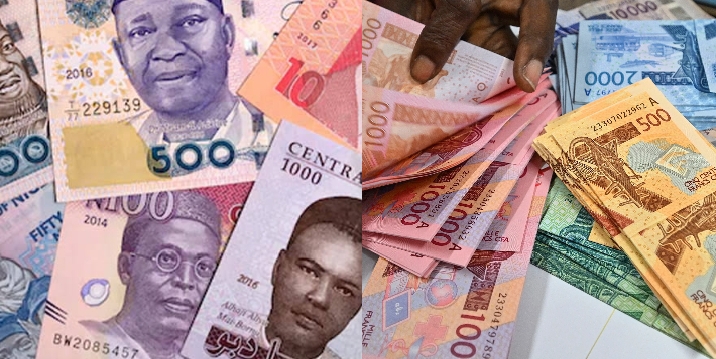
In recent months, social media platforms and messaging groups have been flooded with claims that Nigeria will abandon the naira in 2027 and adopt a new regional currency known as the Eco. The posts are often written with urgency, suggesting that the Federal Government has already made a final decision and that Nigerians should prepare for the disappearance of their national currency within the next year.
For many citizens who have lived through currency redesigns, exchange rate instability, and economic reforms, such claims can trigger anxiety and confusion. Yet when examined carefully against official statements and documented policy timelines, the narrative appears far more complex than viral headlines suggest.
To understand whether Nigeria is truly replacing the naira in 2027, it is necessary to examine the origins of the Eco proposal, the economic conditions attached to it, the official policy position of Nigerian authorities, and the difference between a target date and a confirmed transition.
This piece carefully unpacks the facts, separating speculation from documented policy positions while placing the 2027 discussion in its proper economic and historical context.
Understanding the Viral Claim
The claim that Nigeria will scrap the naira in 2027 gained traction online in late 2025 and early 2026. Several posts alleged that ECOWAS had finalized plans to introduce the Eco currency across all member states and that Nigeria would be required to abandon the naira once the new currency launches. In some versions of the story, the transition was described as automatic and mandatory, creating the impression that Nigeria had already committed to eliminating its national currency.
However, fact checking organizations and policy analysts reviewed the claim and found no official documentation confirming that Nigeria had agreed to abolish the naira in 2027. Public statements from Nigerian monetary authorities continued to reference the naira as the country’s sole legal tender. No legislation was introduced in the National Assembly proposing the termination of the naira, nor did the Central Bank of Nigeria issue a directive outlining a currency replacement timeline.
The difference between a regional aspiration and a legally binding national decision is significant. A target year for possible regional integration does not equal an automatic domestic policy shift. This distinction is central to understanding why the viral claim does not align with the official position of Nigerian authorities as of 2026.
What Is the Eco Currency
The Eco is a proposed single currency for the 15 member states of ECOWAS, a regional economic bloc established on May 28, 1975. The idea of a shared West African currency has been discussed for more than 20 years as part of efforts to promote economic integration, facilitate cross border trade, and reduce currency exchange costs among member countries. The concept is often compared to the euro in the European Union, where multiple nations share a single monetary system under a central framework.
The proposed Eco currency would theoretically allow countries such as Nigeria, Ghana, Senegal, Togo, Sierra Leone, The Gambia, Guinea, and others to operate under a unified monetary arrangement. The goal is to simplify trade transactions, enhance price transparency, and strengthen regional cooperation. However, the introduction of a common currency requires deep economic alignment among participating states, including fiscal discipline, inflation control, and stable exchange rate management.
The 2027 target date has been reaffirmed by ECOWAS leaders in regional meetings, but it is important to note that previous target dates such as 2003, 2005, 2010, and 2020 were postponed due to member states failing to meet convergence criteria. This historical pattern demonstrates that announcing a target date does not guarantee implementation.
The Economic Conditions Required
Adopting a shared currency is not simply a political decision. It depends on macroeconomic convergence criteria designed to ensure that participating countries maintain similar levels of economic stability. These criteria typically include low and stable inflation rates, controlled fiscal deficits, manageable public debt levels, and sufficient foreign reserve buffers. Without meeting these benchmarks, a shared currency could expose weaker economies to severe shocks.
As of 2026, many ECOWAS countries including Nigeria continue to face economic challenges. Inflation rates have fluctuated significantly in recent years, fiscal pressures remain substantial, and exchange rate volatility persists. These conditions indicate that convergence remains incomplete. Even if the Eco is launched in 2027, only countries that satisfy the agreed economic standards would be eligible to join immediately. Participation is not automatic.
For Nigeria, which has the largest economy in West Africa, the implications of monetary union are particularly significant. Surrendering control over national monetary policy would require extensive structural alignment and legislative reforms. Such changes cannot occur quietly or suddenly. They would require public debate, parliamentary approval, and coordinated central banking agreements. None of these processes have been finalized as of the latest confirmed information.
The Role of the Central Bank of Nigeria
The Central Bank of Nigeria remains responsible for issuing and regulating the naira as Nigeria’s legal tender. In recent years, the CBN has focused on stabilizing the currency, managing inflation, and reforming foreign exchange mechanisms. There has been no official statement announcing plans to discontinue the naira in 2027. Instead, policy efforts have centered on strengthening domestic monetary frameworks.
Transitioning to a regional currency would require the CBN to integrate into a broader West African central monetary authority. Such a shift would alter Nigeria’s control over interest rates, exchange rate management, and monetary supply decisions. These are profound changes that would require constitutional and legal adjustments. As of 2026, no such legal instruments have been enacted.
This absence of formal policy change is one of the clearest indicators that the naira is not scheduled for abolition in 2027. Major currency transitions involve public awareness campaigns, phased implementation plans, and detailed technical guidelines. None of these processes are currently underway in Nigeria.
What Would Happen to the Naira If Eco Is Adopted
Even in a hypothetical scenario where Nigeria qualifies and chooses to adopt the Eco, the transition would not involve an overnight disappearance of the naira. Historical examples from other regions show that currency integration typically includes dual circulation periods during which both old and new currencies are accepted. Citizens are given clear timelines to exchange old notes for new ones under regulated frameworks.
Legal tender laws would need to be amended to define the Eco as Nigeria’s official currency. Monetary assets, contracts, salaries, loans, and savings would be recalibrated under strict regulatory oversight. Such a transformation requires years of preparation and coordination. The absence of these preparatory steps further reinforces that 2027 does not currently represent a confirmed abolition date for the naira.
Therefore, at this stage, the naira remains Nigeria’s sole official currency, recognized under national law and managed by the Central Bank of Nigeria. No official policy document states otherwise.
Why the Rumor Persists
The persistence of the 2027 rumor reflects broader public sensitivity around currency issues. Nigeria has experienced periods of currency redesign and exchange rate reforms, particularly during 2022 and 2023. These events heightened awareness about monetary policy decisions and created fertile ground for speculation.
In addition, the repeated reaffirmation of the 2027 target date by ECOWAS leaders may have been misinterpreted as a binding decision rather than a conditional goal. Social media amplification often removes nuance from complex economic discussions, reducing multi layered policy debates into simplified claims.
The result is widespread misunderstanding about what a regional currency initiative actually entails. Without careful explanation of economic prerequisites and legislative processes, target dates can easily be mistaken for confirmed implementation schedules.
The Economic Debate
The idea of a West African single currency is rooted in aspirations for regional integration and economic efficiency. Supporters argue that a unified currency could enhance trade, reduce transaction costs, and improve regional bargaining power in global markets. Critics caution that economic disparities among member states may create imbalances if convergence is incomplete.
For Nigeria, whose economy is significantly larger than many neighboring countries, the stakes are particularly high. Policymakers must weigh the benefits of integration against the importance of maintaining independent monetary tools. These debates are ongoing and involve economists, legislators, and regional policymakers.
What remains clear as of 2026 is that these discussions are still in progress. There is no finalized agreement committing Nigeria to abandon the naira in 2027.
Concluding Lens
The claim that Nigeria will scrap the naira in 2027 and automatically adopt the Eco currency is not supported by official policy statements or enacted legislation. While ECOWAS has reaffirmed a 2027 target for launching a regional currency, adoption depends on strict economic convergence criteria and national level approvals. As of confirmed reports through 2026, the naira remains Nigeria’s legal tender, and no formal decision has been announced to abolish it.
Regional currency integration is a complex process requiring economic alignment, legislative action, and institutional coordination. These conditions have not yet been fully met. Therefore, the narrative that Nigeria is set to eliminate the naira in 2027 is speculative rather than factual.
For citizens seeking clarity, the most reliable indicators remain official communications from the Federal Government, the Central Bank of Nigeria, and ECOWAS policy frameworks. Until concrete legal steps are taken, the naira continues to stand as Nigeria’s recognized national currency.