
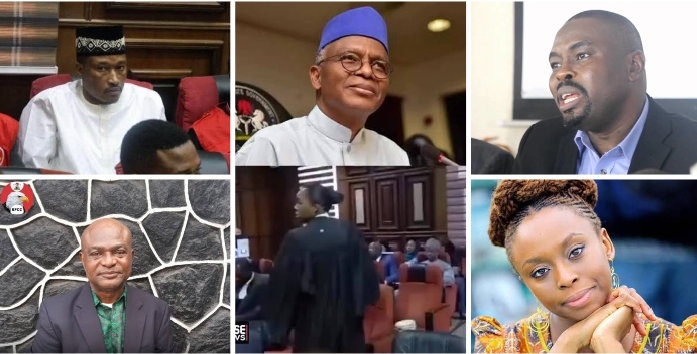
The first months of 2026 have proven to be a period of extraordinary judicial activity in Nigeria, as courts across the nation have been consumed with a series of high-profile cases that cut across personal tragedy, political controversy, financial malfeasance, and questions of national security. February 25 and 26, 2026, in particular, stand out as days when multiple proceedings converged, casting a spotlight on both the workings of the judiciary and the broader societal implications of legal accountability. In Lagos, Abuja, Bauchi, and Oyo States, courts were tasked with addressing matters that not only involve the interpretation of law but also the ethical and human dimensions that accompany such cases.
These developments have stirred intense public interest because they touch on issues of governance, medical accountability, corporate ethics, political integrity, and the lived experiences of ordinary Nigerians who follow these trials with keen attention.
At the center of these events are both high-profile individuals and state institutions whose actions or alleged actions carry consequences for public trust in the justice system. The unfolding events are emblematic of a nation negotiating the difficult balance between legal procedure, societal expectation, and human empathy in the pursuit of justice.
The Tragic Case of Chimamanda Ngozi Adichie’s Son
Among the most emotionally charged developments in February 2026 was the scheduling of the Lagos State coroner’s court inquest into the death of Chimamanda Ngozi Adichie’s 21-month-old son, Nkanu. The child passed away in early January 2026 under circumstances the family contends resulted from gross medical negligence during diagnostic procedures at a Lagos hospital. On February 25, 2026, news outlets reported that the coroner’s court had fixed April 14, 2026, as the date for the formal inquest.
The significance of this case extends far beyond the personal grief experienced by the Adichie family. Parents and caregivers nationwide have followed the story with profound empathy, recognizing the immense pain that accompanies the sudden loss of a young child. The legal proceedings will examine every aspect of the hospital’s conduct, including the diagnostic decisions made by medical personnel, adherence to established protocols, and potential lapses that may have contributed to the fatal outcome.
The coroner’s inquest is designed not only to establish causation but also to hold accountable any parties whose negligence may have played a role. This process is a crucial mechanism for reinforcing public confidence in healthcare oversight, emphasizing that institutions entrusted with life-saving responsibilities must meet exacting standards. For the Adichie family, the inquest represents a painstaking journey toward clarity and closure, a judicial acknowledgment of their grief, and a societal reflection on the responsibilities of medical institutions to the communities they serve.
The legal proceedings set for April 14 will include expert testimonies, medical records review, and cross-examination of healthcare providers, all of which will be closely followed by citizens and media alike. The broader societal impact of the case underscores how law and human experience intersect, where the pursuit of justice involves not only technical legal processes but also empathy, moral reckoning, and the affirmation of human dignity in the face of profound loss.
Cybercrime Allegations Against Ex-Governor Nasir El-Rufai
In Abuja, the Federal High Court was engaged on February 25, 2026, in the arraignment of former Kaduna State Governor Nasir El-Rufai on allegations of cybercrime involving unlawful interception of communications. The Department of State Services brought the case, highlighting the growing importance of digital security in governance and the rule of law. The arraignment, however, did not proceed as scheduled because the former governor was absent, prompting the court to adjourn the matter until April 23, 2026. This delay exemplifies the challenges of prosecuting politically prominent individuals in Nigeria, where procedural delays and adjournments are common in high-profile trials. The allegations themselves are serious, touching on the rights to privacy and the limits of executive authority, and they raise broader questions about governance in the digital age. Legal experts have noted that the outcome of this case could set a precedent for how Nigerian courts handle cybercrime allegations involving state actors, particularly in contexts where the evidence involves sensitive communications or classified information. The public discourse surrounding the case has been intense, reflecting both curiosity about political accountability and anxiety about the implications of digital surveillance on civil liberties.
Citizens are faced with the tension between maintaining trust in elected officials and demanding accountability when breaches occur. The procedural aspects of the case, including the adjournment, serve as a reminder that justice in complex matters often requires patience and meticulous attention to detail, even as public expectations for prompt resolution remain high. Observers also note that the case illustrates the intersection between law and politics, highlighting the need for judicial impartiality in politically charged environments.
EFCC Cases: Lawyers and NRC Officials
The Economic and Financial Crimes Commission continued its active enforcement efforts in Lagos during late February 2026, pursuing cases involving both individual professionals and government officials. On February 25, 2026, Lagos-based lawyer Olasubomi Osinusi was arraigned before the Special Offences Court in Ikeja on charges of forgery and conspiracy linked to an alleged USD 6.52 million fraud. The arraignment attracted significant attention due to the involvement of a legal practitioner, raising concerns about professional ethics and the vulnerability of financial systems to manipulation by individuals with specialized knowledge of law and finance.
The proceedings offered a window into the complexities of prosecuting white-collar crimes, where evidentiary standards are high and the investigation often involves tracing elaborate financial transactions across borders. Citizens and legal analysts alike followed the case closely, recognizing the importance of transparency in prosecuting financial crimes and the message it sends regarding the rule of law.
In parallel, three senior officials of the Nigerian Railway Corporation, including former Director of Finance Felix Njoku, were arraigned in Ikeja on charges of money laundering, abuse of office, and unlawful enrichment involving over ₦2.04 billion. These proceedings illustrate systemic concerns about governance within state corporations and the potential for misappropriation of public funds. The arraignments signal the EFCC’s determination to address institutional corruption and hold officials accountable for breaches of public trust. Analysts note that these cases also reflect a broader societal expectation that financial mismanagement at the state level must have tangible consequences.
Bauchi Commissioner Yakubu Adamu and Terrorism Financing Trial
In Abuja, the Federal High Court adjourned indefinitely on February 26, 2026, the terrorism-financing and money-laundering trial of Bauchi State Finance Commissioner Yakubu Adamu and three co-defendants. The adjournment followed a request by the EFCC to transfer and reassign the case, highlighting the logistical and procedural complexities inherent in prosecuting matters that involve both financial malfeasance and potential national security implications. The sine die adjournment leaves the public without an immediate resolution but underscores the meticulous legal processes required in cases with high stakes.
The charges against Commissioner Adamu are particularly sensitive, given that they intersect with issues of counterterrorism funding, state finance, and governance ethics. Legal observers have emphasized that such cases require careful management to ensure due process is followed while also maintaining public trust in the judicial system.
The indefinite adjournment can be frustrating for communities seeking justice, but it also reflects the reality that thorough investigations and procedural safeguards are critical when national security and public resources are involved.
Oyo State High Court PDP Convention Suit
Political developments in Oyo State also intersected with legal proceedings in February 2026. The High Court in Ibadan dismissed a joinder application in a Peoples Democratic Party convention dispute on February 26, 2026. The suit pertains to the 2025 elective convention of the party, and the application sought to include additional chieftains in the legal proceedings.
The dismissal demonstrates the judiciary’s insistence on procedural correctness and the importance of presenting legally sound claims. The ruling carries implications for political party governance, indicating that courts will scrutinize attempts to alter the scope of political disputes through judicial intervention. The broader societal implication is that legal mechanisms exist to resolve intra-party disputes, and the courts are willing to enforce limits on procedural overreach.
Party members and political observers alike watch these proceedings with a mixture of anticipation and concern, recognizing that judicial decisions in political matters have ripple effects for leadership stability, public confidence, and democratic processes.
FCT High Court OPL 245-Related Libel Suit
In Abuja, the Federal Capital Territory High Court dismissed a N100 million libel suit filed by HEDA Resource Centre chairman Olanrewaju Suraju against former Attorney-General of the Federation Mohammed Bello Adoke. The case, tied to the controversial OPL 245 saga, was dismissed on February 25, 2026, on the grounds that essential elements of defamation were not sufficiently established. The decision illustrates the high evidentiary threshold required for successful libel claims and highlights the judiciary’s role in balancing protection of reputation against freedom of expression, particularly in cases involving public officials and matters of national significance.
The OPL 245 case has long been a focal point for discussions about transparency in Nigeria’s oil sector, and this legal development reinforces the complex interplay between advocacy, legal standards, and accountability. For civil society, journalists, and ordinary citizens, the ruling provides clarity on the limitations of civil claims while reinforcing the importance of evidence-based legal arguments.
NIPSS ₦1.5 Billion Suit by Publisher Yushau Shuaib
Another high-profile matter in Abuja involves a ₦1.5 billion suit by publisher Yushau Shuaib against the National Institute for Policy and Strategic Studies. The Federal High Court adjourned the hearing to March 5, 2026, due to ongoing preliminary objections raised by the defendants. The case exemplifies the challenges of adjudicating large-scale civil disputes involving claims for reputational or financial harm against public institutions. Observers note that the resolution of the case could influence future claims of this nature, particularly regarding the standards of proof required and the scope of institutional liability.
The human aspect of the case includes the stakes for Shuaib as an individual whose professional reputation and financial interests are on the line, as well as the broader implications for the publishing and policy communities who watch the trial unfold. Procedural diligence and judicial transparency are critical to ensuring that the outcome is both fair and publicly credible.
Legal Commentary and Public Perception
Beyond the courtroom, February 2026 has witnessed a chorus of legal commentary that underscores public interest in judicial integrity and procedural fairness. Senior Advocate Jibrin Okutepa SAN has criticized perceived misuse of the judiciary and highlighted concerns over the erosion of public confidence in justice institutions. Such commentary is significant because it contextualizes the cases within ongoing debates about the effectiveness and impartiality of Nigeria’s legal system.
Across the country, citizens are keenly aware of the tension between procedural technicalities and the demand for timely justice, particularly in cases involving prominent figures or substantial financial sums. The February 25–26 court sessions have, therefore, become not just legal events but touchstones for discussions on ethics, accountability, and the role of law in shaping societal expectations.
Humanized perspectives on these cases emphasize the lived experience of those affected, whether as plaintiffs, defendants, or members of the public whose trust in the justice system hangs in the balance.
Closing Thoughts
The events of February 25 and 26, 2026, represent a microcosm of the Nigerian judicial environment, reflecting the intersection of law, politics, human tragedy, and societal expectations. From the grief of Chimamanda Ngozi Adichie’s family to the politically sensitive cybercrime allegations against Nasir El-Rufai, and from complex financial crime proceedings in Lagos to terrorism financing trials in Abuja, the courts have been tested on multiple fronts. These cases demonstrate that justice in Nigeria is not solely about legal statutes but also about human accountability, ethical standards, and the maintenance of public trust.
Procedural delays, adjournments, and legal intricacies are part of the judicial reality, yet they underscore the careful balancing act required to administer law fairly in situations of great complexity. The lessons from these developments highlight the necessity for transparency, diligence, and empathy in judicial proceedings, ensuring that outcomes reflect both legal correctness and the human consequences of decisions. As Nigeria continues to navigate these high-stakes trials, the public watches, hopes, and expects that the judiciary will remain a steadfast guardian of justice and societal integrity.




Discussion about this post