
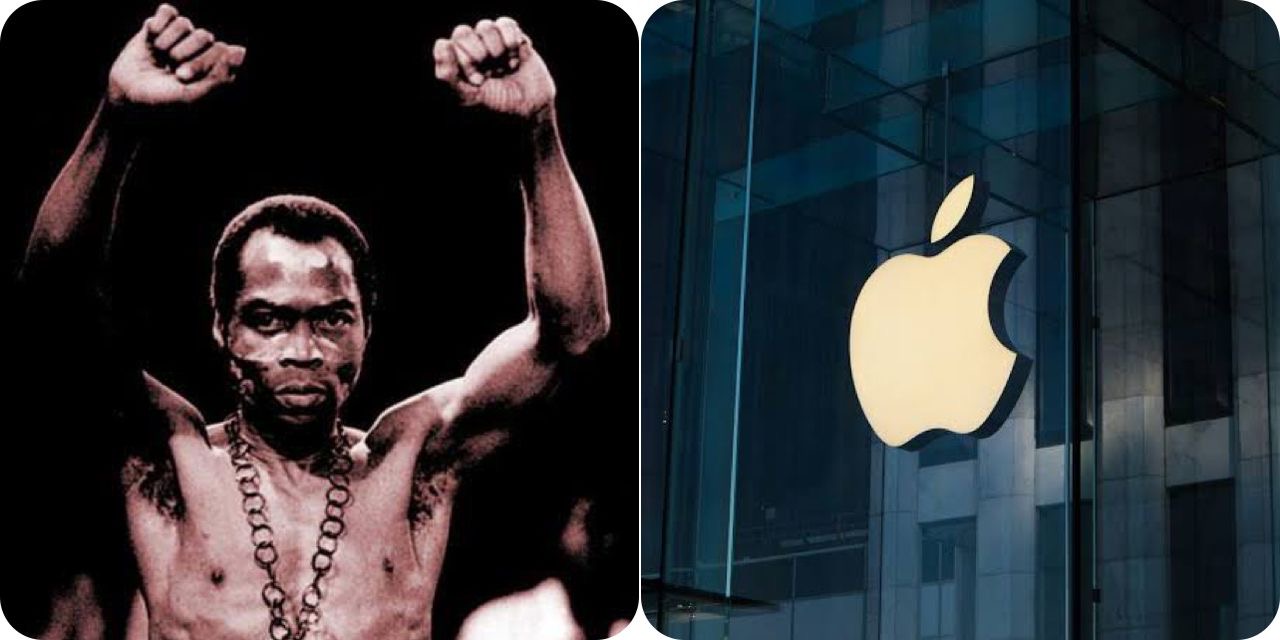
When Apple unveiled its latest MacBook Air (M5) on March 3, 2026, viewers around the world were drawn not just to the laptop’s new performance. They were also captivated by the pulsing soundtrack behind the ad: the 1971 Afrobeat track “Let’s Start” by Fela Anikulapo Kuti.
Recorded more than five decades ago in London, alongside drummer Ginger Baker, the song’s horns, percussion, and hypnotic groove provided a striking contrast to the polished, high-tech imagery of Cupertino’s flagship product launch.
For many, the choice was unexpected. The song was born out of Lagos’ Kalakuta Republic and steeped in political resistance and creative defiance. It is now underscoring one of the world’s most recognizable technology brands. By selecting Fela’s music, Apple is tapping into the enduring influence of Afrobeat and its ability to resonate across generations and geographies.
Rewind: The Birth of “Let’s Start”
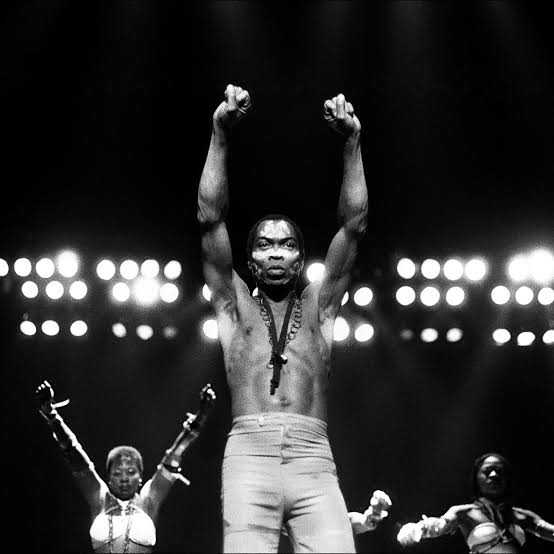
In the summer of 1971, Fela Anikulapo Kuti and his band Africa ’70 entered EMI studios in London to record what would become one of the earliest landmark albums of modern Afrobeat. The project later became the album Live! with Ginger Baker.
The record, released on August 30, captured extended performances that blended the evolving Afrobeat sound with the raw energy of live improvisation. Its opening track, “Let’s Start”, runs just over eight minutes and showcases the foundational elements of the genre. It has an insistently looping groove, layered horns, call‑and‑response vocals, and a hypnotic rhythmic structure that drives the band forward.
The 1971 session was notable for the presence of Ginger Baker, the British drummer formerly of the rock band Cream, who collaborated with Fela and Africa ’70 on several tracks. Baker’s participation was more than a guest appearance. He had travelled to Nigeria and immersed himself in local music and rhythms, a rare cross‑cultural exchange at the time. The combination of Baker’s rock and jazz sensibilities with Fela’s Afrobeat ensemble added a distinctive percussive depth to the recordings, helping bridge Western and African rhythmic traditions.
At its core, “Let’s Start” reflected the experimental spirit of early Afrobeat. Fela’s synthesis of jazz, funk, highlife, and traditional Yoruba rhythmic structures created a distinctive musical style. Layered percussion, syncopated horns, and call and response vocals made the music both danceable and intellectually provocative. While recorded over five decades ago, the track’s extended grooves and improvisational energy make it timeless and universally appealing.
While the original 1971 version is used in the MacBook Air M5 campaign, a remastered “Edit with Intro” was recently released on February 28, 2025, by Kalakuta Sunrise.
Kalakuta Republic: Fela’s Political and Cultural Ground

When Fela Anikulapo Kuti returned to Lagos from the United States in 1970 after his 10-month tour, he wasn’t just returning as a musician. He came back with a sharpened political purpose shaped by global Black radical movements and the civil rights struggles he encountered abroad. Within months, he established the Kalakuta Republic, a self‑declared autonomous commune on Agege Motor Road in the Mushin area of Lagos where he, his family, and members of his band Africa ’70 lived, recorded and created art outside the constraints of the Nigerian state.
Fela named the compound the Kalakuta Republic in deliberate defiance of the Federal Republic of Nigeria, a state he viewed as a continuation of colonial structures. The name itself was a mockery of a prison cell called “Calcutta,” where he had once been detained. He reclaimed the term as symbolise resistance and non‑conformity. Within Kalakuta, there was a recording studio, a communal living space, and later a performance venue that evolved into what became known as the Afrika Shrine.
At its peak, Kalakuta Republic was more than just a home. It functioned as a creative and political hubwhere Fela and his collaborators produced music that directly challenged government corruption, oppression, and military authoritarianism. The commune offered a sanctuary to musicians, dancers, and artists seeking expression and community beyond official repression, and it became widely recognised as a centre of artistic experimentation and sociopolitical discourse.
That defiance came at a cost. In February 1977, following the release of the fiery protest song Zombie, nearly 1,000 soldiers stormed Kalakuta Republic in a violent assault. They burned the compound to the ground, beat its inhabitants, and severely injured Fela. His elderly mother, Funmilayo Ransome‑Kuti, a prominent feminist and activist in her own right, was thrown from a window and later died from her injuries.
Despite its destruction, Kalakuta Republic became a symbol of resistance, representing Fela’s lifelong opposition to political repression and his belief in artistic freedom. Today, the original site houses the Kalakuta Republic Museum, preserving Fela’s legacy through instruments, costumes, and personal artifacts.
The Global Afterlife of Afrobeat
Decades later, Afrobeat has evolved into a global cultural phenomenon. The genre’s complex polyrhythms and layered horns have influenced jazz, rock, and pop artists worldwide.
In 2009, the Broadway musical Fela! dramatized Fela’s life, earning 11 Tony Award nominations and introducing his music and political story to mainstream American audiences. Streaming platforms have further amplified Afrobeat’s reach, with millions of listeners discovering Fela’s catalogue alongside younger artists such as Burna Boy and Wizkid, whose contemporary Afrobeats draw on his grooves.
This worldwide impact was recognised in 2026 when Fela received the Grammy Lifetime Achievement Award, marking the first time an African artist was so honoured, and underscoring how far the music he created has travelled since its early days in Lagos.
Why Apple Chose Fela
When Apple introduced its latest MacBook Air (M5) on March 3, 2026, one element of the promotional video stood out almost as much as the device itself: the soundtrack. Instead of commissioning a contemporary pop track or an original score, Apple opted to use “Let’s Start,” the 1971 Afrobeat classic by Fela Anikulapo Kuti. The choice was notable not only for its vintage pedigree but also for its cultural resonance
Apple’s global promotional content typically reaches millions of viewers across its website, social channels, and streaming platforms, making the soundtrack more than background music; it is part of the narrative identity of the product.
Analysts say that pairing a distinct, recognisable track with product visuals can strengthen consumer recall and emotional impact. This is a strategy Apple has used for years. Previous campaigns, such as the 2008 MacBook Air launch featuring Yael Naim’s “New Soul,” helped elevate the song’s popularity and shaped the product’s cultural footprint.
In the case of the M5 launch, the upbeat energy and rhythmic drive of “Let’s Start” aligns with Apple’s messaging around performance, momentum and creative capacity. The track’s vibrant horns and pulsating beat underscore scenes highlighting the laptop’s speed and versatility, creating a sensory link between the device’s capabilities and the feel of the music.
Beyond marketing mechanics, the choice of Fela’s music comes at a moment of renewed global recognition for the Afrobeat pioneer. In February 2026, Fela was posthumously honoured with a Grammy Lifetime Achievement Award, making him the first African artist to receive that distinction from the Recording Academy. This event reignited worldwide interest in his catalogue. The timing of the MacBook Air campaign amplifies that global spotlight, potentially introducing Fela’s work to younger audiences who may have encountered him only indirectly through film, festivals and streaming playlists.
Closing
From the rebellious pulse of the Kalakuta Republic to the polished visuals of Cupertino, “Let’s Start”embodies a journey from defiance to global recognition. What was once radical protest music now serves as the soundtrack for a flagship technology launch, proving that Fela’s work transcends time, geography, and original intent. In the convergence of Afrobeat and Silicon Valley, the enduring legacy of Fela Anikulapo Kuti finds a new audience, a new stage, and a new beat that continues to inspire.




Discussion about this post