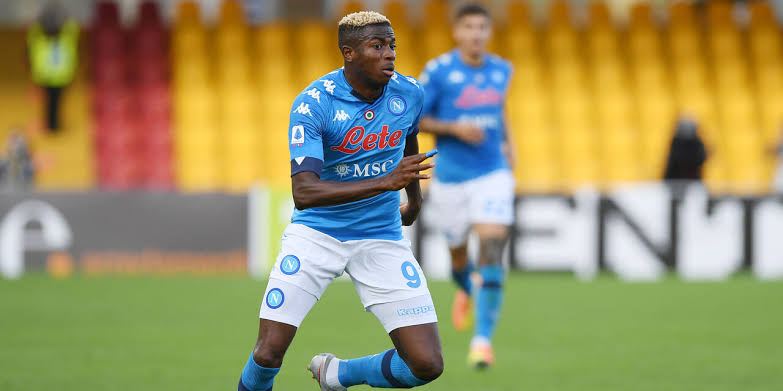

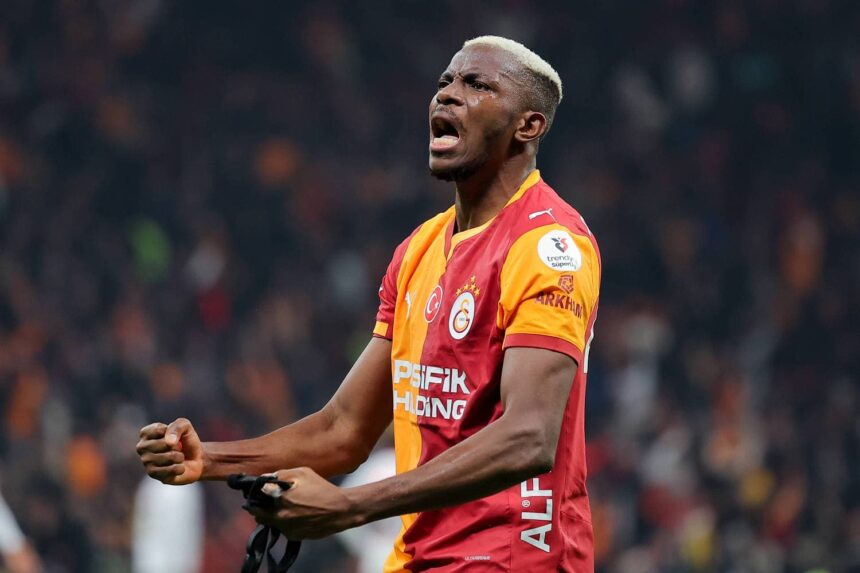
The transfer sagas that grip European football every summer rarely announce themselves this early with this much clarity. By the time most clubs are still finalising scouting reports, the name Victor Osimhen is already dominating boardroom conversations across five of the continent’s biggest institutions. That is not hyperbole. That is where things stand in early March 2026, with the Nigerian forward’s current club Galatasaray doing everything they can to hold onto him while Bayern Munich, Paris Saint-Germain, Chelsea, Atletico Madrid, and Juventus jostle for position in what promises to be one of the defining transfer stories of the year.
- Osimhen at Galatasaray: The Numbers That Made Europe Take Notice
- Bayern Munich: The Frontrunners and the Business of Replacing Kane
- Paris Saint-Germain: Why the Champions of Europe Said No
- Atletico Madrid: Simeone’s Case for the Perfect Striker Fit
- Juventus: The Admiration That Cannot Survive Its Own Mathematics
- Chelsea: The Transfer That Has Been Almost Happening for Three Years
- The 150 Million Euro Question: Galatasaray’s Valuation, the Anti-Italy Clause, and What It All Means
- What Osimhen Wants: Europe, Ambition, and the Wages That Keep Narrowing the Field
- Conclusion
The reasons are not difficult to understand. Osimhen has scored 17 goals in 25 appearances across all competitions this season, including seven in eight UEFA Champions League matches, a tally that places him among the elite strikers in the competition. Galatasaray reached the Champions League round of 16 largely on the back of his performances, including a decisive extra-time goal against Juventus in the playoff round that sent the Turkish giants through on a 7-5 aggregate. A striker who scores goals of that weight, in moments of that pressure, at this stage of the competition, does not stay anonymous for long.
What makes this particular transfer window different from the noise that has followed Osimhen for the past three years is the convergence of factors now aligning at once. His contract at Galatasaray runs until 2029 and there is no release clause, but the club’s financial structure, his extraordinary wages, and the sheer volume of interest from legitimate contenders have created conditions for a genuine bidding war. The question is no longer whether clubs want him. It is whether any of them are willing to pay what it will cost to get him.
Osimhen at Galatasaray: The Numbers That Made Europe Take Notice
When Galatasaray signed Victor Osimhen permanently last summer for a club-record 75 million euros, the Turkish football community was divided. Some viewed it as an extraordinary statement of ambition. Others considered it financially reckless for a club whose transfer record previously stood at a modest 18 million euros. Eight months into the season, the sceptics have largely gone quiet.
Across all competitions in the 2025/26 season, Osimhen has accumulated 17 goals and four assists in 25 appearances. His Champions League record alone, seven goals in eight matches with an average of nearly one goal per game, places him among the tournament’s leading scorers. He scored five goals across Galatasaray’s 5-2 aggregate first-leg victory over Juventus, then returned to net the extra-time goal that killed off Juventus’ dramatic second-leg comeback attempt. These were not routine performances in routine fixtures. These were pivotal goals in knockout football against one of Italy’s most storied clubs.
In the Super Lig, he has contributed 10 goals and four assists in league play, keeping Galatasaray firmly in title contention. His overall numbers at Galatasaray, combining the loan season from 2024/25 with the current campaign, now sit at 54 goals and 11 assists across 66 appearances. For context, Galatasaray has also made 40 million euros from their European run alone this season, not counting television revenue, which suggests the club’s finances, while stretched, are not quite the catastrophe some feared. However, the pressure to sustain these wages, reportedly 15 million euros per season according to multiple outlets, remains a live issue.
Galatasaray vice-president Abdullah Kavukcu has publicly set the market’s expectations. Speaking to La Gazzetta dello Sport, he stated that Osimhen’s value has at minimum doubled since the club signed him, effectively placing the Nigerian’s price tag at no less than 150 million euros. That figure, combined with his salary demands of around 20 to 21 million euros net per annum, immediately narrows the field of realistic buyers.
Victor Osimhen Transfer 2026: Five Clubs, One Striker, and a Price That Changes Everything

The Victor Osimhen transfer 2026 conversation is not built on speculation or quiet admiration from afar. Multiple credible sources across France, Germany, Italy, Spain, and England have independently confirmed interest from five distinct clubs over the past several weeks. What follows is a detailed examination of where each club stands, what they want from Osimhen, what they can realistically offer, and why the obstacles ahead are as significant as the desire.
-
Bayern Munich: The Frontrunners and the Business of Replacing Kane
Of all the clubs in the picture, Bayern Munich have emerged most convincingly as the side with genuine intent rather than just admirers’ interest. French publication Foot Mercato, one of the first outlets to break the story, reported that Bayern are the most interested party and that head coach Vincent Kompany has personally approved the move. Kompany’s backing is significant. At the level of football Bayern operate, a manager’s explicit approval of a target carries weight that general director discussions do not.
The logic behind Bayern’s pursuit is straightforward and well-documented. Harry Kane, the club’s first-choice striker and Bundesliga’s standout performer over the past two seasons, turned 32 in May 2025. Bayern have always planned generationally, and the German champions are acutely aware that building around a 32-year-old striker, however prolific Kane remains, requires a succession plan. Osimhen, who turns 28 in December 2026, represents exactly that. A striker at his physical peak, capable of operating as both a focal point and a runner in behind, with a Champions League pedigree now established at the highest level.
There is also a historical thread connecting Osimhen to Germany. His professional career began at VfL Wolfsburg, where he was signed from Wolfsburg’s youth academy structure. Former Super Eagles striker Jonathan Akpoborie, who himself played in Germany, noted on the Playzone podcast that Osimhen’s formative years in the Bundesliga mean he understands the culture. That familiarity is not a trivial consideration for a striker being asked to lead a club of Bayern’s magnitude.
Perhaps the most telling development in recent days is that Manchester United, who had been discussed as a potential rival for Osimhen, have now formally cooled or abandoned their pursuit according to Foot Mercato. That effectively clears the runway for Bayern, removing one major competitor from the wage and transfer fee negotiation. If Bayern move decisively in the summer, they will likely do so with the advantage of being the most credible football proposition on the table.
-
Paris Saint-Germain: Why the Champions of Europe Said No
The timing of PSG’s reported withdrawal from the Osimhen race is notable. Foot Mercato has reported that the reigning European champions have turned down the chance to sign the Nigerian striker, a decision driven by three interlocking factors: the transfer fee north of 150 million euros, Osimhen’s salary demands of around 20 million euros net per season, and manager Luis Enrique’s reluctance to sanction the deal.
Luis Enrique’s PSG have built their identity around a specific type of attacking player, technically fluid, mobile, and capable of functioning within a high press and intensive positional system. Osimhen is a devastating centre-forward in the traditional sense, a goal-scorer built for directness, power, and the penalty box. He is not the profile PSG have prioritised since Enrique took over, and the manager’s reservations appear to reflect a genuine tactical disagreement rather than mere financial caution.
PSG also has self-imposed wage structures that have shifted considerably since the spending era of Neymar and Mbappe. The club has moved towards a more sustainable model in terms of individual salaries, and Osimhen’s reported demand of around 20 million euros net per year sits substantially above what PSG are currently paying their squad players. Even with Kylian Mbappe’s departure to Real Madrid, the club has been careful about committing to contracts of this scale for a single player. The decision to walk away appears firm for now, though transfer sagas of this complexity have been known to resurface.
-
Atletico Madrid: Simeone’s Case for the Perfect Striker Fit
Of the five clubs linked with Osimhen, Atletico Madrid represent the most tactically interesting proposition. Diego Simeone’s sides have always been built on physical intensity, pressing from the front, and a striker willing to work the channels and lead the line with aggression. Atletico have not had a natural nine of that profile since Diego Costa in his prime, and the Argentine coach has reportedly approved Osimhen’s name on the transfer shortlist.
According to Turkish outlet Turkiye Today, Atletico Madrid have made Osimhen their primary striking target for the summer. Spanish publication reports citing Bein Sport Turkiye add Barcelona to the mix, with the Catalans reportedly considering Osimhen as a long-term replacement for Robert Lewandowski. But Atletico’s interest carries a particular urgency tied to their own squad dynamics. Julian Alvarez, the Argentine forward who arrived from Manchester City in the summer of 2024, has reportedly attracted interest from Arsenal and Barcelona ahead of the 2026/27 season. If Alvarez departs, Atletico would be left with a significant gap at the top of their attack, and Osimhen’s profile, powerful, direct, dangerous in behind, aligns closely with what Simeone demands from his forwards.
The financial obstacle for Atletico is not insignificant. Funding a transfer in excess of 150 million euros would require the club to first sell, and even with the proceeds of an Alvarez departure, the total outlay would represent one of the largest transactions in Spanish football history. Atletico have historically operated with discipline in the transfer market, preferring calculated investments over marquee spending. Whether the Simeone factor and the club’s ambition to close the gap on Barcelona and Real Madrid is enough to sanction this level of expenditure will be one of the more interesting storylines of the summer.
-
Juventus: The Admiration That Cannot Survive Its Own Mathematics
Of the five clubs mentioned in connection with Osimhen, Juventus occupy a peculiar position. Their interest in the striker is genuine, established, and personal. Osimhen himself confirmed to Gazzetta dello Sport ahead of Galatasaray’s Champions League playoff against the Italian club that Juventus approached him before his permanent move to Istanbul. He stated that sporting director Cristiano Giuntoli called him personally to express interest, and that conversations took place. The deal did not happen then because Napoli president Aurelio De Laurentiis refused to facilitate a move to a direct Serie A rival.
That same Napoli clause now stands between Juventus and any realistic pursuit in 2026. When Galatasaray completed the permanent purchase of Osimhen last summer, a condition was embedded in the deal: if Galatasaray were to sell Osimhen to any Serie A club in 2026, they would be required to pay Napoli a penalty of 61 million pounds, approximately 70 million euros. That figure drops to around 53 million pounds in 2027 before expiring entirely in September of that year.
The practical implication is crushing for Juventus. A transfer to the Turin club this summer would not only require convincing Galatasaray to accept a bid of at minimum 150 million euros, it would also obligate Galatasaray to forward an additional 70 million euros directly to Napoli. That takes the effective total cost of the deal, before wages, to somewhere north of 220 million euros. Serie A’s financial structure, stringent under UEFA’s squad cost regulations and historically cautious by comparison to the Premier League and Bundesliga, simply cannot absorb that kind of expenditure. The clause was designed by De Laurentiis precisely to prevent this outcome, and it has achieved its purpose with mathematical precision.
Juventus interest in Osimhen therefore operates in the realm of sincere but ultimately futile admiration for the foreseeable future. Unless circumstances change dramatically between now and September 2027 when the clause expires, the Italian giants will have to pursue this particular target through a different window or move on to other options entirely.
-
Chelsea: The Transfer That Has Been Almost Happening for Three Years
No club carries a longer history with Victor Osimhen than Chelsea. The London club have been in various stages of pursuit, near-agreement, and frustrated withdrawal since 2023, and the saga shows no sign of reaching its conclusion any time soon. According to multiple reports from FootballTransfers, Chelsea renewed interest in Osimhen in late 2025 and are once again monitoring his situation ahead of the summer window.
The previous failure to sign Osimhen in 2024 came down to a single sticking point: wages. Chelsea were willing to complete the deal but operated under a structured wage policy, preferring performance-related incentives that Osimhen’s representatives reportedly rejected in favour of a guaranteed base salary. Chelsea were unable or unwilling to match the 15 million euros per season Osimhen was seeking at the time, and the deal collapsed. Galatasaray subsequently offered both the wages and the permanent commitment the player was looking for.
The picture now is somewhat different. Chelsea’s current forward options, including Joao Pedro, Liam Delap, Marc Guiu, and Emanuel Emegha, have not entirely convinced the club’s hierarchy or the fanbase that they represent a sustained title challenge at the top end of the Premier League. Calls for a more established, proven striker have grown louder, and Osimhen’s name has featured prominently in those discussions. There are also reports suggesting Chelsea may revisit their wage structure to accommodate elite-level talent, particularly with the club’s ownership continuing to invest heavily in squad development.
There is one structural advantage Chelsea and the other Premier League clubs carry in this race that clubs in Italy, Spain, and Germany do not: the anti-Italy clause does not apply to England. Premier League clubs face no punitive fee beyond the standard transfer cost, which makes the financial calculation marginally more manageable than it is for Juventus. Whether Chelsea’s ownership is prepared to commit to the kind of package Osimhen commands remains the central question. The history between the two parties suggests this is a deal that could happen. The history also suggests that something always seems to get in the way.
The 150 Million Euro Question: Galatasaray’s Valuation, the Anti-Italy Clause, and What It All Means
The financial architecture around a potential Osimhen transfer in 2026 is complex enough to deter all but the most committed buyers. Start with the base transfer fee. Galatasaray vice-president Abdullah Kavukcu has publicly stated that the club purchased Osimhen for 75 million euros and that his value has since doubled, placing the minimum acceptable offer at 150 million euros. That is not a negotiating position so much as a market statement, delivered through a national newspaper to ensure the message reached every interested club in Europe simultaneously.
On top of that figure, any buyer must absorb wages of between 15 and 21 million euros net per annum depending on the source, which translates to somewhere between 30 and 42 million euros per year in gross wages before tax in most European jurisdictions. Over a five-year contract, the total financial commitment from a potential buyer could exceed 350 million euros across transfer fee and wages combined. The number is genuinely staggering, and it explains why clubs like PSG and Manchester United have already walked away.
Then there is the Napoli clause. As reported by Gazzetta dello Sport and confirmed across multiple outlets, Galatasaray are contractually obligated to pay Napoli approximately 70 million euros if they sell Osimhen to any Serie A club in 2026. This was a condition inserted by Napoli president De Laurentiis when finalising the permanent transfer last summer, specifically designed to prevent the striker from resurfacing in Italian football with a rival club. It effectively rules out Juventus for the duration of the clause, and it is one of the more unusual contractual devices seen in recent transfer history.
Osimhen also does not have a release clause in his Galatasaray contract, which means any interested club must negotiate directly with a club that has publicly stated their reluctance to sell and established a price that many in the market consider prohibitive. Galatasaray signed him permanently less than a year ago. They built their Champions League campaign around him. The leverage sits firmly with the Turkish club, and they know it.
What Osimhen Wants: Europe, Ambition, and the Wages That Keep Narrowing the Field
Throughout the sustained speculation around his future, Victor Osimhen has been consistent on one point: he has no interest in a move to Saudi Arabia. The financial proposals from clubs in the Middle East are reportedly extraordinary, with some figures suggesting contract offers in excess of 43 million euros per annum from Saudi Pro League clubs. Osimhen has declined every approach, publicly and privately, stating his desire to remain in Europe and compete at the highest level of the game.
That commitment to European football is significant because it narrows the field for Saudi clubs and simultaneously raises the stakes for European ones. Osimhen knows his own value. He has watched the transfer market closely enough to understand that the clubs interested in him are paying 100 to 150 million euros for players of a similar or arguably lesser profile. He is not going to accept a discount to accommodate a club’s internal wage structure, and that firmness is precisely what has derailed previous negotiations.
On his future with Galatasaray, Osimhen has been carefully diplomatic rather than explicitly committed. He has spoken publicly about his love for Istanbul and the connection he has developed with the club’s supporters. But he has also been candid enough to say he does not know what the future holds, language that his potential suitors will read as an open door rather than a closed one. The player’s demeanour in the Champions League this season, appearing entirely focused, delivering in the biggest matches, and managing the noise around his name professionally, suggests a footballer at peace with his immediate situation while remaining open to what comes next.
At 27, he is at the optimal point in a striker’s career, physical capacity fully intact, experience of multiple leagues now established, and the Champions League stage no longer unfamiliar. The next destination, if there is one, will likely be determined not by sentiment but by which club can construct a package that addresses every dimension of his requirements: a competitive squad capable of winning trophies, a transfer fee Galatasaray will genuinely consider, and wages that reflect what Osimhen and his representatives believe his value is in the current market.
Conclusion
The Victor Osimhen transfer 2026 story has already distinguished itself from the years of noise that preceded it by the sheer number of credible institutions now visibly engaged. Bayern Munich lead the field with Kompany’s direct approval and a clear structural need. Atletico Madrid have identified him as their primary target with Simeone’s backing. Chelsea carry the longest-running interest and the structural advantage of no punitive clause. Juventus want him deeply but face arithmetic that makes a deal all but impossible this summer. PSG have stepped back, at least for now.
Galatasaray hold the cards. A club-record 150 million euro valuation, no release clause, and a striker under contract until 2029 gives them every reason to wait for the right bid rather than the first one. Osimhen himself is not pushing for an exit, but the language he uses about his future suggests a man who will not resist the right opportunity if it materialises.
The summer of 2026 will resolve this one way or another. Either a European giant meets Galatasaray’s conditions and secures one of the most dangerous strikers in the world, or Victor Osimhen begins next season in Istanbul, almost certainly to the sound of the same names circling again twelve months later. Either way, African football and Nigeria’s Super Eagles will be watching closely. A striker of his generation does not pass through moments like this unnoticed.