
As Nigeria moves closer to the 2027 general election, opposition parties continue to grapple with internal divisions that have weakened their ability to present a coordinated challenge.
The ruling All Progressives Congress remains dominant, while rival parties face leadership disputes, defections, and structural challenges that limit their collective strength.
Despite concerns over economic conditions and security issues, opposition groups have struggled to convert public dissatisfaction into a unified political strategy.
Political observers have described the situation as a weakening alliance, where fragmentation could reduce competitiveness in the forthcoming election.
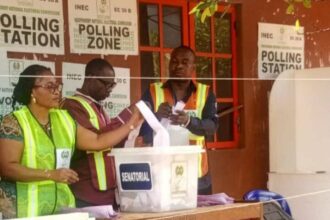
Recent electoral outcomes, including area council polls in the Federal Capital Territory, have highlighted the effects of disunity among opposition parties.
The results reflected how divided support bases can influence overall outcomes in favour of a more organised political platform.
Across the opposition space, four parties — the Peoples Democratic Party (PDP), Labour Party (LP), New Nigeria Peoples Party (NNPP), and African Democratic Congress (ADC) — present varying levels of strength and limitation.
The PDP remains one of the most established opposition platforms with a presence across the country.
The party maintains representation in national and state legislative bodies despite prolonged internal disagreements.
It continues to hold minority positions in some assemblies and retains influence in selected states.
However, recurring disputes over leadership have affected its organisational stability and public perception.
The party has experienced significant defections, which have reduced its control at the state level.
Internal divisions have also resulted in competing factions, creating uncertainty around decision-making processes.
A court ruling that nullified a previous national convention further complicated the party’s leadership structure.
Analysts note that unresolved disputes could affect the party’s preparations for the next general election.
The Labour Party, which gained visibility during the 2023 election cycle, has also encountered internal challenges.
The party previously attracted strong support from young and urban voters through a message centred on reform and accountability.
However, leadership disagreements have weakened its structure and reduced its influence within legislative institutions.
Factional disputes created uncertainty about the party’s direction, limiting its ability to sustain earlier momentum.
A court ruling recognising a caretaker leadership has provided temporary clarity on the party’s internal structure.
Despite this development, the party continues to face the task of rebuilding cohesion and expanding its organisational base.
The ADC has emerged as a platform attracting various political figures from different parties.
Its growing profile is linked to a series of defections that have increased its visibility within the opposition space.
The party presents itself as a coalition seeking to provide an alternative political direction.
However, its electoral performance since its recent expansion has not translated into major victories.
Analysts observe that internal competition among key figures could affect its stability ahead of the elections.
The integration of individuals with different political interests presents a complex organisational challenge.
Questions relating to candidate selection and zoning arrangements have also generated internal discussions.
The party’s ability to manage these dynamics may influence its effectiveness as a unified platform.
The New Nigeria Peoples Party entered the political scene with notable regional strength during the last election cycle.
Its influence was largely connected to support in Kano State, where it secured a major electoral victory.
However, internal developments have altered the party’s position, particularly following high-profile defections.
The departure of key figures led to a shift in political alignment within its stronghold.
Several lawmakers at both state and federal levels also changed affiliation, affecting the party’s legislative presence.
Despite these changes, the party retains some level of influence through established political networks.
Compared to other opposition groups, it appears to have fewer internal leadership disputes.
Across the opposition landscape, a common theme remains the challenge of building unity.
While each party holds certain strengths, fragmentation continues to limit collective effectiveness.
The African Democratic Congress has attempted to position itself as a central platform for opposition coordination.
Its growing membership reflects ongoing realignments within the political environment.
However, analysts note that coalition arrangements require sustained cooperation to remain effective.
The ruling All Progressives Congress continues to benefit from its extensive structure and nationwide reach.
The party has also strengthened its position through the absorption of defectors from opposition groups.
This expansion has increased its presence across states and legislative institutions.
Some analysts describe the current situation as one where opposition forces are dispersed rather than consolidated.
In such a context, electoral outcomes may be influenced by organisational strength as much as voter sentiment.
Economic challenges and public concerns could shape political discourse ahead of the elections.
However, the ability of opposition parties to translate these concerns into coordinated action remains uncertain.
Observers suggest that unity among opposition groups could improve competitiveness in the electoral process.
Without such coordination, internal divisions may continue to affect their overall performance.
The period leading to 2027 is expected to test the organisational capacity of all political parties.
Developments within opposition platforms may determine whether they can present a cohesive alternative.
At the same time, the ruling party’s established structure provides it with a strategic advantage.
The evolving political environment reflects a balance between internal party dynamics and broader national issues.
As preparations for the elections continue, the structure and unity of political parties are likely to remain central factors.